When you stand at the edge of the dramatic cliffs of North Mayo, you can look out across stone walls older than Stonehenge and the Egyptian pyramids, across the extraordinary and ancient Céide Fields.
This unique and under visited site will give you an insight into our Neolithic ancestors as well as being one of the most spectacular settings along the Wild Atlantic Way.
The Céide Fields are the world's most extensive Stone Age monument, dating back nearly 6,000 years. But what makes them truly special is how perfectly preserved they are beneath Mayo's windy boglands, and how dramatically they're positioned on these Atlantic cliffs. This is my guide to visiting the Céide Fields.
 Patrick standing at the cliffs at the Céide Fields
What Are the Céide Fields?
Beneath the bogs of north County Mayo lies a sophisticated farming landscape that would have supported thousands of Neolithic people. The Céide Fields contain:
- Over 100 kilometres of stone walls preserved under peat bog
- Field systems dating to 3500 BCE: making them older than Stonehenge by 1,000 years
- Dwelling sites and megalithic tombs scattered across the landscape
- Evidence of the world's first farmers who cleared ancient pine forests for agriculture
The site stretches for miles along the coast, though the main concentration and visitor center focus on the area around Céide (pronounced "kay-jeh"), meaning "flat-topped hill" in Irish.
Planning Your Visit to Céide Fields
Best Time to Visit
The site is dramatically beautiful year-round, but timing affects your experience:
- Summer (June-August): Longest opening hours and warmest weather, but expect crowds
- Spring/Autumn (March-May, September-November): Fewer visitors, dramatic skies, changeable weather
- Winter: Limited access but atmospheric: call ahead for group bookings
I like shoulder season (May or September) when you have a shot at decent weather, and you'll have the bog and coastline largely to yourself.
What to Expect: Weather and Conditions
The Céide Fields sit on exposed cliffs 110 meters above the Atlantic, so weather is a major factor. It's almost always windy here, at least when I've visited, and you'll really see the weather changing quickly. It can get a bit muddy around the bog site, even on designated paths. But the light is spectacular: the wild Atlantic, shifting skies and green/brown bog makes for a fantastic place to take photos.
Essential gear: Waterproof jacket, sturdy shoes (hiking boots ideal), layers for temperature changes. Read more on this in my essential packing guide.
Getting There and Parking
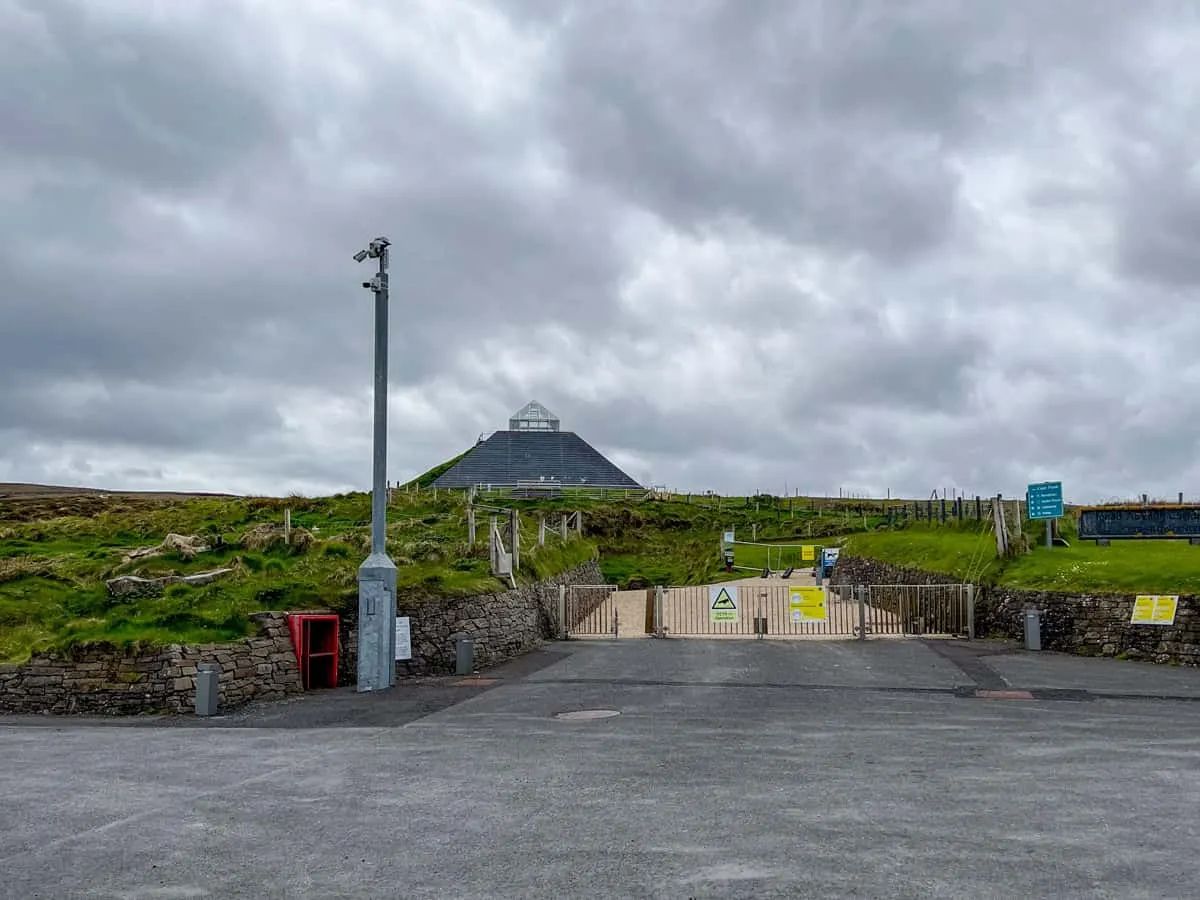
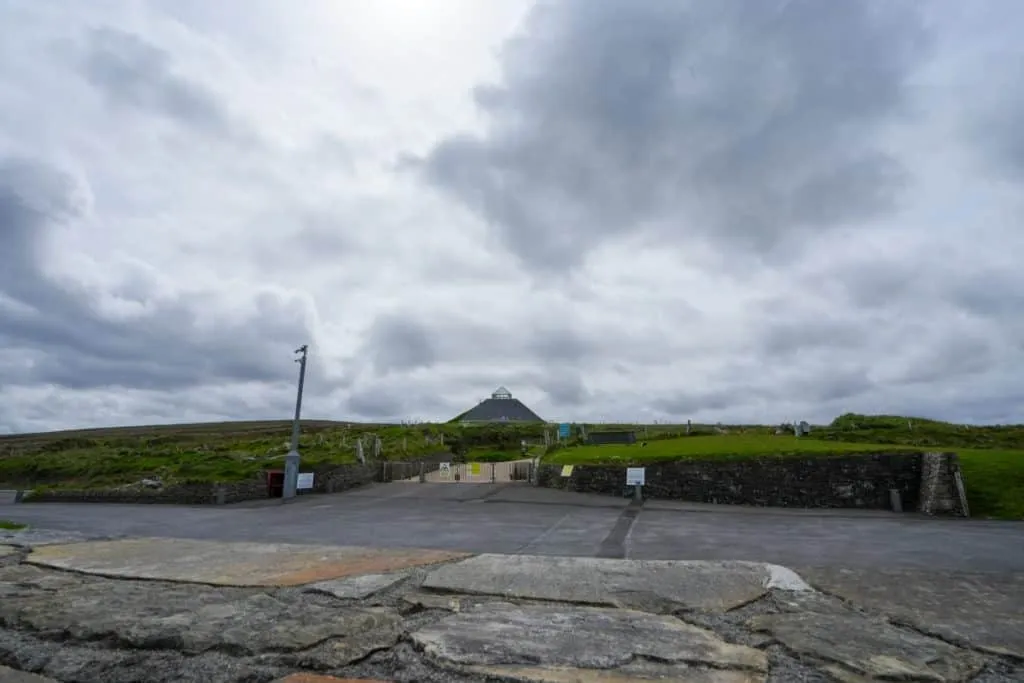
The Céide Fields visitor centre is about 8 kilometres northwest of Ballycastle, County Mayo, and it's well-signposted from the R314 coastal road. Free parking is available at the visitor centre.
To give you a sense of driving time:
- Dublin: 3.5 hours via N4 to Longford, the N5 to Ballina, follow the R314 coastal route
- Galway: 2 hours via N17 through Knock, on to Ballina, then the R314
- Belfast: 3.75 hours via Enniskillen, Sligo, Ballina, then follow the R314
The drive along the coast from Ballina is spectacular: consider it part of the experience.
The Céide Fields Visitor Centre Experience
Inside the Award-Winning Centre
The modern visitor centre is built into the hillside to minimise visual impact. Here's what to expect:
- Interactive Exhibitions: Learn about bog ecology, Stone Age life, and archaeological techniques through hands-on displays
- A Mirror Model: An immersive model showing how the fields looked 5,500 years ago, with mirrors creating the illusion of endless prehistoric landscape (known as the infinity box).
- Preserved Ancient Pine: See a 4,300-year-old Scots pine trunk, perfectly preserved in the bog
- Viewing Platforms: Indoor and rooftop platforms offering panoramic views of the Atlantic and archaeological landscape
Guided Tours: The Real Magic
The outdoor guided tours are where the Céide Fields come alive. If you're there at the right time, the guides are both friendly and extremely knowledgeable. They'll lead you along raised walkways over the bog. Expect to see:
- Visible stone walls emerging from the peat
- Domestic enclosures where Neolithic families lived
- Field boundaries that divided grazing and crop areas
- The famous probing demonstration: using traditional iron rods to locate hidden walls beneath your feet
The tour takes 45 minutes to 1 hour, and departs every 30 minutes during peak season. The group will usually be fewer than 20 participants.
Photography at Céide Fields
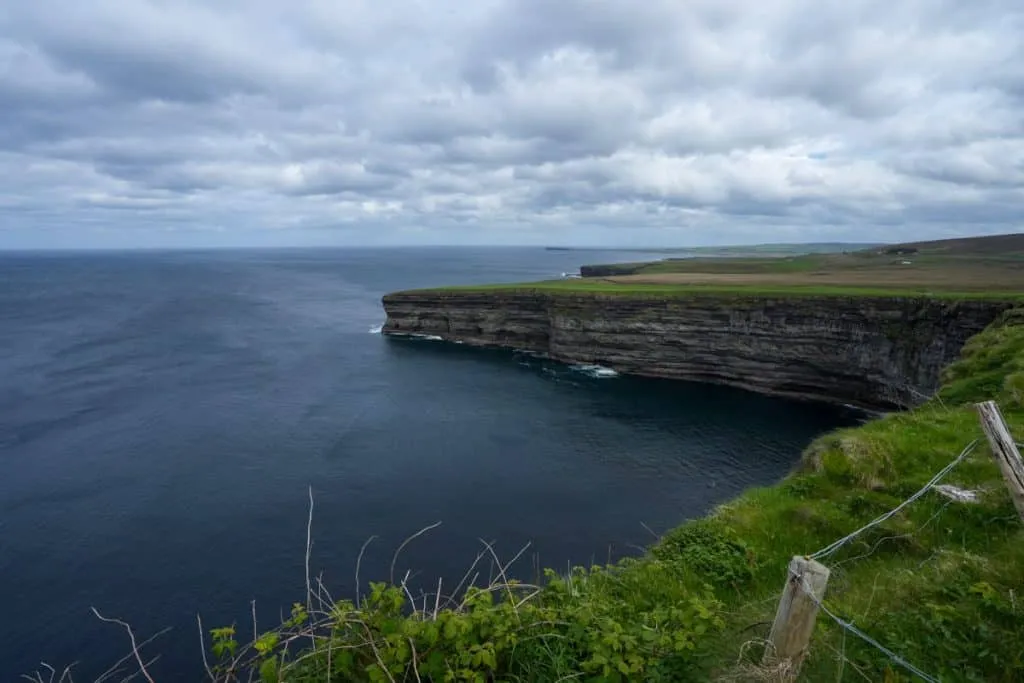
This is one of the most dramatic places in the West of Ireland for photography.
Best Photo Spots
- Rooftop viewing platform: Panoramic shots of the entire archaeological landscape
- *My favourite is the Atlantic cliff edge: Dramatic coastline views (stay safely back from edges)
- Stone wall: Close-ups of Neolithic walls emerging from peat
- Bog cotton season (June-July): White bog cotton creates a cool photographic foreground
The Archaeological Story: How the Céide Fields Were Discovered
The discovery story is as fascinating as the site itself. In the 1930s, local schoolteacher Patrick Caulfield noticed something odd while cutting turf for fuel: linear piles of stones that seemed too organised to be completely natural.
The Caulfield family connection runs deep at the site:
- Patrick Caulfield (1930s): First noticed the stone patterns
- Seamus Caulfield (1970s): Patrick's son, an archaeologist, began systematic investigation
- It took 4 decades of research to understand the true scale of the site
The breakthrough came with a simple technique: probing the bog with iron rods (traditionally used to find fallen trees for fuel) to map the hidden walls. This method revealed a sophisticated landscape of fields, enclosures, and settlements. If you're lucky enough to take the guided tour, you'll experience the iron rod technique.
Life in Neolithic Céide: What the Evidence Shows
Archaeological evidence shows this was likely a thriving farming community:Here's what we know about daily life 5,500 years ago:
If this was such an idyllic location, why was the area abandoned? Around 3,500 years ago, climate change made the area wetter and cooler. Farming became difficult, and gradually the bog began to grow, eventually covering and preserving the entire landscape for millennia.
Connecting Céide Fields to Your Mayo Itinerary
Nearby Attractions (Within 30 Minutes)
I visited the Céide Fields as part of my Wild Atlantic Way itinerary, but you can visit here before or after other local attractions:
Wild Atlantic Way Context
The Céide Fields sit on one of the most spectacular sections of the Wild Atlantic Way. You can fold the site into a day trip or visit as part of a longer itinerary. Here's some ideas:
- Day trip from Westport: Céide Fields + Downpatrick Head + coastal drive
- North Mayo coastal tour: Slow itinerary from Ballina to Belmullet
- North West: Combine a tour of Donegal, with Sligo and Mayo
Accommodation Recommendations
- Luxury: Mount Falcon Estate (45 minutes): country house hotel with falconry
- Mid-range: Ballina area hotels with easy access to Céide Fields
- Budget: Find some options in Ballycastle village for a friendly Mayo welcome
Practical Information for Your Visit
Opening Hours 2025
Admission and Facilities
- Admission: €5 for adults (2025 rates), free for children under 12
- Parking: Free on-site parking
- Accessibility: The visitor centre is fully accessible; outdoor bog walks have limitations
- Café: Light refreshments, local products, spectacular views
- Shop: Books, crafts, and archaeological-themed gifts
Planning Your Time
You'll need at least 1.5 hours to visit the Céide Fields centre and do a guided tour. If you want to browse the exhibition and take photos, allow 2-3 hours.
FAQs
Is it worth visiting in bad weather? Absolutely: the dramatic setting is actually enhanced by wild weather (it poured while I was there last), and the indoor centre provides shelter during the heaviest of showers.
Can children enjoy it? Yes: the probing demonstrations and interactive exhibits engage kids, though you might find that the outdoor conditions could be challenging for very young children.
Do I need to book in advance? Not usually required, except for large groups, but call ahead in winter months.
How does it compare to other Irish ancient sites? Unlike, say, Newgrange, Céide Fields offers landscape-scale archaeology in a dramatic coastal setting: it's pretty unique.
Bottom Line: Céide Fields is Worth the Journey
The Céide Fields offer something you won't find anywhere else in Ireland, or the world. Where else can you walk through agricultural fields that predate written history, preserved perfectly beneath the bog, with the Atlantic Ocean crashing against cliffs below?
I wouldn't consider the Céide Fields another ancient site to tick off the list. It hits a bit differently to connect you with Ireland's earliest farmers who were lucky enough to be in one of the most dramatic parts of the world, and who clearly were thriving.
There's nowhere quite like it!
Exploring County Mayo? Don't miss my Wild Atlantic Way guide which covers Mayo and beyond.