Hello
Dia duit
A greeting to one person.
Explore the phraseA little closer to Ireland / Gaeilge
You do not need to be fluent to make an effort. Start with a greeting, listen to the reply, and let the conversation find its level.
A few phrases to begin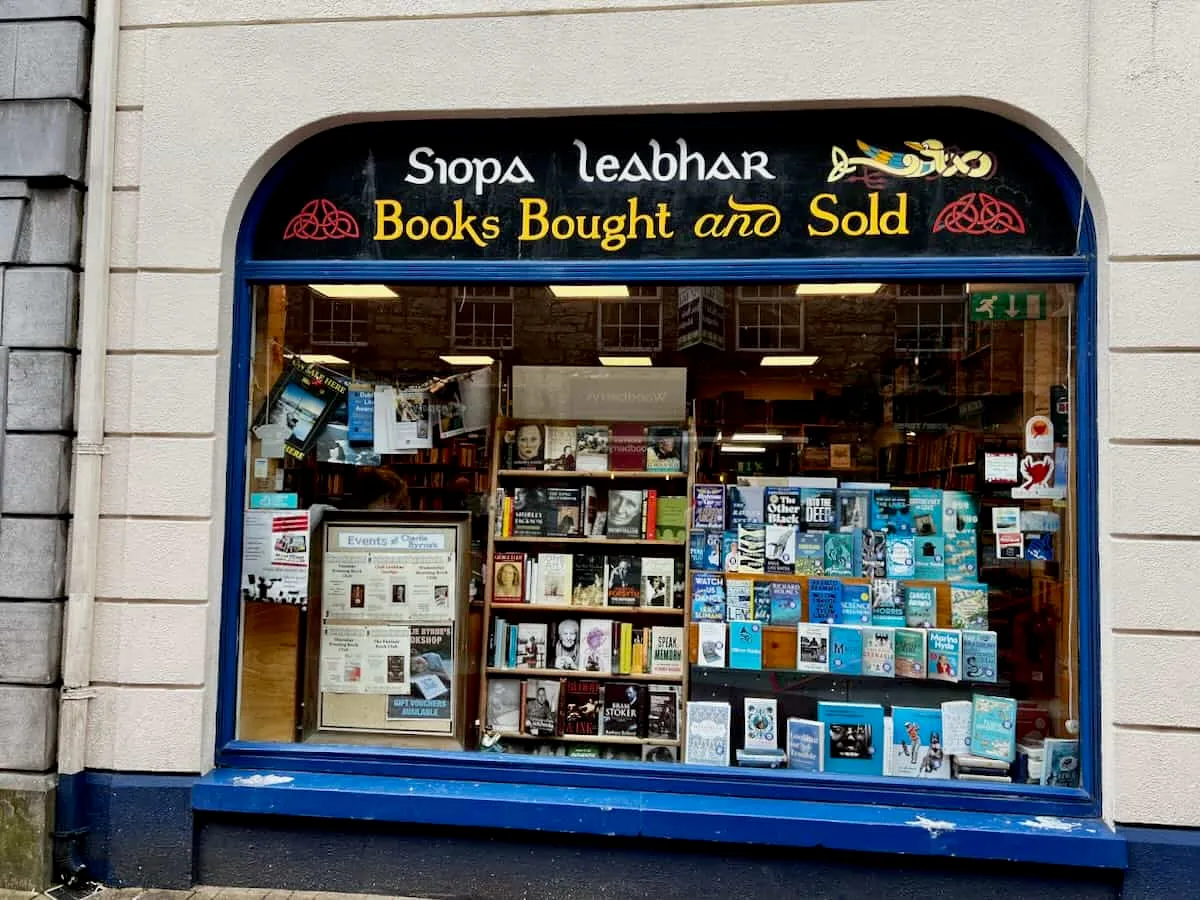
The Irish language
Gaeilge
Listen before you practise. You will hear different pronunciations across the country.
Listen at TeanglannStart small
Hello
A greeting to one person.
Explore the phraseThank you
A few words of appreciation.
Explore the phraseCheers
For raising a glass.
Explore the phraseBye for now
Until the next conversation.
Explore the phraseMeanings from Foras na Gaeilge's dictionaries. Follow each entry to explore its usage; use Teanglann for pronunciation recordings.
I was brought up learning some basic Irish at primary and secondary school and I've learnt that even using a few words of Irish (Gaeilge) makes me feel even closer to home.
If you're a prospective visitor, it's not about speaking Irish with perfect pronunciation or fluency; it's about showing a little respectful knowledge about Irish culture and heritage and connecting in a deeper way with the heart of the country.
Our cultural heritage is deeply intertwined with our native tongue, Irish (Gaeilge). While English is spoken everywhere, using an Irish phrase or two can connect with someone, open a door to a deeper conversation and engage with a linguistic tradition that stretches back thousands of years.
The truth about using Irish in Ireland might surprise you. When foreigners attempt to speak Irish, most local people will react positively (if with a bit of surprise). Here's what you can expect:
Cultural Bridge Building: Even a simple "hello" in Irish immediately identifies you as someone who's made an effort to understand Irish culture beyond the tourist surface. If some people seem surprised, it's rarely rudeness, maybe more a reflection of the complex relationship we Irish have with our own language. Many of us feel culturally connected to Irish but mightn't necessarily be confident speakers.
Gaeltacht Navigation: In Ireland's Gaeltacht regions, where about 2% of the population lives, Irish is still commonly spoken as a first language. Your phrases will be especially appreciated here.
Signage Understanding: Road signs throughout Ireland display both Irish and English. Recognising basic Irish words helps you navigate and understand place names with their original meanings.
While 40% of people in Ireland claim they can speak Irish, in practice only about 2% use it regularly in daily life.
Start with the four phrase cards above. Each links to a dictionary entry so you can explore its meaning and usage. Listen to pronunciation recordings at Teanglann as you practise.
"Sláinte" is a toast, while "go raibh maith agat" says thank you. Start simply and follow the other person's lead if they reply in English.
Irish spelling is actually more regular than English once you understand the patterns. These English sound comparisons are only rough starting points. Sounds vary with the surrounding letters and the dialect; listen to a recording of the whole word when you can.
Vowel Sounds:
Consonant Differences:
Listen for the stress: Do not rely on a single rule for every word or dialect. Copy the rhythm you hear in a pronunciation recording.
In Gaeltacht areas, scattered mainly along Ireland's west coast, Irish is the community language. These regions include parts of:
Here, starting conversations in Irish is not only appropriate but often appreciated, even if you need to switch into English after using up all your words!
In cities like Dublin, Cork, Belfast, and Galway, Irish phrases work best as:
In heavily touristed areas, Irish phrases demonstrate you're not just another casual visitor but someone genuinely interested in Irish culture.
Irish has three main dialects: Ulster (north), Connacht (west), and Munster (south). For travellers learning a few phrases, the differences are minor, but knowing the dialects exist at least shows deeper cultural understanding:
Don't worry about dialect differences as a traveller: any attempt at Irish will be appreciated regardless of regional variation.
Understanding why Irish matters to Irish people will help you use these phrases more meaningfully:
Irish was the majority language until the 19th century, when English became dominant through colonial policies including punitive education laws, economic pressures, and the devastating impact of the Great Famine on Irish-speaking communities. Using Irish today connects you to centuries of cultural heritage that survived deliberate suppression.
Today's Irish language revival, while different from early 20th-century expectations, is actually quite successful compared to similar efforts worldwide. Your participation, however small, contributes to this revival.
For many Irish people, the language represents national identity and collective pride, even if they don't speak it fluently themselves.
For me, it's Pádraig for Patrick
Over-confidence: Don't assume your pronunciation is perfect. Irish has sounds that don't exist in English, so written phonetics can only approximate the real sounds. I come from Ulster, so my pronunciation is different to someone from Kerry, so every day I use Irish I'm learning different phonetics and forms.
Giving up too easily: Even if someone seems surprised by your Irish, it's usually positive surprise
Ignoring responses: If someone corrects you or offers to help, accept it graciously
Using Irish phrases during your travels isn't about achieving fluency or perfect pronunciation. It's about showing genuine respect for Irish culture, connecting with us on a deeper level, and participating in the living heritage of one of Europe's oldest languages.
Whether you're ordering a pint in a Galway pub, asking directions in rural Donegal, or simply greeting your B&B host, your use of Irish might open a door to Irish experiences that go far beyond typical tourist interactions.
I hope you'll forgive me waxing lyrical as I finish this post: the Irish language carries the soul of Ireland in its sounds and structures. The phonetics, the phrasing, the distinct character of spoken Irish connects with thousands of years of continuity that was at risk of dying. In a country like this, where storytelling is an art form, your participation will be noticed and appreciated.
**Slán go fóill! **(Goodbye for now!)
*Ready to experience Irish culture firsthand? Explore County Donegal where Irish remains strong in the Gaeltacht regions, plan your visit to Belfast to experience the complex linguistic heritage of Northern Ireland, or discover the Wild Atlantic Way, where many of the coastal communities still maintain their Irish-speaking traditions alongside stunning Atlantic scenery. If you're already en route, don't forget to read my Essential Packing List! *