This article contains affiliate links. If you book through them, I may earn a commission at no extra cost to you. See my affiliate disclosure.
My first proper visit to Cork was to sing at its choral festival with the Irish group, Anúna, about twenty years ago. But it took repeated visits under my own steam to understand the layout of the "Rebel City", and decide the best areas to stay.
In case you need reminding, Cork calls itself the "real capital of Ireland" with only partial irony! But it has every reason for confidence in its accommodation: boutique hotels, very modern properties, and traditional guesthouses that capture Cork's friendly spirit. This guide breaks down the areas to stay in, with solid recommendations for most budgets.
Where to Stay in Cork: Quick Overview
I'll get into the details shortly, but here's the essence of Cork's accommodation areas:
City Centre (Oliver Plunkett Street) - for first-time visitors to Cork who want to walk to the English Market, the best restaurants, and Cork's nightlife spots.
MacCurtain Street area (aka the "Victorian Quarter") - still close to town, but with a bit more character and quality independent shops.
Huguenot Quarter & South Main Street - for visitors who'd like a historic atmosphere near the English Market and Paul Street's cultural attractions.
Shandon & Northside - for travellers prioritising value and a "real people live here" atmosphere with easy enough walking access to the centre.
Western Road, UCC & Victoria Cross - for stays west of the centre, with university access and riverside hotels. Check each address: this covers a longer stretch than the central neighbourhoods.
Where to Stay in Cork City Centre
The city centre is the part of Cork I know best. Oliver Plunkett Street was the winner of the 2016 Great Street Award by London's Academy of Urbanism, and if you take a walk here, you'll get it: independent boutiques, old school pubs, and a busyness greater than the size of Cork suggests.
You'll be near enough to the English Market to grab morning coffee and pastries, yet far enough from the late-night revelry on Union Quay to actually sleep. The City Centre is best for walking to restaurants: Market Lane is my favourite for local ingredients. The Farmgate Café upstairs in the English Market does a great breakfast.
Best hotels in City Centre:
The Imperial Hotel
Clayton Hotel Cork City
Leonardo Hotel Cork
Maldron Hotel South Mall
Where to Stay in MacCurtain Street (aka Victorian Quarter)
If you're wondering what I mean by "aka Victorian Quarter", the area around MacCurtain Street was branded VQ or Victorian Quarter and the name hasn't quite stuck for many Cork people, not least for the association of marking time periods with a colonial or monarchical "Victorian". Still The Sunday Times Ireland says this is Cork's coolest neighbourhood, and perhaps we can agree on that.
This is ideal shopping territory, especially for antiques. On the weekend, you could lose time at Mother Jones Flea Market, named after Shandon-born Mary Harris Jones, an advocate for workers' rights in early 20th-century America. The area gives a sense of Cork's independent character in that you'll find vintage clothing shops, pubs and a mix of bohemian and the traditional that is uniquely Cork.
Best hotels in this area:
Hotel Isaacs Cork
Bru Bar & Hostel
Staying in Huguenot Quarter & South Main Street
South of Shandon and across the River Lee you'll find the Huguenot Quarter, around French Church Street, Carey's Lane and Paul Street. This historic area hosts some of Cork's cultural stars, as it's close to the Crawford Art Gallery, Cork Opera House, and the English Market.
Forming the T-bar of the Huguenot Quarter, Paul Street leads into the old market area of the Coal Quay, where you'll find evidence of Cork's trading heritage in the weekend markets and traditional shopfronts.
South Main Street is a separate historic street to the southwest, beside the English Market. For hotel options within reach of both areas, start with the city-centre picks above; check the exact address before booking.
Staying in Shandon & Northside
Shandon (sean dún means 'the old fort' in Irish) is a historical part of Cork, home to a fort settlement as early as the 1170s. Today it has great views across the city. The area has Cork's most famous landmark - the Shandon Bells of St Anne's Church - plus the Butter Museum - a relic of the 1800s local butter trade. There's good value here, but expect to walk 10-15 minutes into town.
Best hotels in Shandon & Northside:
Gabriel House Guesthouse
Staying near Western Road, UCC & Victoria Cross
These stays are west of the central shopping streets. Western Road is useful for University College Cork; Victoria Cross is farther out, so allow more time to reach the city centre.
The River Lee Hotel
The Kingsley
Garnish House
Getting Around Cork
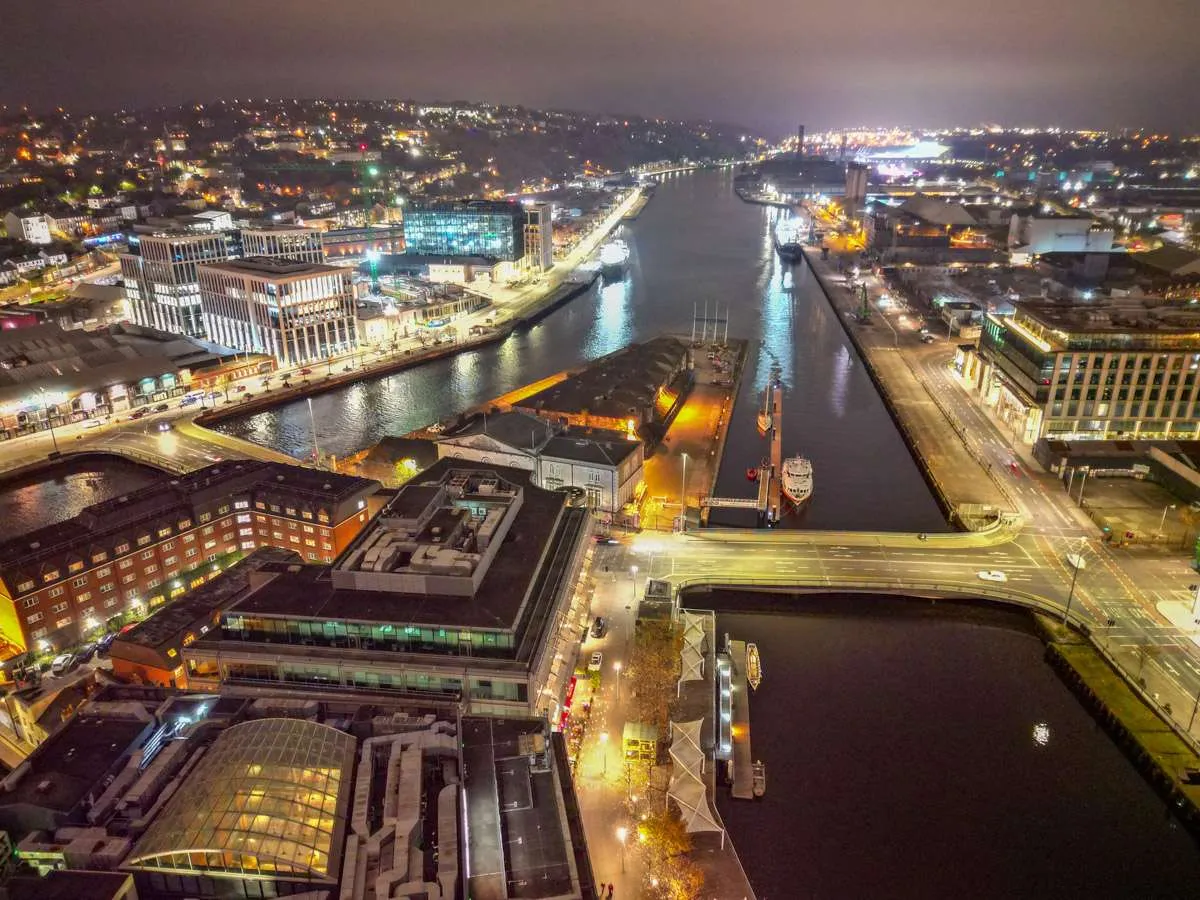
The city centre is an island between two channels of the River Lee, which makes Cork compact and walkable. You can cross the entire centre in less than 20 minutes, though hills like those leading to Shandon provide good exercise.
From Cork Airport:
| Option | Price |
|---|---|
| Bus Éireann route 226 | €5.50 (about 30 minutes to city centre) |
| Taxi | €25-35 (about 20-25 minutes) |
| Car rental | Available from all major companies |
From Dublin:
| Option | Price |
|---|---|
| Bus Éireann/Aircoach | €20-30 (3.5-4 hours) |
| Train | €35-50 (2.5 hours to Kent Station in city centre) |
| Car | About 2.5 hours via M8 motorway |
Local transport:
| Option | Detail |
|---|---|
| City buses | €2.50 per journey |
| Taxi | Short trips within city €8-15 |
| Walking | Everything central is within 20 minutes' walk |
| Bike share | Available from Cork City Bike |
Parking: City centre parking is limited and expensive (€2-4 per hour). Most hotels charge €15-20 nightly for parking. MacCurtain Street area has better on-street parking than the city centre.
Planning Your Cork Stay
Let's get down to brass tacks: if it's your first time staying in Cork, stay in the City Centre or Huguenot Quarter, even if the stay is a bit more expensive. It's very convenient for walking to the English Market, a good range of restaurants and Cork's cultural outlets.
Remember: Cork hotel prices spike during major events like the Jazz Festival (October) and Midsummer Festival (June). Book early, consider midweek over weekends, and remember that a central location usually justifies higher room rates in this compact city.
Planning your trip to Cork? Read my Perfect One Day in Cork for travel ideas!
FAQ
Where should I stay in Cork for a first visit?
If it's your first time staying in Cork, stay in the City Centre or Huguenot Quarter, even if the stay is a bit more expensive. It's very convenient for walking to the English Market, a good range of restaurants and Cork's cultural outlets.
Where can I look for better-value accommodation in Cork?
For better value, look at Shandon and the Northside. The guesthouses there offer comfortable rooms with excellent Corkonian hospitality, though you'll walk 10-15 minutes to reach the main restaurants and attractions.
Can I explore Cork city centre on foot?
Absolutely. The city centre is an island between two channels of the River Lee, making it compact and walkable. You can walk from the English Market to the MacCurtain Street area in 10 minutes, with many central sights close together. Allow extra time for places farther west, such as UCC and Victoria Cross. The only challenge is some steep hills leading to areas like Shandon.
Which Cork hotels offer a more luxurious stay?
The Imperial Hotel is Cork's most prestigious address: a beautifully restored Victorian property on South Mall with historical significance and modern luxury. For contemporary luxury with views, The River Lee Hotel has a riverside setting on Western Road and access to a fitness club with a 20-metre pool.
How early should I book a hotel in Cork?
As soon as your dates are confirmed, especially if visiting during festival season. Cork's accommodation supply is tighter than Dublin's, and prices increase dramatically for events like the Guinness Jazz Festival (October) or when major conferences are in town. Popular properties sell out months in advance during peak times.