The Origin of the Term 'Emerald Isle'
The term Emerald Isle is widely attributed to William Drennan, a prominent poet, physician, and political activist from the late 18th century. Drennan first coined the term in his 1795 poem When Erin First Rose, in which he wrote about Ireland's verdant beauty, calling it "the em'rald of Europe" that "sparkled and shone." Drennan's work came at a time of great political upheaval, and his poetic depiction of Ireland's green landscape was also a longing for peace amidst political uncertainty.
While some sources suggest that the term may have existed in earlier songs, Drennan is credited with popularizing it and embedding it into the national consciousness. His usage of Emerald Isle was not just a reference to Ireland's natural beauty but a call to recognize the inherent value of the land and its people during a time of political turmoil. Drennan, a founder of the United Irishmen, was deeply invested in Ireland's identity, and his poetry helped to associate Ireland with its now-iconic green hue.
How the Name Came into Popular Usage
During the late 18th and early 19th centuries, Ireland became a popular destination for British tourists. Political unrest on the continent made Ireland an appealing alternative for middle-class British travelers, eager to explore the "untamed" corners of the United Kingdom. Travel writings of the time often depicted Ireland through a picturesque lens, contrasting the island's natural charm with its perceived social and economic challenges.
Drennan's Emerald Isle metaphor gained traction as this idealized view of Ireland grew in the British imagination. Irish travel guides and local writers began to lean into the image, emphasizing the country's scenic beauty to attract more visitors. The idea of Ireland as the Emerald Isle became both a symbol of national pride and a marketing tool for early tourism, solidifying its place in Irish and British culture.
Ireland's Other Names: A Rich Tapestry of Identity
While Emerald Isle is the most famous nickname for Ireland, the island has gone by many other names throughout its long history. These names reflect Ireland's cultural, historical, and geographical significance across various eras:
Ancient Names
- Hibernia: Used by the ancient Romans, derived from the Latin term for winter, reflecting the island's cold and remote nature.
- Ivernia/Iournia: Greek names for Ireland, meaning "fertile country."
- Ogygia: Mentioned in Homer's Odyssey, a mythical name for a distant land.
Celtic and Gaelic Names
- Éire: The modern Irish name for Ireland, which has mythological roots and is derived from the goddess Ériu.
- Éirinn or Erin: A poetic version of Éire, often used in patriotic songs and literature.
- Inis Fáil: Meaning "Island of Destiny" in Irish, symbolizing Ireland's mythological significance.
- Inis Ealga: Translating to "noble island" in Irish, another reference to the island's mythic stature.
Medieval Names
- Scotia: Before the name became associated with Scotland, Ireland was referred to as Scotia until the 11th century.
- Insula Sanctorum: Latin for "Island of Saints," highlighting Ireland's early Christian heritage and its monastic tradition.
- Insula Doctorum: Latin for "Island of the Learned," referencing Ireland's renowned scholars during the Middle Ages.
Poetic and Cultural Names
- Cathleen Ní Houlihan: A poetic personification of Ireland, often used in literature as a symbol of Irish nationalism.
- Róisín Dubh: Meaning "Dark Rosaleen," another poetic name used to represent Ireland in nationalistic contexts.
- The Ould Sod: A colloquial term often used by Irish emigrants to refer to their homeland.
These various names not only highlight the island's rich history but also illustrate the many layers of meaning associated with Ireland throughout different periods and cultures.
What 'Emerald Isle' Represents Today
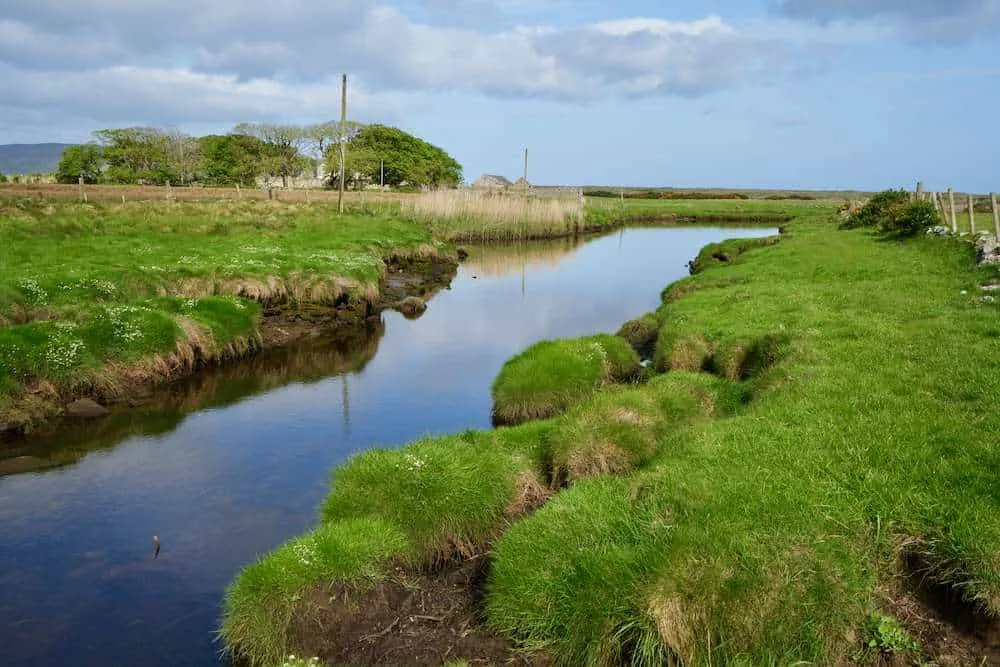
In modern times, the name Emerald Isle evokes a sense of natural beauty and cultural richness. The deep green landscapes of Ireland, from its rolling hills to its rugged coastlines, remain one of the country's most distinctive features. For many Irish people, the term represents more than just the island's aesthetic appeal - it symbolizes resilience, peace, and a deep connection to the land.
This connection between Ireland and the color green has also been reinforced by cultural symbols like the shamrock, which is said to have been used by St. Patrick to explain the Holy Trinity. Green also became a prominent color during Ireland's fight for independence and is now one of the colors on the Irish flag, representing Ireland's Catholic majority and nationalist identity.
How 'Emerald Isle' Frames Ireland's Image Internationally
Ireland's reputation as the Emerald Isle has played a key role in shaping its global image, particularly in tourism. From the 19th century onward, travel guides and promotional materials depicted Ireland as a land of scenic beauty, untouched by industrialization. Today, tourism campaigns continue to leverage this image, marketing the country as a haven for those seeking breathtaking landscapes and a serene escape.
Beyond tourism, the Emerald Isle has become a symbol of Irish identity for the global diaspora. For millions of Irish emigrants and their descendants, the term conjures a sense of nostalgia for their ancestral homeland. This enduring image of Ireland as a place of beauty and heritage is reflected in global celebrations of Irish culture, such as St. Patrick's Day, where green is a dominant color worn by millions worldwide.
A Legacy of Names
Ireland's many names offer a glimpse into its multifaceted identity, with each name carrying its own unique meaning and origin. Here's a look at some of Ireland's most notable names and their significance:
- Hibernia: A name used by the ancient Romans, derived from the Latin word for winter, reflecting Ireland's cold and remote northern location.
- Ivernia/Iournia: Ancient Greek names possibly meaning "fertile country," emphasizing Ireland's rich, green landscape.
- Ogygia: Mentioned in Homer's Odyssey, this name reflects Ireland's role in mythology as a distant, magical place.
- Éire: The modern Irish name for Ireland, derived from the goddess Ériu, symbolizing the island's sovereignty and cultural heritage.
- Éirinn or Erin: A poetic variation of Éire, used in Irish literature and songs to evoke a sense of national pride.
- Inis Fáil: Translating to "Island of Destiny" in Irish, this name ties Ireland to ancient prophecy and myth.
- Scotia: An early name for Ireland, used before the name became associated with Scotland.
- Insula Sanctorum: Latin for "Island of Saints," referencing Ireland's early Christian history and the monastic communities that preserved knowledge during the Dark Ages.
- Cathleen Ní Houlihan: A poetic personification of Ireland, often used as a symbol of Irish nationalism and resistance.
Each of these names adds a layer to Ireland's identity, connecting its ancient past, mythological roots, and cultural evolution. The name Emerald Isle has endured as a poetic tribute to the island's natural beauty and remains a powerful symbol of Ireland's unique place in the world.