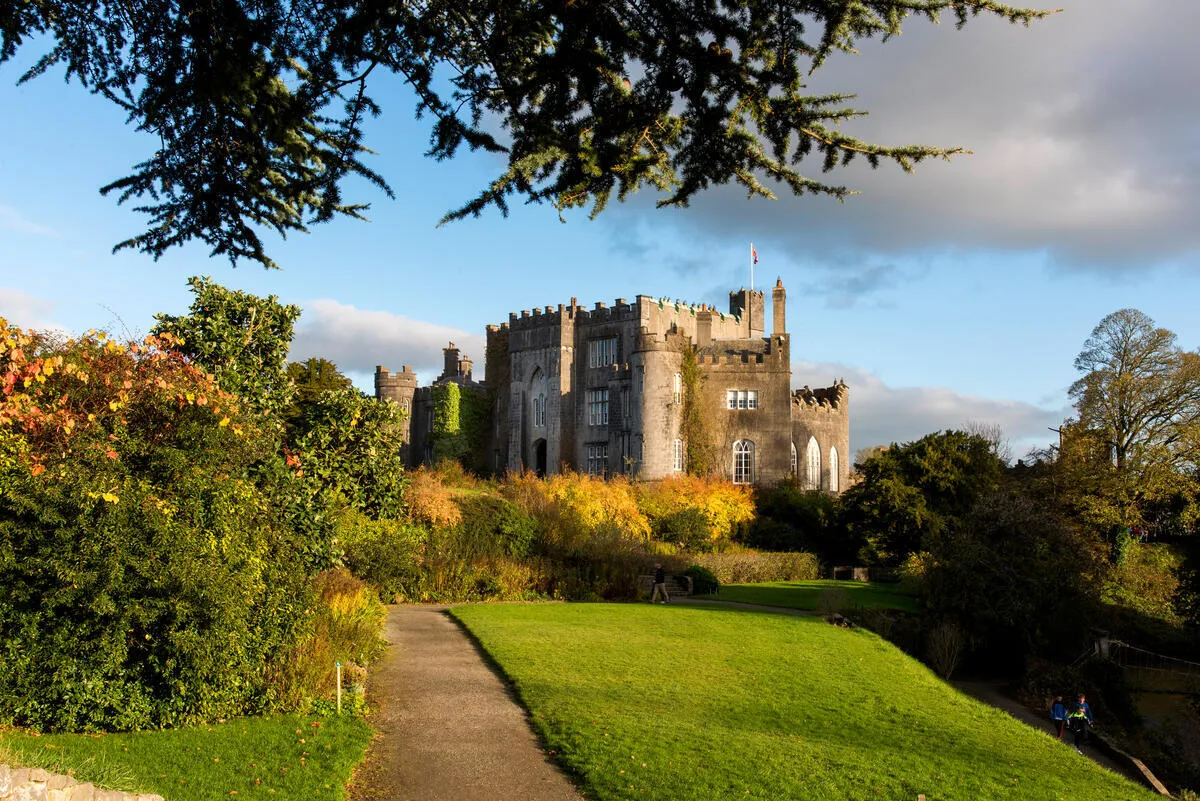
Birr Castle is still privately owned by the Parsons family, and that makes all the difference. This is not a state-managed heritage site with roped-off rooms and laminated information panels. It is a working estate where the family lives in the castle and opens 120 acres of gardens, parkland, and a science centre to the public.
The headline attraction is the Great Telescope - the Leviathan of Parsonstown - built in 1845 by the 3rd Earl of Rosse. For 75 years it was the largest telescope in the world. It has been restored and stands in the grounds as an extraordinary piece of Victorian engineering.
The gardens are among the best in Ireland. Mature specimen trees, a lake, river walks, and the tallest box hedges in the world. Combined with the science centre telling the Rosse family story, there is enough here for a full morning or afternoon in County Offaly.
What to Expect
I have been to Birr quite a number of times. The town itself is surprisingly good - Georgian architecture, proper pubs with live music, and a food scene that punches above its weight for a midlands town. Birr Castle sits at the edge of all this, and the combination of town and estate makes the visit.
The gardens are the main event. You enter through the courtyard and the paths lead you through 120 acres of parkland. The specimen trees are world-class - many planted by the Parsons family over two centuries. The lake is a focal point, with walks looping around it through mature woodland. The tallest box hedges in the world line one of the formal garden paths. They tower over you at around 12 metres.
The Great Telescope is worth the walk to the far end of the grounds. The Leviathan was built by the 3rd Earl of Rosse in 1845. Its 72-inch mirror made it the largest telescope on the planet for 75 years. The restored structure sits between two massive stone walls that supported the original instrument. The science centre nearby explains the Rosse family's contributions - not just astronomy, but early photography (Mary Rosse was a pioneer) and engineering.
I am glad Birr Castle has had a renaissance through Failte Ireland. For years it was one of those places that locals knew about but tourists drove past. The investment in the science centre and the garden restoration has given it the profile it deserves.
Is It Worth It?
EUR 11 to 12.50 for 120 acres and what was the largest telescope in the world for 75 years. The Leviathan of Parsonstown was built here in 1845 by the 3rd Earl of Rosse and has been restored in the grounds. The Parsons family still live on the estate and still run it, which is why it feels like a working place rather than a state heritage site. The gardens are among the best in Ireland: mature specimen trees, a lake, and river walks. Two to three hours, open 362 days of the year.
The catch: the castle itself is private. You do not go inside. Some visitors arrive expecting a house tour and are disappointed. This is a gardens-and-grounds visit. Manage your expectations and you will enjoy it.
How to Get There
Birr is about 1.5 hours from Dublin via the M7 motorway and N52. From Tullamore, it is 40 minutes south on the N52. The castle is signposted from Birr town centre - a two-minute drive or ten-minute walk from the main street.
A car is essential. There is no practical public transport to Birr. The nearest rail station is Tullamore, 40 minutes away, and bus connections are infrequent.
The car park is on site and included in your admission ticket. If you are making a day of Offaly, Birr Castle pairs naturally with Clonmacnoise (30 minutes north) or Lough Boora (20 minutes east). A rental car gives you the flexibility to combine them.
Where to Stay Nearby
Birr town has a good selection of places to eat and drink. Accommodation is more limited, but the county is compact enough that Tullamore or Kinnitty work as alternative bases.
Walking distance to the castle and Birr town. Solid base with a good restaurant. The obvious choice for Birr.
Check availability →What Else is Nearby
A Note on the History
The Parsons family has held Birr Castle since 1620. It is one of the longest continuous occupancies in Ireland. The castle itself dates to the 17th century, though it has been extended and modified over four centuries.
The 3rd Earl of Rosse, William Parsons, built the Leviathan telescope in 1845. Its 72-inch speculum metal mirror was ground on site. The telescope made groundbreaking observations of nebulae and was the first to resolve the spiral structure of what we now know as galaxies. It remained the world's largest telescope until 1917.
Mary Rosse, wife of the 3rd Earl, was a pioneering photographer. She built a darkroom at Birr in the 1840s and her photographs are among the earliest taken in Ireland. Her work is featured in the science centre.
The scientific legacy continued through generations. The 4th Earl made significant contributions to the measurement of lunar heat. The gardens were developed over two centuries, with the family importing specimen trees from around the world.
Frequently Asked Questions