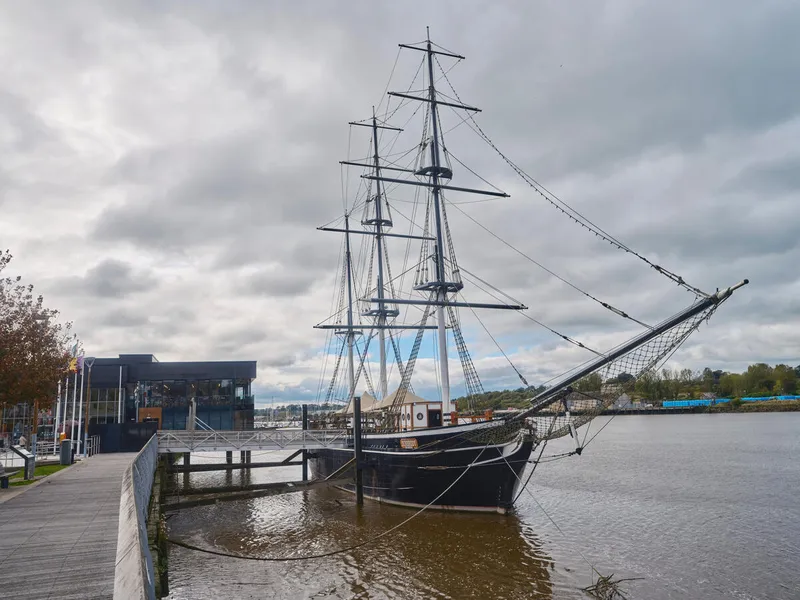
The Dunbrody is a full-size replica of a 19th-century emigrant ship, moored on the quayside in New Ross where the original vessel was built. Costumed actors take you below deck and walk you through what it was like to spend weeks in steerage during the Famine - the cramped bunks, the rations, the diseases, and the odds of not making it to the other side.
New Ross is also where Patrick Kennedy - great-grandfather of JFK - left Ireland. The Kennedy connection runs through the town and the nearby Kennedy Homestead. But the Dunbrody works on its own terms. This is emigration history told in a space that makes the scale of it physical. You are standing where hundreds of desperate people once stood, and County Wexford does not let you forget it.
What to Expect
The tour begins on the quayside with context about the Famine and the emigrant trade. Then you board. The Dunbrody is a three-masted barque - 176 feet long - and looking up at the rigging from the deck gives you the first sense of scale. Below deck is where it hits. The steerage section has replica bunks, personal effects, and costumed actors playing passengers. They tell individual stories - real names, real destinations, real outcomes.
The cramped conditions are not exaggerated. These ships carried 200 or more passengers in spaces designed for cargo. The actors explain the food rations, the seasickness, the diseases that spread in the dark below the waterline. Typhus killed thousands before they ever saw America. The tour does not shy from this.
Back on shore, the exhibition centre has an emigration database. Visitors - particularly Americans and Canadians with Irish roots - can search for ancestors who left from Wexford ports. The Kennedy connection adds another layer: JFK's great-grandfather sailed from New Ross in 1848.
Is It Worth It?
EUR 12 and about an hour to stand in a steerage deck, which is the point of it. The Dunbrody is a full-size replica of a 19th-century emigrant ship, moored at the New Ross quayside where the original was built, and costumed actors take you below to walk through what weeks in steerage actually meant: the bunks, the rations, the diseases and the odds of arriving. Patrick Kennedy, JFK's great-grandfather, left Ireland from this town, and the Kennedy Homestead is nearby if you want to follow that thread.
The catch: the experience depends heavily on the quality of the actors and the size of the group. On a quiet Tuesday morning, it is genuinely moving. On a packed Saturday with three coach tours, the intimacy is lost and you are shuffled through. The ship itself is a replica, not an original, which matters to some visitors. And New Ross is a small town with limited dining options if you are making a half-day of it.
How to Get There
New Ross is about 30 minutes from Wexford Town and 40 minutes from Waterford. The ship is right on the quayside - you cannot miss it. From Kilkenny, it is about 45 minutes south via the N30.
Street parking and a car park are available near the quayside. A car is the most practical option as bus services to New Ross are limited. Combine with the Kennedy Homestead at Dunganstown (10 minutes) or Hook Head Lighthouse (30 minutes south) for a full day.
Where to Stay Nearby
New Ross has limited accommodation. Wexford Town or Enniscorthy are better bases for exploring the county. The Dunbrody works well as a stop on a day combining New Ross with Hook Head or the Kennedy Homestead.
A proper destination spa in the Wexford countryside. If you need to decompress after a week of driving narrow Irish roads, this is where you do it. The thermal suite alone justifies the price.
Check availability →What Else is Nearby
A Note on the History
The original Dunbrody was built in the William Graves shipyard in New Ross in 1845 - the year the Famine began. It made multiple crossings to North America carrying emigrants fleeing starvation and disease. The vessel was typical of the "coffin ships" that earned their name from mortality rates that could reach 30 per cent on some voyages.
The replica was built in 2001 using traditional methods and is historically accurate in its dimensions and layout. New Ross was one of the main emigrant ports in southeast Ireland. The Kennedy connection - JFK's great-grandfather Patrick Kennedy left from here in 1848 - has given the town an international profile, but the thousands of unnamed emigrants who sailed from this quayside are the real story.
Frequently Asked Questions