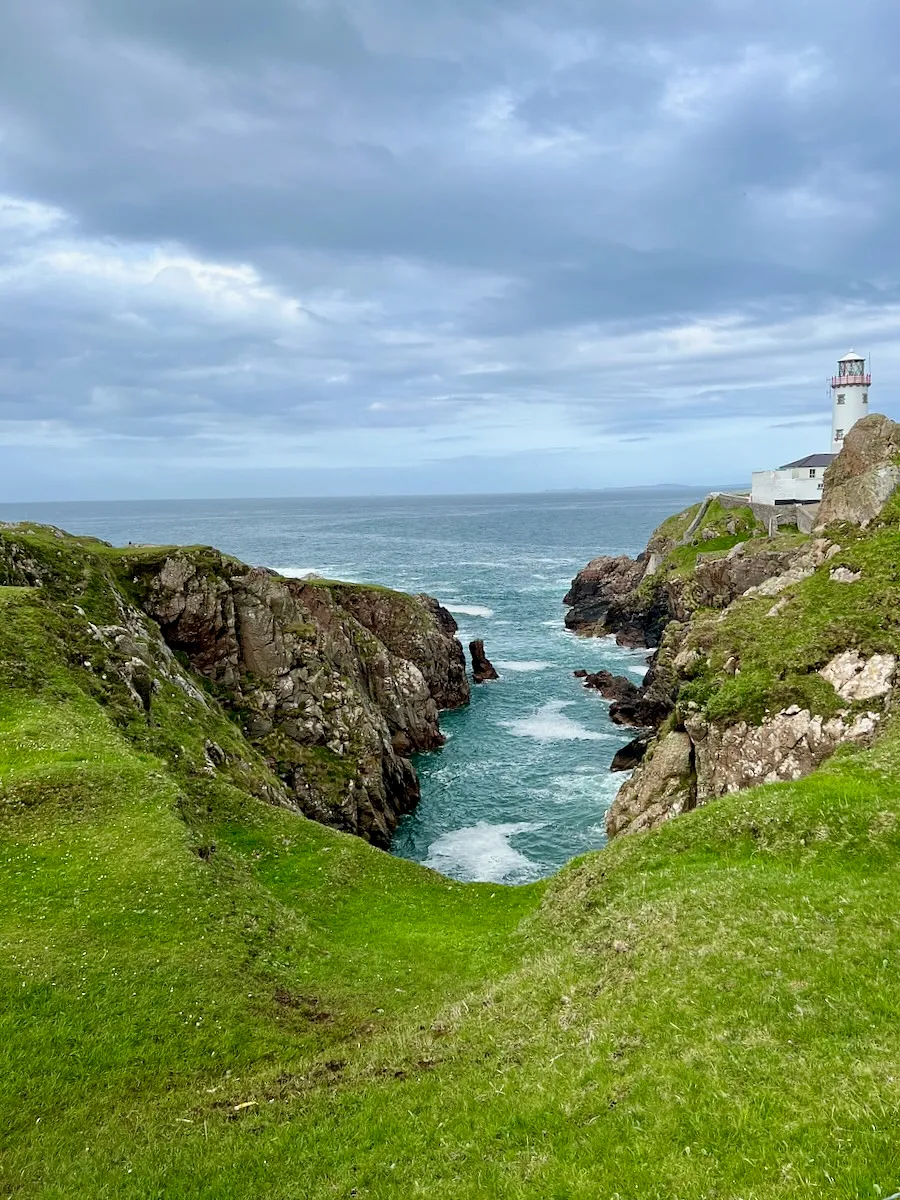
I first drove out to Fanad Head on a campervan trip around the Wild Atlantic Way, and despite visiting Donegal many times over the years, I'd never made it this far north on the peninsula before. It's one of those places that feels genuinely remote - not in a difficult-to-reach way, but in the sense that you're properly at the edge of things, with the Atlantic on three sides and very little between you and the horizon.
Most people arrive, take a photo of the lighthouse, and leave within an hour. That's a mistake. The headland rewards time - whether that's staying for sunset (which I did), joining a guided lighthouse tour, or just sitting in the car park with a flask watching the light change across Lough Swilly. The lighthouse itself was built in 1817 after a naval disaster, and it's still operational. You can tour it, and you can even stay overnight in the former keepers' cottages, which is something I'm planning to do next time.
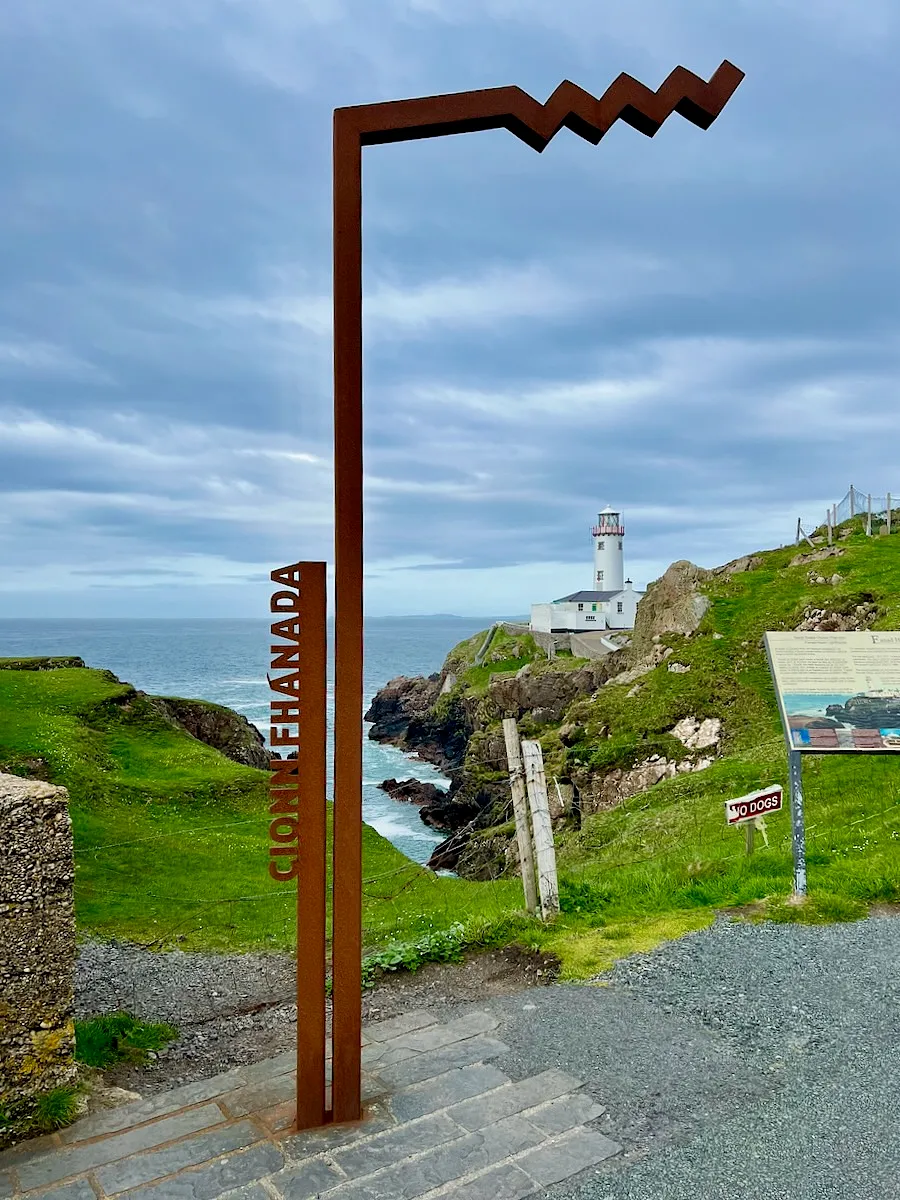
What people don't expect: the wind. It's wildly exposed up here, and even on a calm day you'll feel it. Pack layers.
What to Expect
Arriving and parking at the headland
The drive out to Fanad Head takes you through some properly wild Donegal countryside. I came via Portsalon, which is the most scenic route if you've got time. The road hugs the coast and on a clear day you get views right across to Inishowen. It's a single-track lane for the last stretch, with passing points, so you need to take it steady. Not difficult, just narrow.
I arrived mid-afternoon and the car park was busy with families packing up picnics. There's plenty of space - I parked my campervan without any trouble - but by late afternoon in summer it does fill up. The headland has that end-of-the-day vibe where people are starting to leave and you can feel the place settling down. I decided to stay overnight, which you can do if you're in a campervan, though I'd suggest being considerate about space if day visitors are still arriving.
The wind is the thing you notice immediately. Even on what looked like a calm sunny day, the headland was properly exposed. I'm glad I had a jacket. If you're planning a picnic, bring something to weigh down your blanket.
One catch: if the weather turns, this place is miserable. I was lucky with sunshine, but I've heard from others who arrived in rain and low cloud and couldn't see the lighthouse from 50 metres away. Check the forecast before you drive out - it's a long way to come for zero visibility.
Doing the lighthouse tour and climbing the tower
The lighthouse tours run most days but they're guided-only for safety reasons, and you need to book ahead via the official website. I didn't do the tour on this visit - I was focused on the sunset - but I spoke to someone who'd just finished one and they said it was excellent. The tour lasts 45-60 minutes and includes climbing the tower for 360-degree views. You can see the Atlantic, Lough Swilly, and back towards the Donegal hills.
The guides are local and they know the history inside out. The lighthouse was built in 1817 after HMS Saldanha, a Royal Navy frigate, sank on the rocks in 1811 with almost everyone aboard. The only survivor was the ship's parrot, which is the kind of detail that sticks with you. The tour covers the lightkeepers' lives through old log books and maps. There's a small visitor centre with exhibits on the maritime history of the area.
If you're doing the tour, allow at least an hour and a half total including the visitor centre. The climb involves stairs - it's not accessible if you have mobility issues - but the views from the top are worth it. You can see why this location was chosen. It's a natural vantage point for the entire coastline.
I'd recommend booking a few days ahead in summer. The tours do sell out, especially at weekends.
Sunset, sunrise, and the photographers
I stayed overnight in the campervan, and as the sun started dropping towards the horizon, cars began arriving. Photographers, mostly, with tripods and serious camera gear. They were after the classic shot - the lighthouse silhouetted against the Atlantic sunset - and I can see why. The light was extraordinary. Golden hour here is properly golden, with the sea turning copper and the sky layered in pinks and oranges.
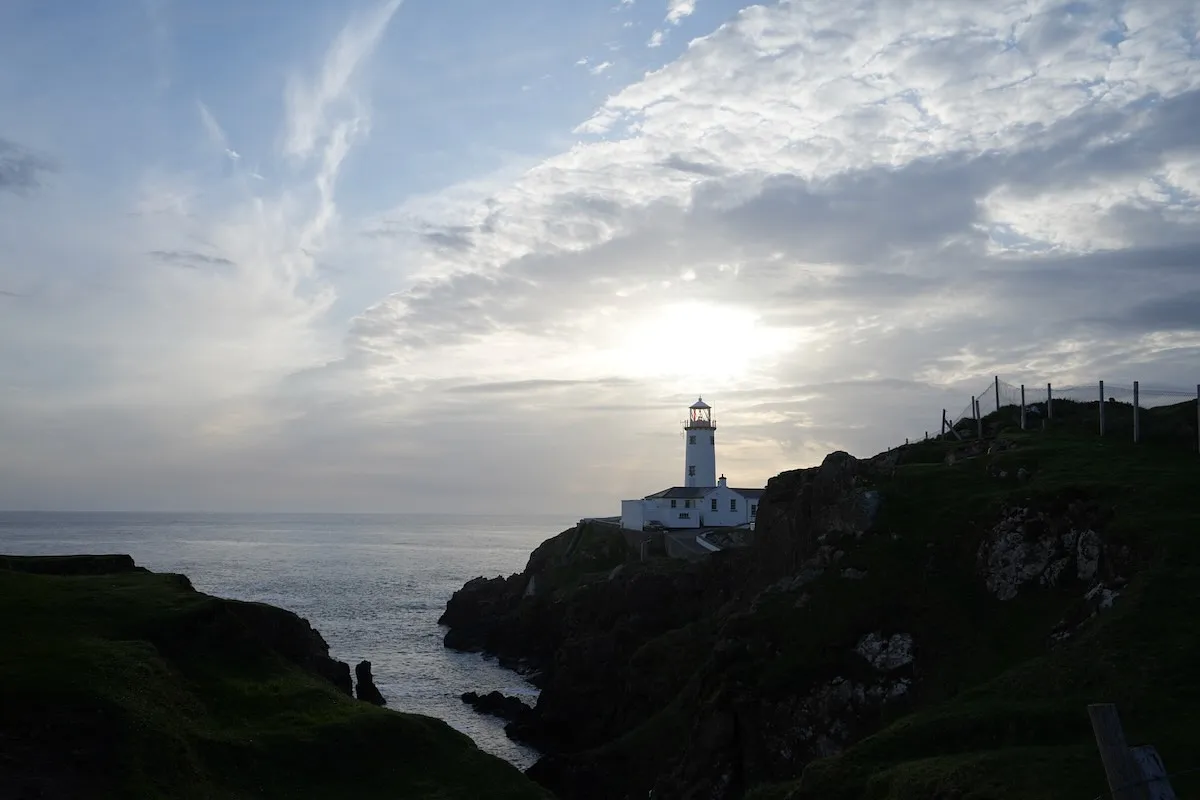
What I didn't expect was the 5am return. It was summer, so dawn came early, and by 5am the car park was filling up again with the same crowd coming back for sunrise over the Atlantic. I'm not usually a dawn person, but I'm glad I got up for it. The quality of light at that hour is completely different - cooler, sharper, with mist lifting off the water.
If you're serious about photography, this is one of the best lighthouse locations in Ireland. The headland's exposure means you get dramatic weather rolling in off the sea. The lighthouse itself is perfectly positioned for both sunrise and sunset depending on the time of year. Just be prepared for wind - I watched one photographer's tripod nearly blow over, and he wasn't the only one struggling to keep gear steady.
How to Get There
Fanad Head is 26 kilometres north of Milford, which is the nearest town of any size. From Milford, you follow the R246 north through Kerrykeel, then take the turn for Portsalon and follow the coast road. It's well signposted once you're on the peninsula, but Google Maps will get you there without trouble. The drive from Milford takes about 35 minutes in good conditions.
If you're coming from Letterkenny (the main hub for Donegal), allow an hour. From Derry, it's about 90 minutes. The route via Rathmullan is slightly longer but more scenic - you get views across Lough Swilly and past Ballymastocker Bay, which is worth seeing in its own right.
Public transport is effectively non-existent out here. There's no bus service to Fanad Head, so you need a car. If you're flying into Donegal or Derry and don't have your own vehicle, I'd strongly recommend hiring one. This part of Donegal is impossible to explore properly without your own wheels. Check car hire options near Derry or Letterkenny.
Parking at the lighthouse is free and there's space for campervans, which is what I used. The car park surface is tarmac and it's well maintained. In summer it fills up by mid-afternoon, especially at weekends, so if you want space and quiet, aim for morning or late evening.
If you don't have a car and you're based in Letterkenny or Derry, your only realistic option is a guided tour that includes Fanad Head as part of a wider Donegal day trip. I've listed a few below.
Where to Stay Nearby
The nearest proper base for Fanad Head is Portsalon, about 15 minutes south, though options there are limited. Most people stay in Rathmullan (20 minutes) or Letterkenny (an hour away but with far more choice). If you want to be close to the headland, Portsalon and Rathmullan are your best bets - both are small coastal villages with a few good hotels and guesthouses.
For more standard accommodation options near Fanad Head, check hotels and prices in Portsalon and Rathmullan.
Self-catering accommodation in the actual lighthouse - former keepers' cottages sleeping up to 6. You're staying in a working lighthouse with 360-degree Atlantic views. Genuinely unique and worth the splurge if you're doing Donegal properly.
Check availability →What Else is Nearby
A Note on the History
The lighthouse exists because of a disaster. On December 4th, 1811, HMS Saldanha - a Royal Navy frigate - struck the rocks at the entrance to Lough Swilly in heavy fog. Almost everyone aboard died. The only survivor was the ship's parrot, which was found clinging to a piece of wreckage. That detail always stuck with me - the idea of this parrot being the sole witness to what happened.
The wreck prompted the construction of Fanad Head Lighthouse, which was completed in 1817. It's been operational ever since, guiding ships safely into Lough Swilly and around the treacherous northern coast. The lighthouse is still working - you'll see the beam rotating at night - and it's maintained by the Commissioners of Irish Lights.
The area is part of the Donegal Gaeltacht, so you'll hear Irish spoken locally, and the lighthouse tours are available in both English and Irish. There's also material in German and Ukrainian, which reflects the international interest in the place. It's been voted one of the most beautiful lighthouses in the world, and having seen it at sunset, I'd say that's fair.
The keepers' cottages were occupied until the lighthouse was automated, and now they're available to rent as self-catering accommodation. Staying there must be extraordinary - you're sleeping in a piece of working maritime infrastructure with the Atlantic on three sides. Next time I'm in Donegal, that's where I'm staying.
Frequently Asked Questions