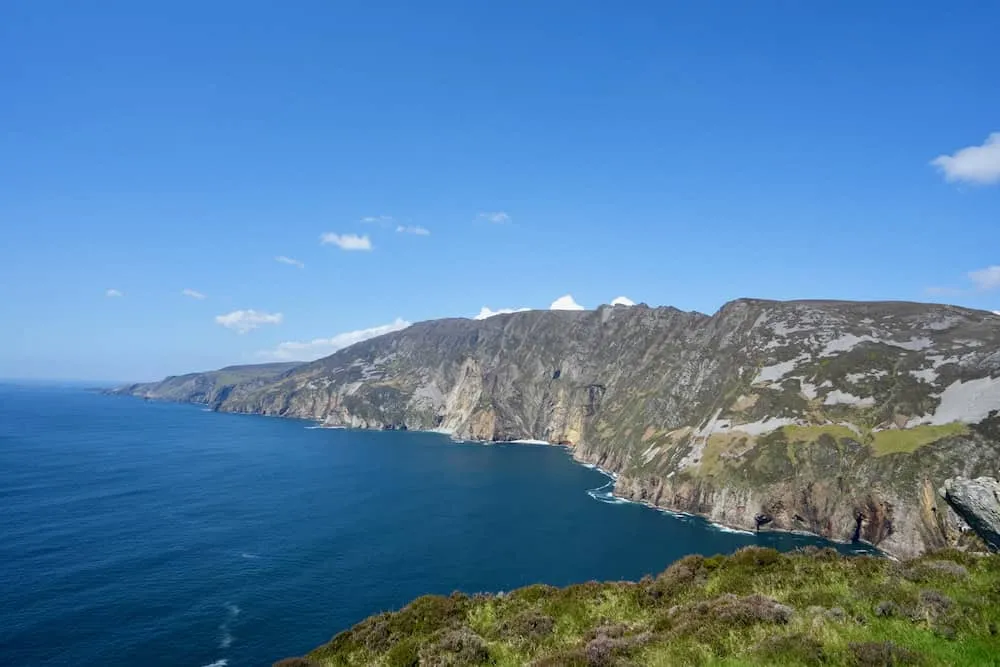
Slieve League Cliffs
Three times higher than the Cliffs of Moher and a fraction of the crowds. The drive up is half the experience - and the car park situation is something you need to plan for.
County Donegal / Ulster
Ireland's wild northwest corner - geographically closer to Iceland than to Cork, and it feels like it. The highest sea cliffs in Europe, empty beaches that'd make the Algarve weep, and a Gaeltacht culture that's still genuinely lived, not performed for tourists.
Wild Atlantic Way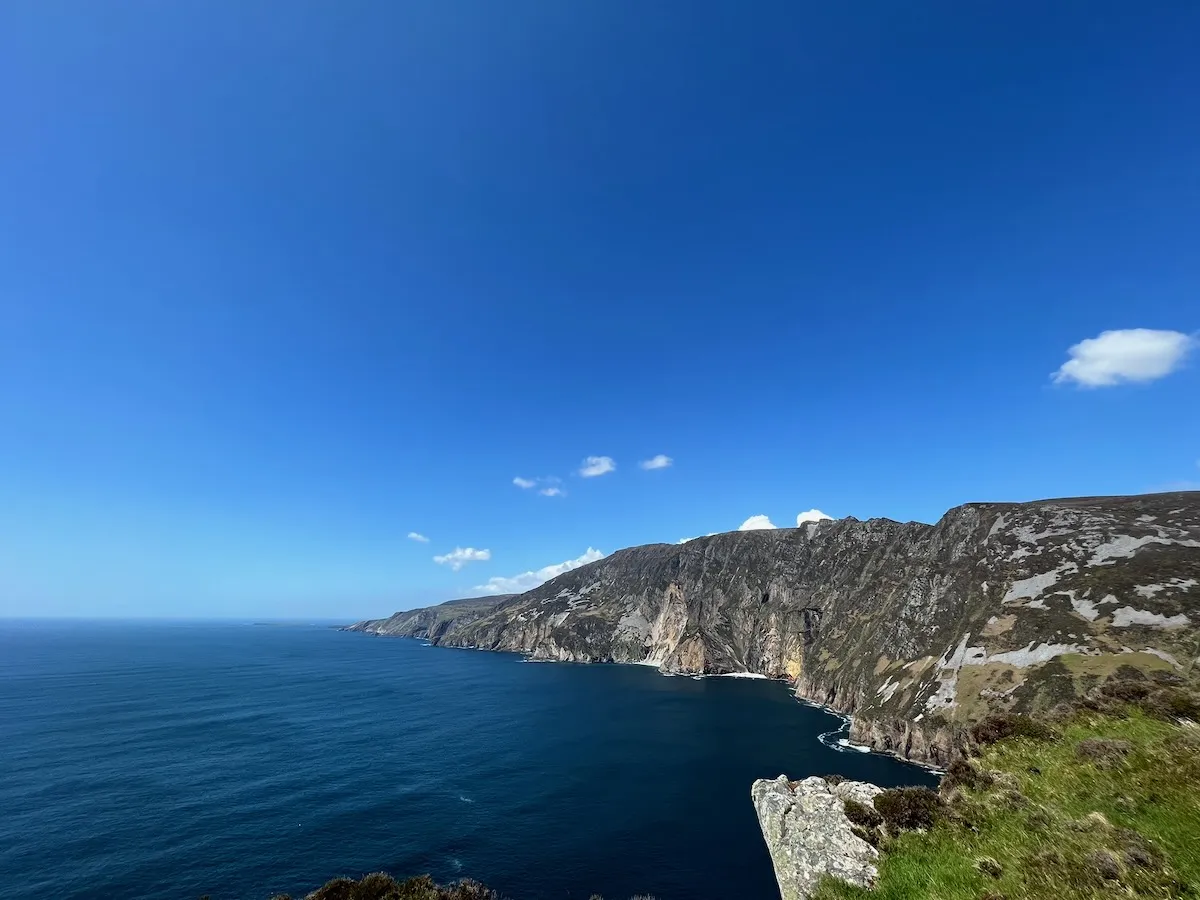
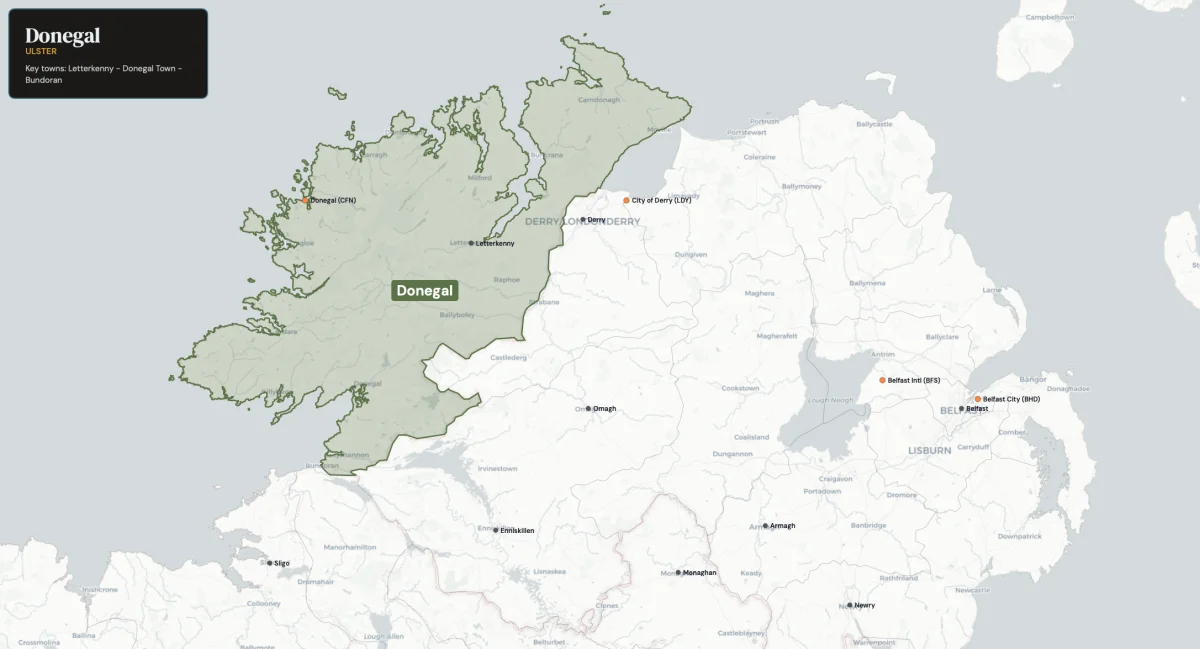
While Kerry and Galway battle coach-tour crowds from May to September, Donegal remains Ireland's magnificent oversight. It's the country's second-largest county and arguably its most dramatic, but because it's attached to the Republic by just a sliver of land at Bundoran - and is actually further north than Northern Ireland's border - most visitors never make it up here. Their loss.
This is where the Wild Atlantic Way hits its stride. Slieve League's sea cliffs make the Cliffs of Moher look like a garden wall. Malin Head, Ireland's most northerly point, has a raw windswept beauty that no amount of Star Wars location-scouting has managed to tame. And the Gaeltacht areas around Gweedore and the Rosses are among the last places where Irish is spoken as a daily language, not a classroom exercise.
Donegal is a car county. Public transport exists but it's thin - Bus Eireann runs a few routes and Local Link fills some gaps, but realistically you need wheels. The roads are narrow, scenic, and occasionally terrifying. Budget more driving time than Google Maps suggests.
Below you'll find my complete Donegal intelligence - where to base yourself, what's genuinely worth your time, and the practical stuff that the tourism brochures conveniently skip. Everything from first-hand experience.
The places worth your time
The places that make Donegal worth the drive. Arranged by genuine impact, not alphabetical order.
Three times higher than the Cliffs of Moher and a fraction of the crowds. The drive up is half the experience - and the car park situation is something you need to plan for.
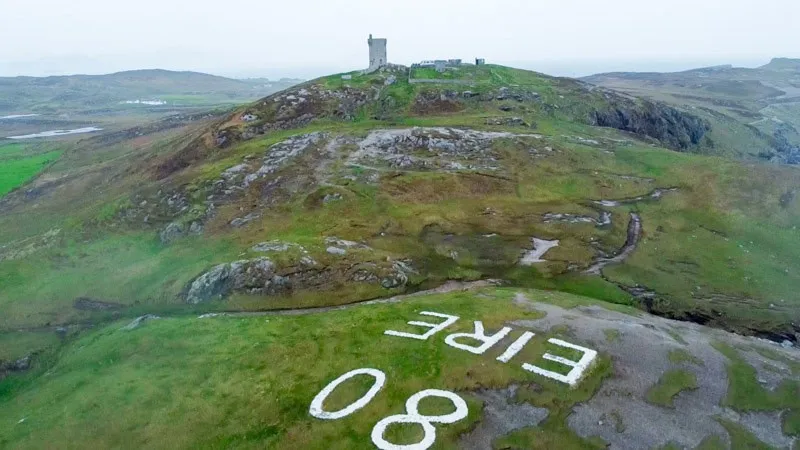
Ireland's most northerly point. Bleak, beautiful, and genuinely remote. The Star Wars filming brought some infrastructure but it's still raw. Check the weather before driving up.
Read the guide 6 min read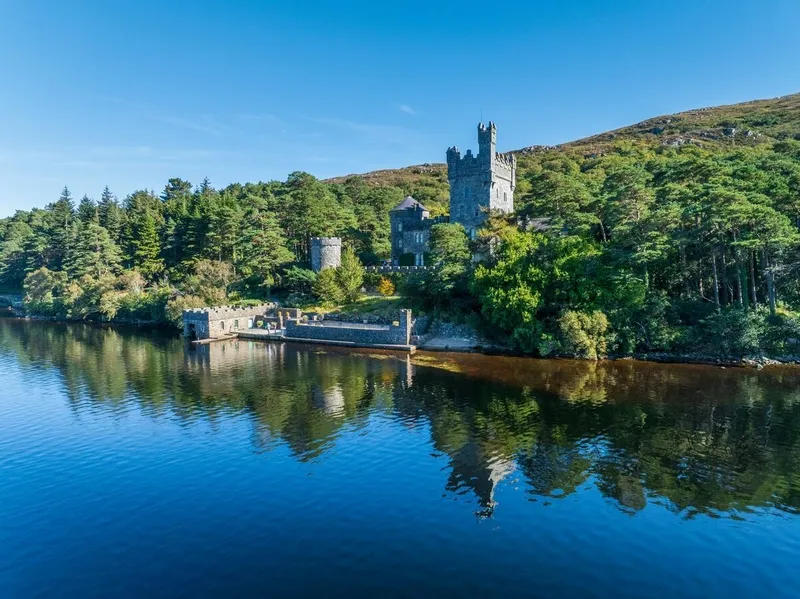
A Victorian castle in a mountain valley that feels like it belongs in the Scottish Highlands. The park has experienced serious overcrowding in recent years - arrive before 10am or don't bother.
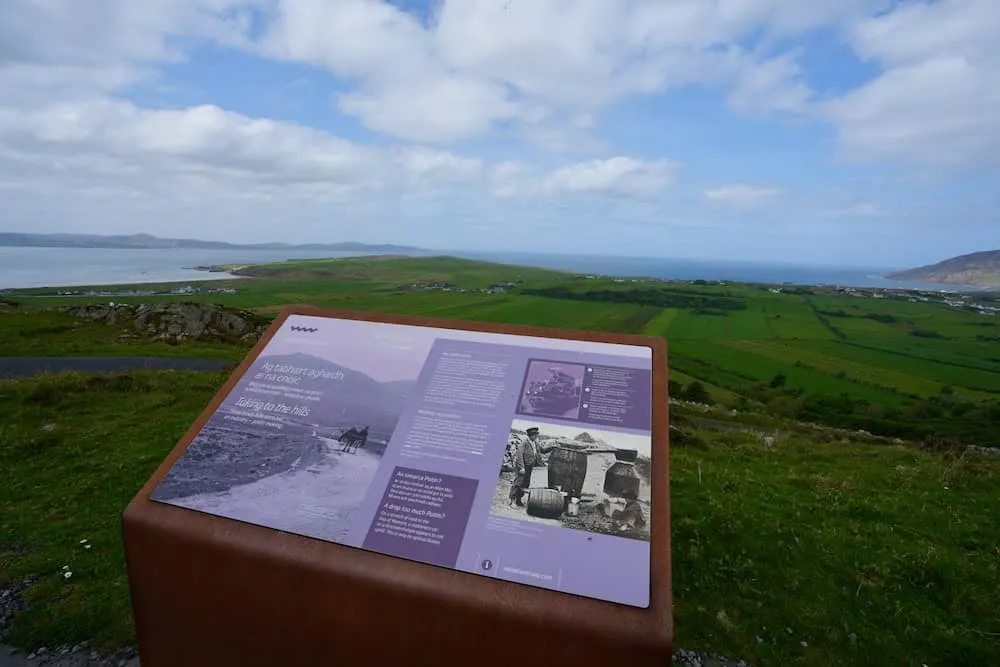
A peninsula within a peninsula, with its own 100-mile driving loop. Fort Dunree, the Gap of Mamore, and Buncrana - less visited than the coast further south and all the better for it.
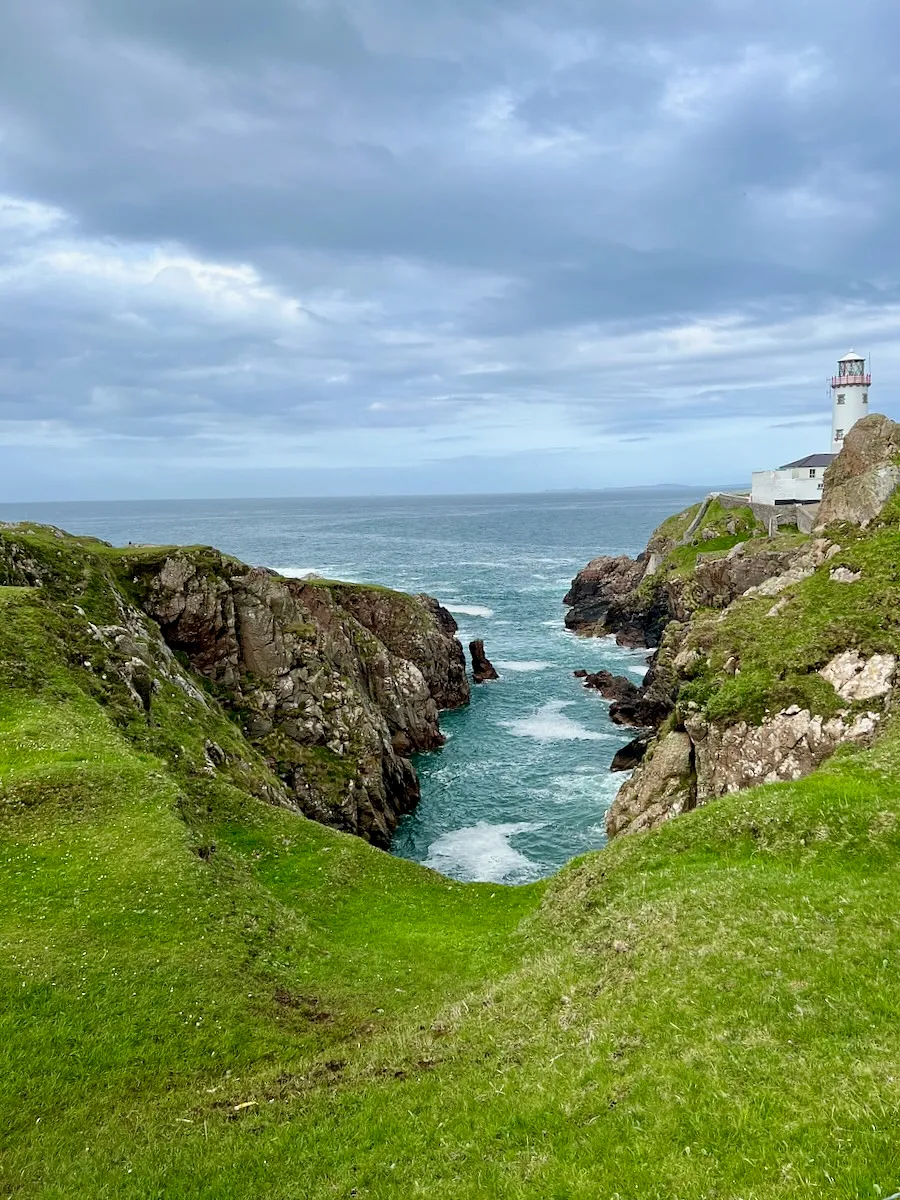
One of the most photographed lighthouses in Ireland, and deserves it. The road out to it winds through increasingly empty countryside. You can stay in the keeper's cottage.
Read the guide 8 min read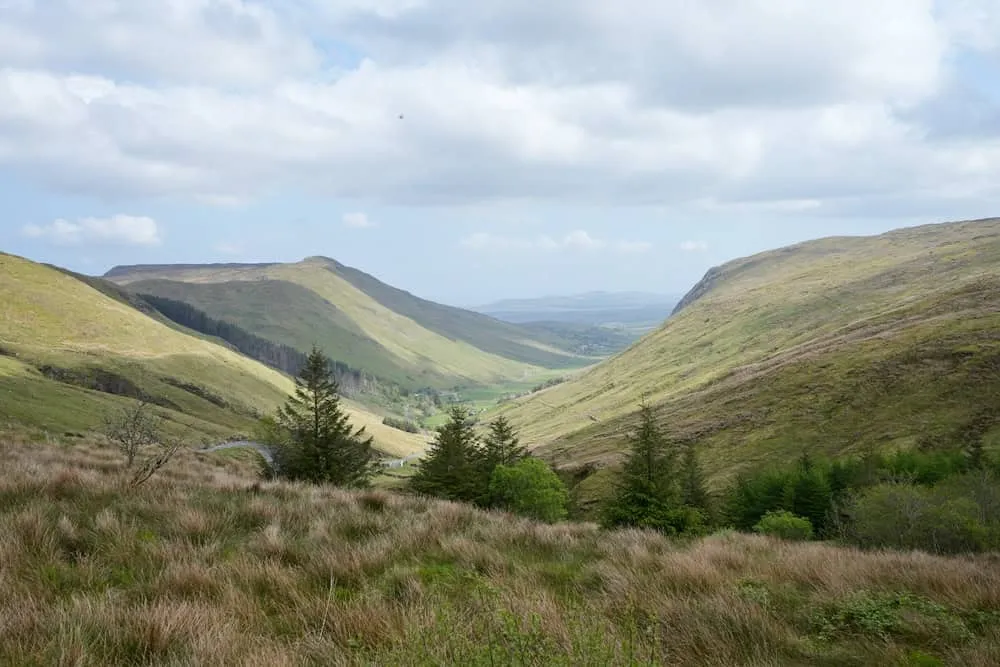
A glacial valley below Mount Errigal with a name that oversells the danger but undersells the atmosphere. The walk in is easy; the silence is the thing.
Donegal is big. Where you sleep determines what you can reasonably see. Choose based on what matters to you.
The obvious base and it works. Compact, walkable, decent restaurants. The castle is worth 30 minutes. Good launching point for Slieve League (45 min) and southern Donegal.
Donegal's largest town isn't pretty but it's functional. Best selection of hotels and supermarkets. Central for Glenveagh, Fanad, and the northern half of the county.
A faded seaside resort that's reinvented itself around surfing. Great craic, good value accommodation, but it's at the very southern tip - not ideal for exploring the whole county.
A tiny village on the north coast with outsized charm. Several excellent restaurants, proximity to Horn Head and Ards Forest. This is where Dubliners with taste come on holiday.
Yes, it exists. Twice-daily flights from Dublin on Aer Lingus Regional. The airport is near Dungloe on the west coast - useful if that's where you're heading, but it's a long drive to the east of the county.
About 4 hours via the N2/A5 through Monaghan and Omagh. The road through the North is faster than going via Sligo. Yes, you cross the border twice. No, you won't notice.
2.5 hours to Letterkenny via the A6 and A2 through Derry. This is genuinely the easiest access route. Donegal is closer to Belfast than to most of the Republic.
Bus Eireann route 30 runs Dublin to Letterkenny. John McGinley and Feda O'Donnell run private services that are often more practical. Once you're there, you need a car.
May, June, and September are the sweet spot - decent weather, long evenings, manageable crowds. July and August get busy at the big-name spots.
Donegal accommodation skews toward B&Bs and self-catering cottages. Chain hotels are limited to Letterkenny and Donegal Town.
Consistently rated Ireland's top hotel by guests (not just hotel awards). Lakeside setting outside Donegal Town, Swiss-Irish ownership that shows in the attention to detail. Not cheap, but you'll understand the fuss. Worth it for at least one night.
Best selection in Letterkenny. Donegal Town has 3-4 good options. Elsewhere, expect guesthouses.
The backbone of Donegal accommodation. Quality varies wildly. Check reviews from the current year, not 2019.
Excellent for families and longer stays. Daft.ie and Donegal Cottages have the best range. Book early for July-Aug.
The Donegal diaspora is vast. The Famine and subsequent emigration hollowed out entire townlands, particularly in the west of the county. If your surname is Gallagher, O'Donnell, Boyle, Sweeney, Doherty, or McGinley, there's a decent chance your family passed through here.