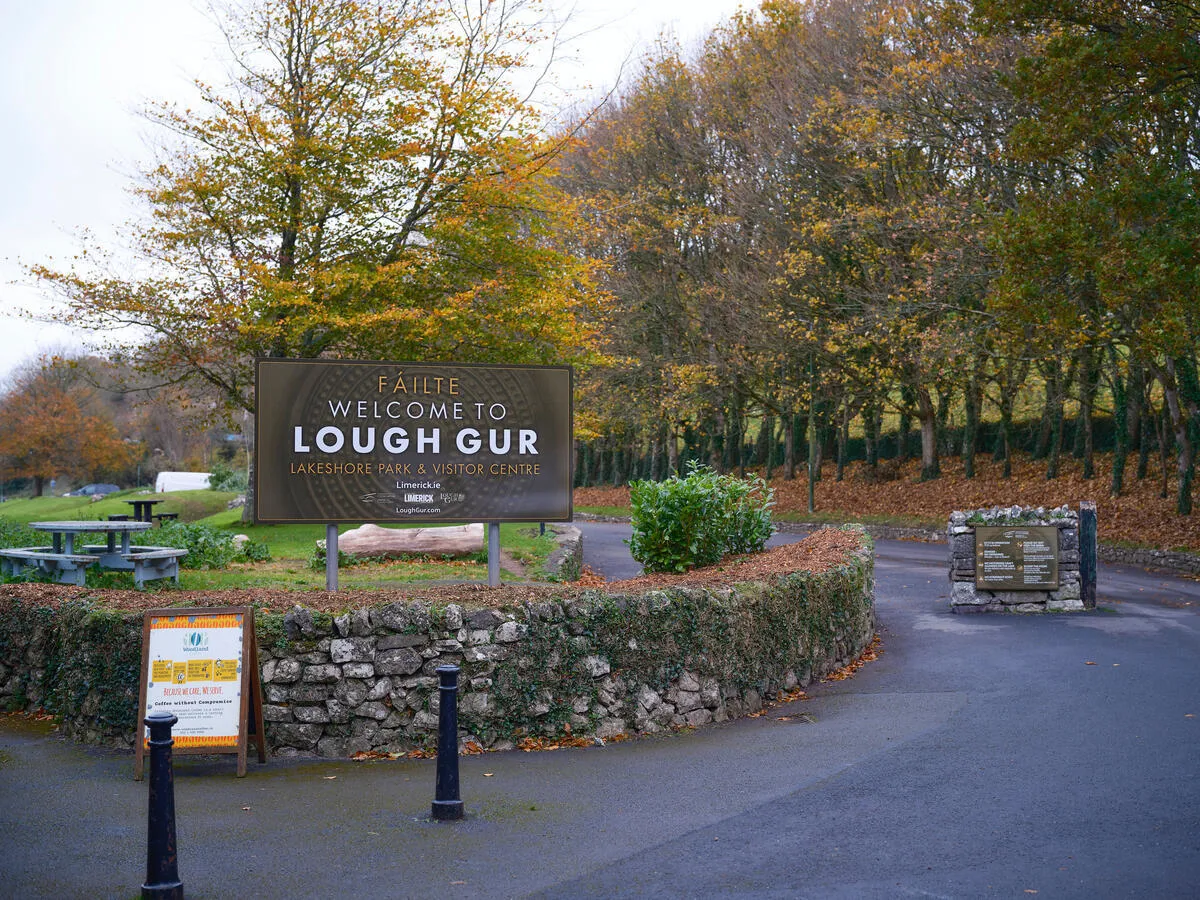
Lough Gur is the most archaeologically dense landscape in Ireland and almost nobody visits it. A horseshoe-shaped lake surrounded by Neolithic tombs, Bronze Age stone circles, crannogs, and ring forts - six thousand years of continuous human settlement in a quiet pastoral landscape 25 minutes south of Limerick city. The Grange Stone Circle, the largest in Ireland at 46 metres across, sits in a field beside the road with no fences, no ticket booth, and usually no other visitors. If you want to see ancient Ireland without the crowds of Newgrange or the commercialism of the Cliffs of Moher, this is the place.
What to Expect
Start at the heritage centre. The exhibition is small but well done - interactive displays covering 6,000 years of settlement, Neolithic artefact replicas, and an audiovisual presentation. Allow 45 minutes to an hour. It gives you the context to understand what you are looking at outside.
Drive or walk 2 km to the Grange Stone Circle. This is the moment that justifies the visit. One hundred and thirteen stones arranged in a near-perfect circle, 46 metres in diameter, sitting in a field beside the road. There are no barriers, no entrance fee, and usually no other visitors. You walk right up to and among the stones. The scale is genuinely impressive - this is not a handful of rocks in a field, it is a major ceremonial monument dating to approximately 2200 BC.
The lake loop walk is about 5 km and takes 1.5-2 hours at an easy pace. The path is flat and follows the horseshoe shape of the lake, passing wedge tombs, a crannog (artificial island), ring forts, and the remains of Bourchier's Castle. On a calm day, the reflections on the water are beautiful. Birdlife includes swans, herons, and moorhens.
Is It Worth It?
Six thousand years of continuous settlement, and usually nobody else there. Lough Gur is the most archaeologically dense landscape in the country: Neolithic tombs, Bronze Age stone circles, crannogs and ring forts around a horseshoe lake twenty-five minutes south of Limerick. The Grange Stone Circle is the largest in Ireland at 46 metres across and sits in a field beside the road with no fence and no ticket booth. The circle and the lake walk are free, the heritage centre is EUR 6, and two to four hours covers all of it.
The catch: you absolutely need a car - there is no public transport. The heritage centre is small and will not hold attention for more than an hour. The stone circle has no interpretation panels on site, so visit the heritage centre first or you are just looking at rocks without context. The lake walk is completely exposed - no shelter, no facilities, and in poor weather the wind across the water makes it miserable. This is a quiet archaeological landscape, not an attraction - manage expectations accordingly.
How to Get There
Lough Gur is 21 km south of Limerick city, about 25-30 minutes via the R512 through Bruff. The road is straightforward and well-signposted. From Shannon Airport, allow 45 minutes.
There is no public transport to Lough Gur. A car is essential. Parking is free at both the heritage centre and the stone circle lay-by.
The drive combines well with Adare (25 minutes away) for a southern Limerick day trip. Kilmallock, a medieval walled town worth a stop, is 15 minutes south.
Where to Stay Nearby
Limerick city (25 minutes) is the practical base. Bruff (3 km) has a few B&Bs for a quieter option. See the County Limerick hub for full accommodation details.
Stay in Limerick city and drive to Lough Gur as a morning trip. The best base for combining city and countryside.
Check availability →What Else is Nearby
A Note on the History
Lough Gur has been continuously inhabited for over 6,000 years. The Grange Stone Circle dates to approximately 2200 BC. Neolithic house foundations found nearby are among the oldest dwellings in Ireland. The lake itself was partially drained in the 19th century, revealing enormous quantities of artefacts - bronze swords, gold ornaments, pottery - now in the National Museum in Dublin.
The crannog on Bolin Island was a fortified lake dwelling. The ring forts date from the early Christian period. Bourchier's Castle on the lakeshore is a 15th-century tower house. Every period of Irish history left something here, layered on top of the last.
Frequently Asked Questions