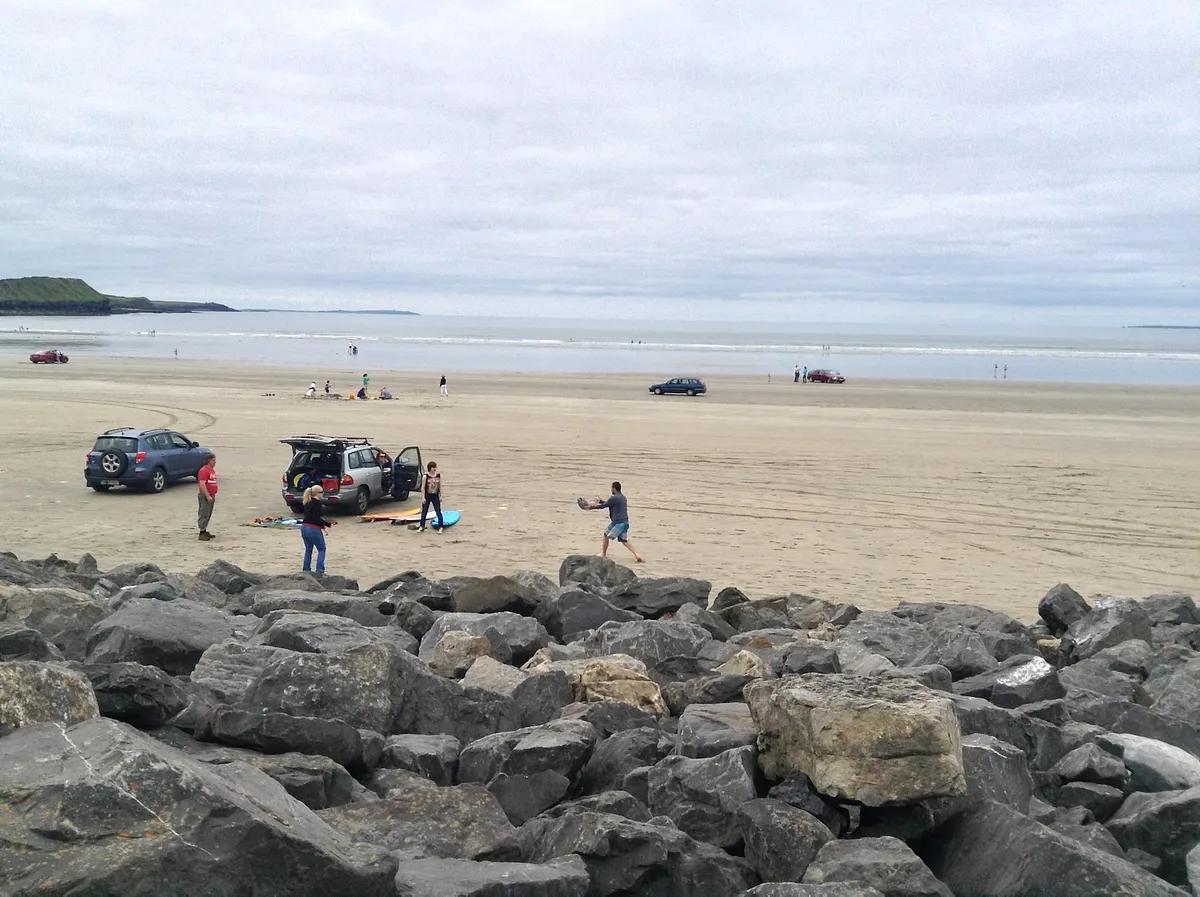
I'll admit upfront that I'm completely biased about Rossnowlagh. It's an easy drive from my part of County Armagh, and I've been visiting for years. That includes a couple of trips with my mother to the Sands Hotel Check availability, which has a very good spa. What most people don't realise is that this is one of the few beaches in Ireland where you can actually drive onto the sand. Three ramps lead down from the main car park, which means you'll occasionally see an ice cream van parked on the beach itself. I've a photograph of a bright pink one from my last visit.
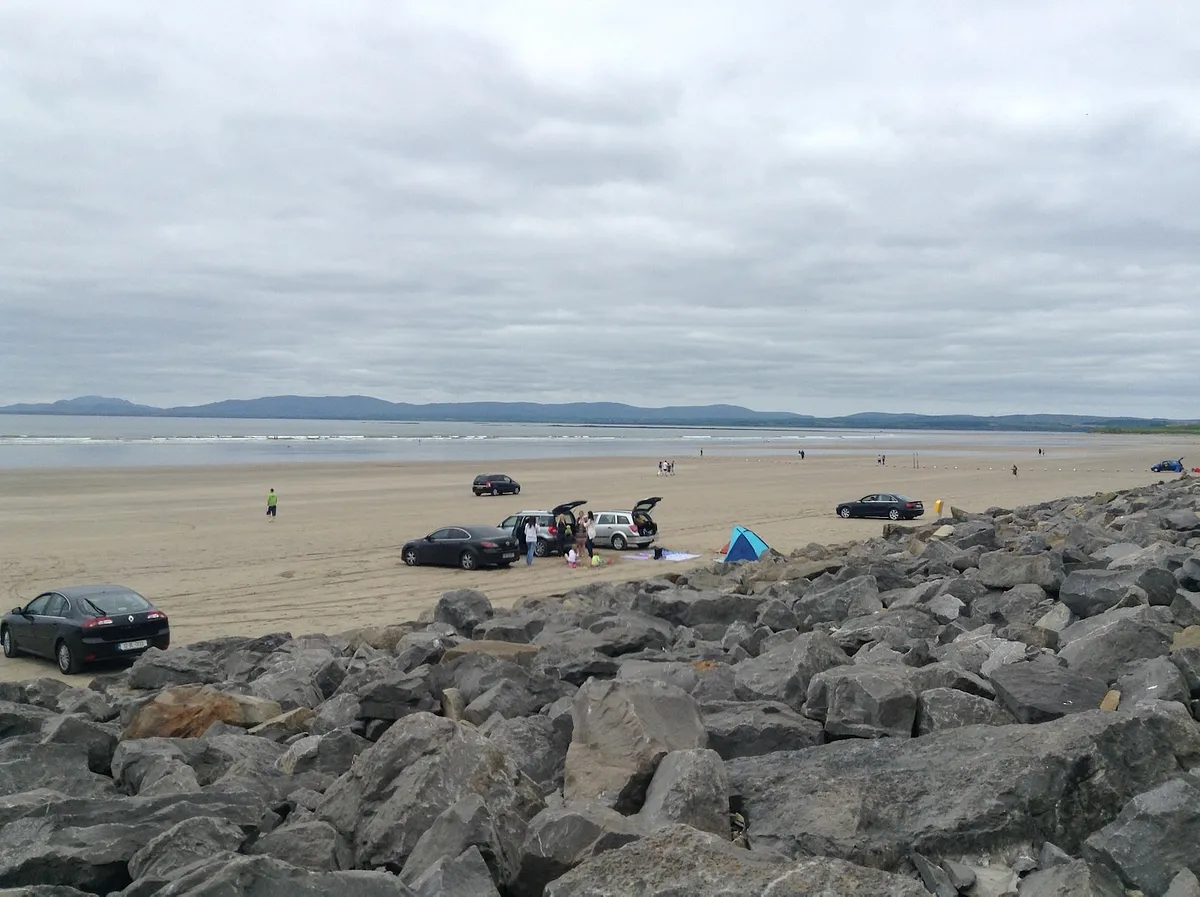
The beach stretches for more than 3km, and at low tide the sand is hard-packed enough to walk or drive on comfortably. At high tide it narrows fast, so you need to plan your timing. It's a Blue Flag beach with lifeguards in summer, but it's still the Atlantic. The waves can be serious, especially in winter when they've been recorded at 7 metres high. If you're treating this as a quick stop-off on the Wild Atlantic Way, you're missing the point. Give it at least two hours, ideally at low tide.
What to Expect
You'll know you're close when you see the hotels and B&Bs lining the approach road. The main car park sits right at the beach, with the playground to your left as you arrive. On a summer weekend this fills up by late morning, so I'd suggest getting there before 11am if you want a guaranteed space.
The first thing that strikes you is the scale. From the car park you're looking at over 3km of sand stretching north. The Coolmore cliffs are visible to the south. The Carrickfad rock outcrop marks the northern end, only visible at low tide. The beach faces west into Donegal Bay, which funnels the Atlantic swells and makes this one of Ireland's best surf beaches.
Low tide versus high tide
Timing matters here more than at most beaches. At low tide you've got a massive expanse of hard-packed golden sand. It's the kind you can walk on without your feet sinking, or drive on if you're using one of the ramps. The Carrickfad rock becomes visible about 3km north, and you can walk the entire length comfortably.
At high tide the beach narrows significantly. The soft sand near the dunes becomes the only dry area, and it's much harder to walk on. I've seen visitors arrive at high tide, spend 20 minutes struggling through soft sand, and leave thinking the beach is overrated. Check the tide times before you go. It makes that much difference.
Driving onto the beach
The three ramps are clearly marked and well-maintained. I've driven down a couple of times, and it's straightforward at low tide when the sand is firm. The main benefit is access. If you've elderly relatives or very young children, you can park much closer to the water. It also means you'll occasionally see an ice cream van on the beach itself, which is a nice quirk.
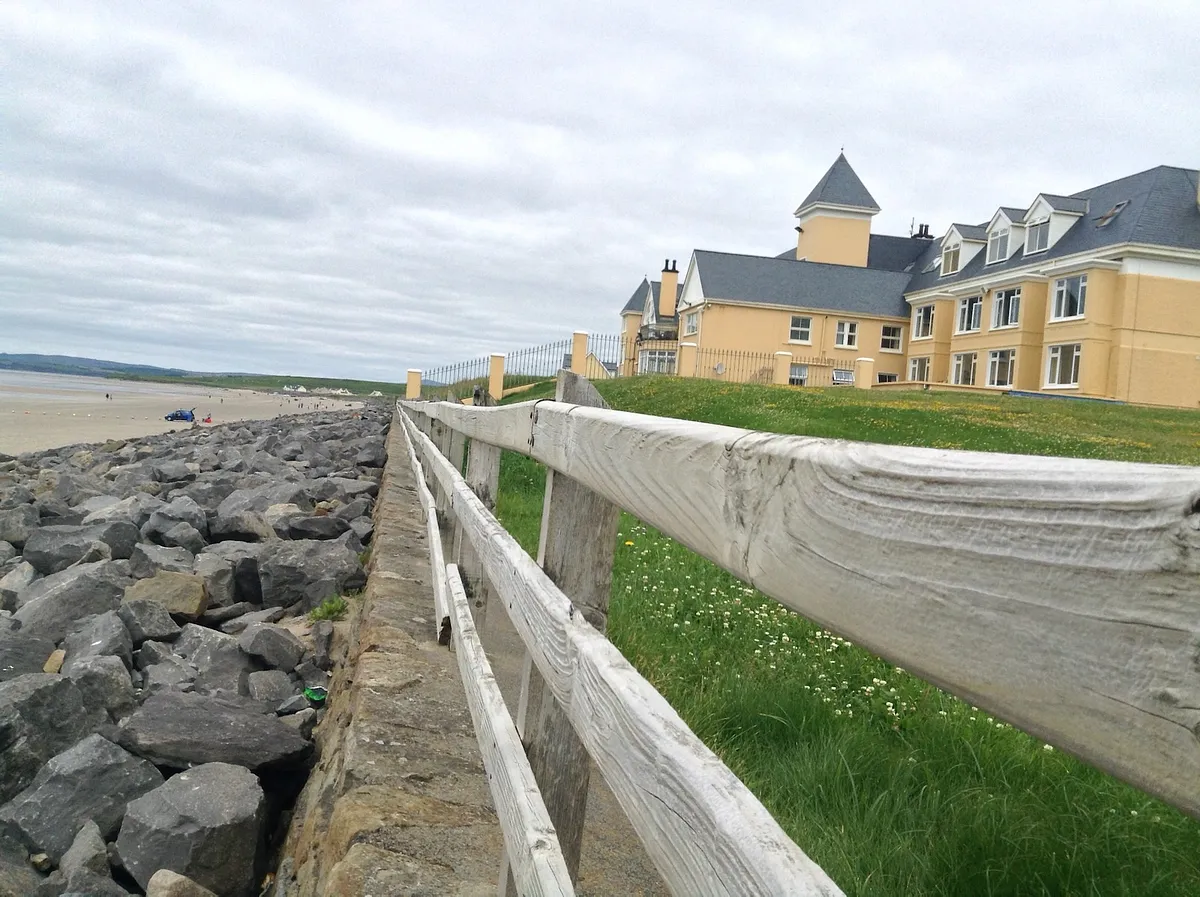
I wouldn't drive onto the beach at high tide or if you're not confident with sand driving. Soft patches can catch you out. I've seen cars get stuck near the dune line where people have parked too close to the soft sand. Stick to the hard-packed areas and you'll be fine.
Surf conditions and Atlantic reality
Rossnowlagh is popular with surfers for good reason. The bay shape funnels the swells. In winter the waves can reach 7 metres, which is serious Atlantic power. In summer it's much calmer and suitable for beginners. Both Rossnowlagh Surf School and Fin McCool Surf School operate here, offering lessons and equipment rental.
There are lifeguards on duty during summer months, which is reassuring if you're swimming. But this is still the Atlantic, not a pool. The water is cold year-round, currents can be strong, and conditions change quickly. I've seen people underestimate it because the beach looks gentle on a calm day.
The catch: the wind. Rossnowlagh is exposed, and even on sunny days you can get battered by Atlantic gusts. I've had visits where the wind made it hard to relax on the sand. You definitely need a windbreak if you're planning to sit for any length of time. It's part of the Atlantic coast experience, but it's worth knowing before you arrive. Don't expect a sheltered Mediterranean-style beach day.
How to Get There
Rossnowlagh is 8km north of Ballyshannon and 16km south of Donegal Town. From Ballyshannon, take the N15 north and follow signs for Rossnowlagh. It's about a 10-minute drive. From Donegal Town, head south on the N15 and turn off at Ballintra. That takes around 20 minutes total.
If you're coming from Northern Ireland, it's very straightforward. From my part of County Armagh it's about 90 minutes via the A5 and N15. From Belfast it's roughly 2 hours. The roads are good quality and well-signposted once you're on the N15.
There is a bus service. Line 292 runs from Donegal Town to Rossnowlagh. But the schedule is limited and doesn't give you much flexibility for tide timing or staying as long as you'd like. Realistically, you need a car for this one.
If you're flying into Ireland and don't have a car, I'd strongly recommend hiring one for Donegal. Check car hire options. You'll find the best rates if you book in advance. Having a car opens up the entire coastline, not just Rossnowlagh.
Parking is in the main car park right at the beach entrance. It's free, which is unusual for a beach this popular. The three vehicle ramps are clearly marked if you want to drive onto the sand. I'd only do this at low tide when the sand is firm. On summer weekends the car park can fill up by late morning. Arrive early if you're visiting in July or August.
Where to Stay Nearby
Your two realistic base options are Donegal Town (20 minutes south) or Ballyshannon (10 minutes north). I'd choose based on what else you want to do. Donegal Town is larger with more restaurants and shops. Ballyshannon is quieter and closer to the beach.
There are also hotels and B&Bs right in Rossnowlagh itself, which makes sense if the beach is your main focus. You can walk to the sand in a few minutes, and you're perfectly positioned for sunset visits.
For a full range of accommodation across County Donegal, check hotels and prices in Donegal ->
I've stayed here a couple of times, including visits with my mother, and I'd strongly recommend it. The spa is very good - proper treatments, not just a small pool - and the restaurant is tasty. You're right at the beach, which means you can walk down for sunset without getting back in the car. The rooms are comfortable and the staff know the area well.
Check availability →What Else is Nearby
A Note on the History
The Irish name is Ros Neamhlach, which translates as "heavenly headland". It's appropriate given the views. The official name for the beach is Belalt Strand, though almost everyone calls it Rossnowlagh.
The beach has been eroding for decades. Between 1951 and 1977, the central dune section eroded at rates up to 0.6 metres per year. That's significant for a coastal system. The erosion has slowed since then, but it's still an active process. The beach you see today is narrower than it was 50 years ago.
The Carrickfad rock outcrop at the northern end is only visible at low tide. It marks the natural boundary of the main beach. At very low tides you can walk out to it across hard sand. Local geology is a mix of sandy beaches, rocky shore platforms, sand dunes, grassland, and boulder clay cliffs. It's typical of this part of the Donegal coast but particularly well-preserved here.
The Blue Flag designation came later than many Irish beaches, but it's been maintained consistently since. The criteria are strict. Water quality, safety standards, environmental management, and accessibility all have to meet European standards. It's not just a marketing badge.
Frequently Asked Questions