County Laois
The county everyone drives through on the way to somewhere else - which is exactly why you should stop. Emo Court's Gandon-designed grandeur, Dunamase's dramatic castle ruin, the Slieve Bloom Mountains rising from the midlands, and Abbeyleix's quiet charm. All within an hour of Dublin and largely tourist-free.
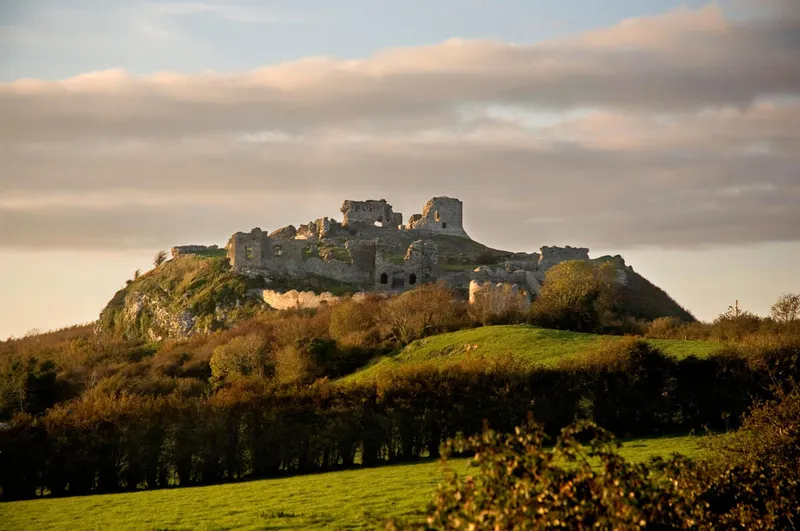
Laois is pronounced 'Leash', which is the first thing most visitors need to know and the second is that there is more here than the motorway suggests. The M7 and M8 cut through the county, making it one of the most driven-through places in Ireland. Almost nobody stops, which is their loss. Emo Court is one of the finest neo-classical houses in Ireland. The Rock of Dunamase is a dramatic castle ruin on a rocky outcrop. And the Slieve Bloom Mountains, shared with Offaly, are one of the quietest walking ranges in the country.
Abbeyleix is one of the prettiest estate towns in the midlands, with a heritage trail and the de Vesci Demesne open for walks. Portlaoise is functional and well-connected. The Electric Picnic music festival in Stradbally every September has become one of the biggest events in the Irish calendar. Beyond that, Laois is a quiet agricultural county that rewards anyone who takes the exit off the motorway.
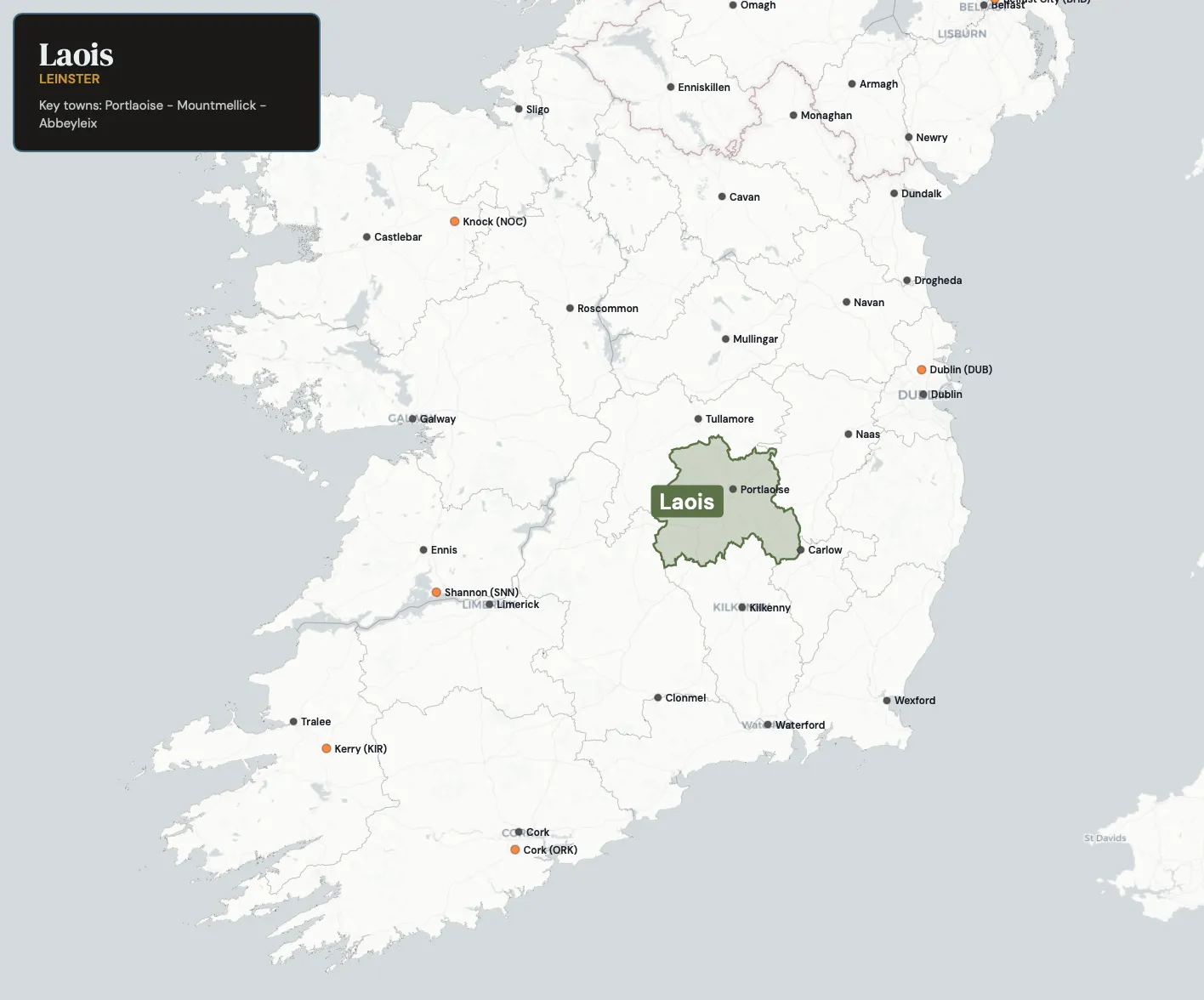
Laois is one of the most accessible counties in Ireland - the M7 from Dublin takes barely an hour to Portlaoise. Everything in the county is within thirty minutes of the town. The Slieve Blooms are in the north-west, Emo Court in the east, Dunamase in the centre. A car is essential but the distances are small. Electric Picnic weekend (early September) transforms the county - book months ahead or avoid entirely.
Below you'll find my complete Laois intelligence - where to base yourself, what's genuinely worth your time, and the practical stuff that the tourism brochures conveniently skip. Everything from first-hand experience.
Where is County Laois?
Signature Destinations
The places that make Laois worth the drive. Arranged by genuine impact, not alphabetical order.
Emo Court
A neo-classical mansion designed by James Gandon (the architect of Dublin's Custom House) in 1790. The domed rotunda is magnificent. The gardens and parkland, maintained by the OPW, are open year-round and free to enter. The house tour is guided and included in the entry fee. One of the finest houses in Ireland and remarkably uncrowded. The lakeside walk through the grounds is excellent.
Rock of Dunamase
A castle ruin perched on a rocky limestone outcrop rising from the plains of Laois. The site has been fortified since the Iron Age. The Anglo-Norman castle was demolished by Cromwell's forces in 1650. What remains is dramatic and the 360-degree views from the summit are the best in the county. Free, open access, no visitor centre. Bring your imagination.
Slieve Bloom Mountains
The southern slopes of the Slieve Blooms fall in Laois, offering walking routes through blanket bog, forest, and mountain valleys. The Glenbarrow waterfall and the Ridge of Capard are the highlights on the Laois side. The Slieve Bloom Way loops through both counties. These are modest mountains by any standard, but the solitude is the attraction - you will likely have the trails to yourself.
Abbeyleix
A planned estate town that is one of the tidiest and most attractive small towns in Ireland. The heritage trail through town takes about an hour. The de Vesci Demesne walks are open to the public and the old carpet factory building is being repurposed as a community space. Morrissey's pub on the main street has not changed in decades and is all the better for it.
Where to Base Yourself
Portlaoise for transport links and practicality. Abbeyleix for character and a quieter pace.
Portlaoise
The county town and the most connected base. The M7/M8 junction is here, the train station has frequent Dublin services, and the town has decent restaurants and shops. Not a tourist town as such, but extremely practical. Fort Protector, a 16th-century plantation fort in the town centre, is worth a quick visit.
Abbeyleix
A much more characterful base than Portlaoise, fifteen minutes south on the N77. The heritage trail, the pubs, and the surrounding countryside make it a pleasant overnight. Limited accommodation but what exists has character.
Getting There & Around
From Dublin
About 1 hour 15 minutes to Portlaoise via the M7. One of the fastest and easiest drives in Ireland. The motorway runs directly to the town.
From Cork
About 2 hours via the M8 through Cashel. Portlaoise sits on the Dublin-Cork corridor, making it equally accessible from both cities.
By Train
Irish Rail runs Dublin to Portlaoise frequently - about 1 hour. Also on the Dublin to Cork and Dublin to Limerick lines. One of the best rail-connected county towns in Ireland.
By Bus
Multiple services through Portlaoise on the Dublin-Cork and Dublin-Limerick routes. Bus Eireann, JJ Kavanagh, and Dublin Coach all serve the town. The bus stop is central.
When to Visit
April through October all work well. Laois is inland and drier than the west. Emo Court's gardens peak in late spring. The Slieve Blooms are best in summer. September brings Electric Picnic to Stradbally - the county's busiest weekend by a considerable margin.
Where to Stay
The Heritage in Killenard is the luxury option. Portlaoise has practical mid-range hotels. Abbeyleix for B&B character.
The Heritage, Killenard
A golf and spa resort between Portlaoise and Monasterevin. The spa is one of the best in the midlands. The golf course is championship standard. The rooms are modern and well-appointed. It feels like it belongs in a more obviously tourist-heavy county, which works in your favour for pricing. Good value for a five-star experience.
Hotels
Portlaoise has a few good options. The Heritage in Killenard is the county's luxury choice with an excellent spa. Nothing else in the luxury category.
B&Bs
Good countryside options, particularly around Abbeyleix and the Slieve Blooms. Friendly, affordable, and unhurried.
Self-catering
Limited range but very affordable. The Slieve Blooms and the canal area have some options. Good for walkers and cycling holidays.
Finding Your Laois Roots
Laois was O'More territory - the sept whose resistance to English rule was so persistent that the county was planted as Queen's County in 1556 (one of the first plantations in Ireland). The Rock of Dunamase was a strategic prize fought over for centuries. The Famine and land wars hit hard. If your surname is Moore, Dunne, Delaney, Phelan, or Lalor, the Laois connection may be strong - Peter Lalor, leader of the Eureka Stockade in Australia, was from Laois.