County Kilkenny
Ireland's most medieval city and the jewel of the southeast. A castle at one end, a cathedral at the other, and eight centuries of stone, craft, and culture between them. Kilkenny has been brewing beer since 1710, hosting arts festivals since before they were fashionable, and quietly proving that Ireland's best day out does not require a cliff or a coastline.
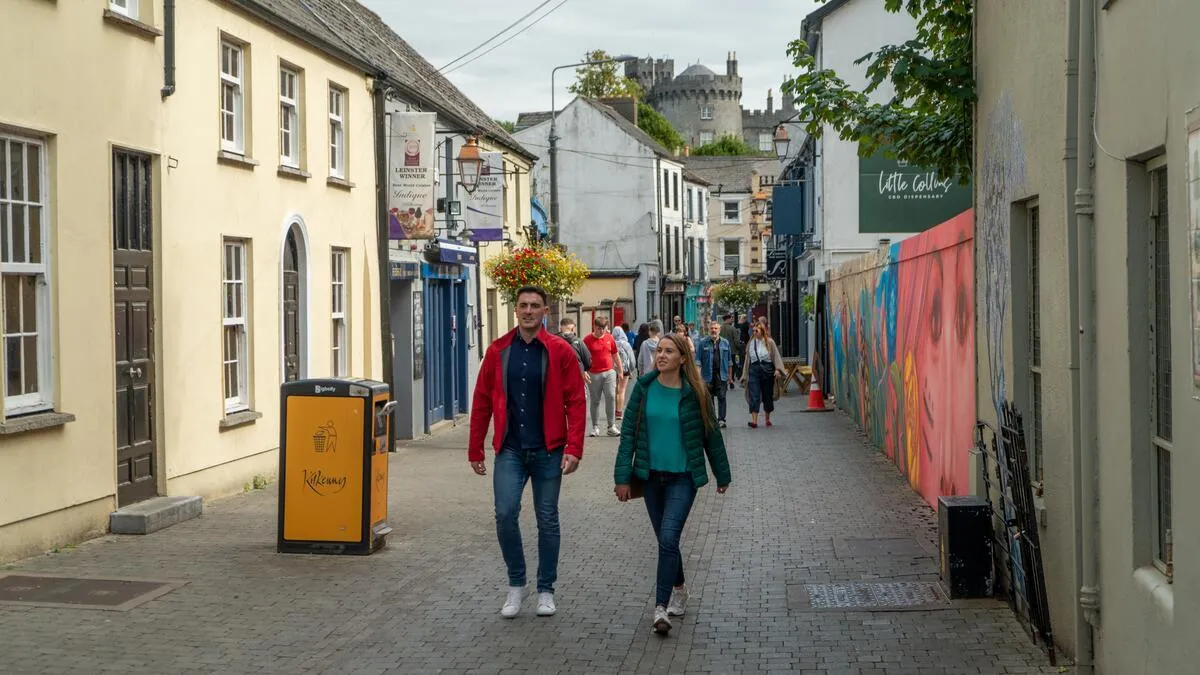
Kilkenny is the most medieval city in Ireland and one of the most enjoyable places to spend a couple of days on the island. The Medieval Mile from the castle to the cathedral is a genuine historical corridor, not a marketing invention. The castle dominates the southern end, St Canice's Cathedral and its round tower anchor the north, and between them runs a streetscape of stone buildings, craft shops, and pubs that has retained more of its medieval fabric than anywhere else in the country.
The county beyond the city is rich farmland dotted with tower houses, monastic ruins, and the kind of quiet villages that tourism brochures love but tourists rarely reach. Jerpoint Abbey is one of the finest Cistercian ruins in Ireland. Inistioge is a village so pretty it gets used as a film set. The Nore and Barrow rivers offer excellent walking and kayaking. And Kilkenny's craft beer and food scene is one of the strongest outside Dublin - Smithwick's has been brewed here since 1710.
Kilkenny city is compact and walkable - you do not need a car in the city itself. For the county beyond, you do. The Kilkenny Arts Festival in August is one of the best in Ireland but accommodation books out months ahead and prices double. The Cat Laughs comedy festival in June is similarly popular. Plan around these if you want value, or plan for them if you want atmosphere.
Below you'll find my complete Kilkenny intelligence - where to base yourself, what's genuinely worth your time, and the practical stuff that the tourism brochures conveniently skip. Everything from first-hand experience.
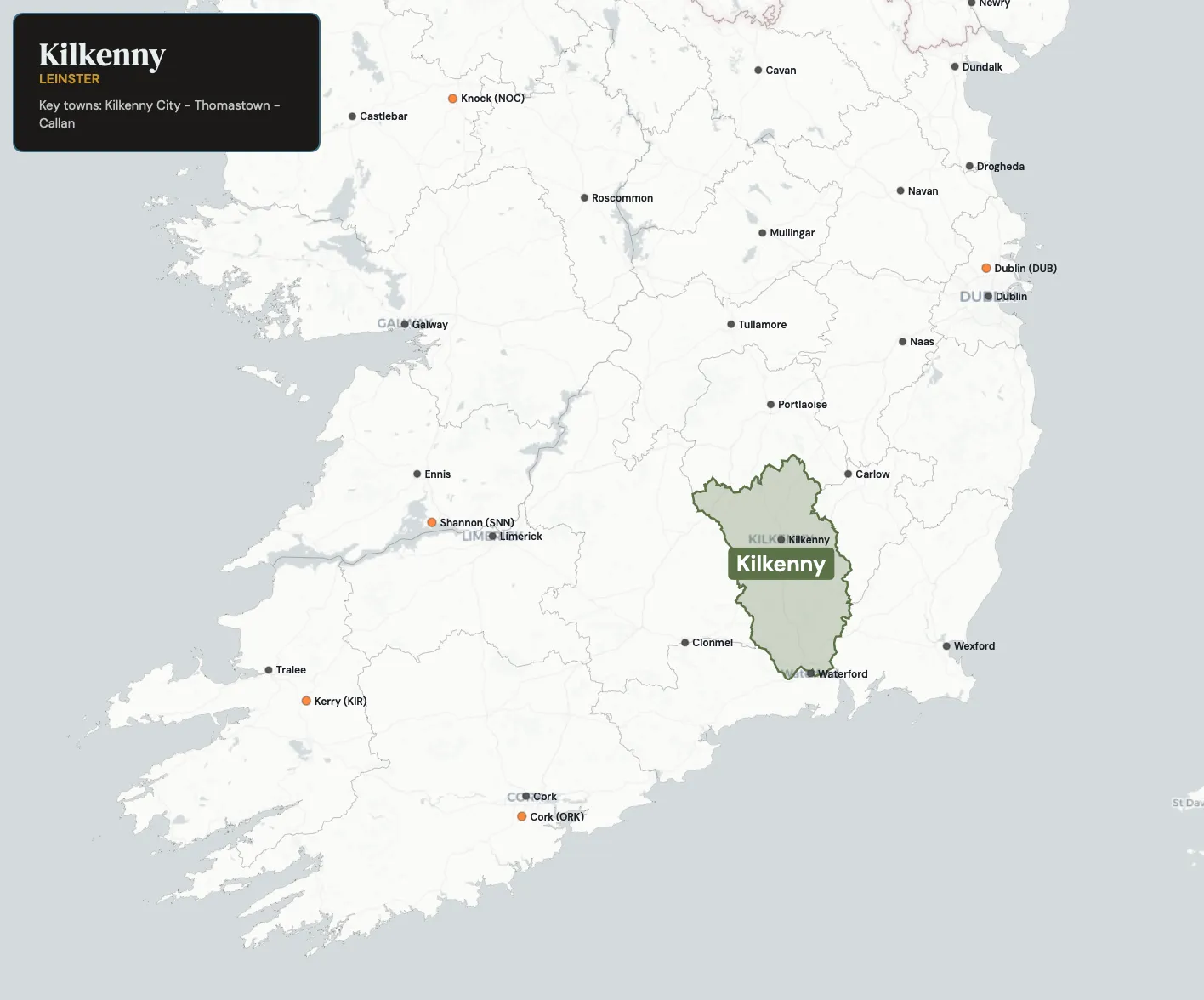
Where is County Kilkenny?
Signature Destinations
The places that make Kilkenny worth the drive. Arranged by genuine impact, not alphabetical order.
Castle Full guide Kilkenny Castle
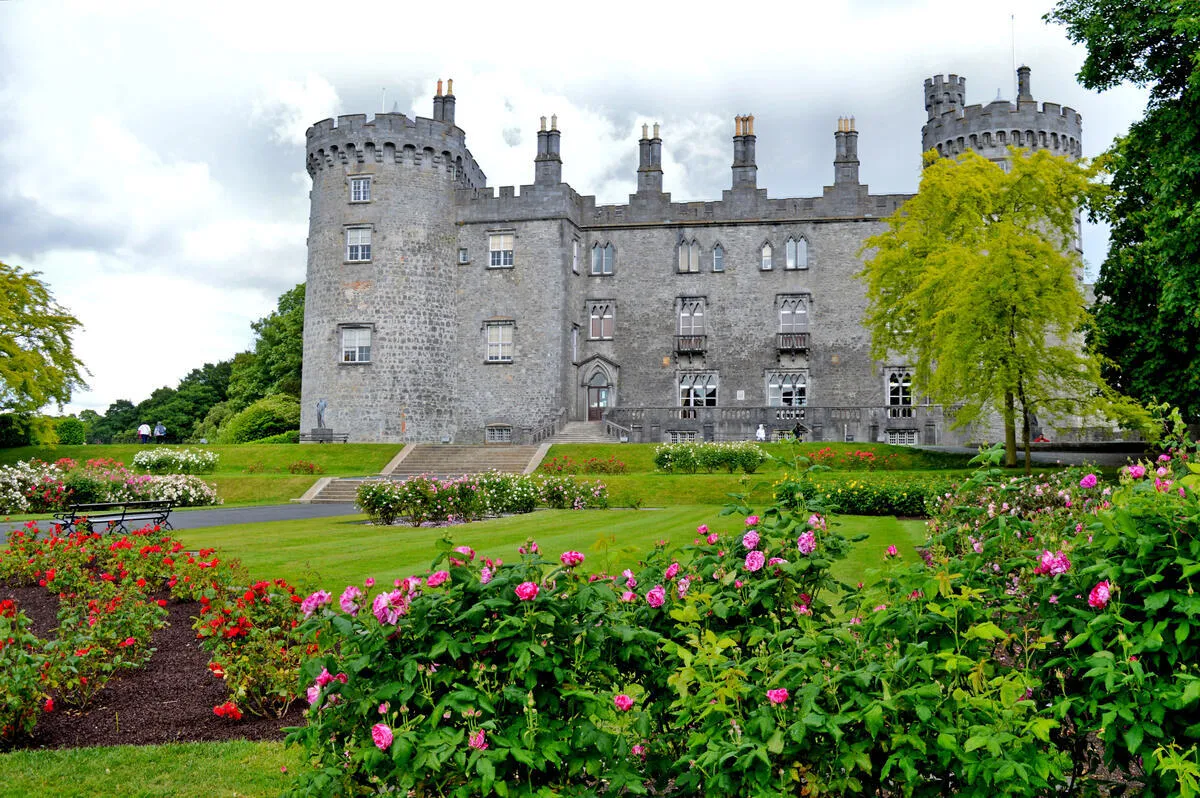
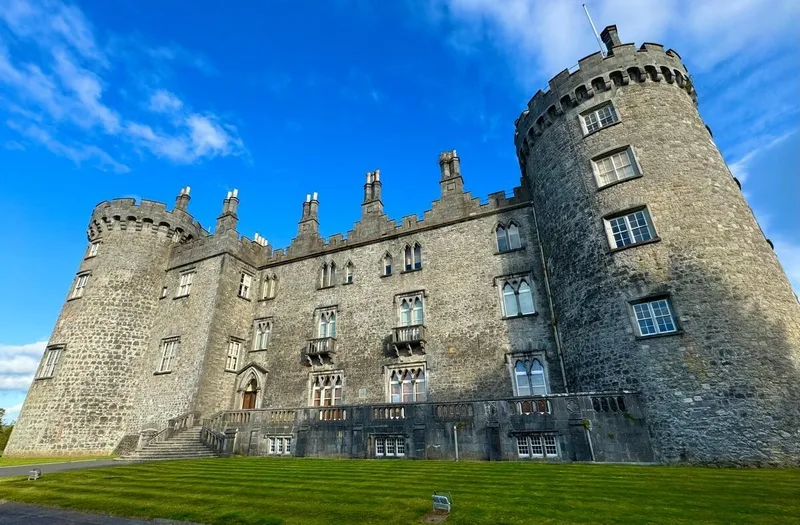
A Norman castle rebuilt and remodelled over 800 years, dominating the city from its position above the Nore. The Long Gallery with its painted ceiling and Pre-Raphaelite portraits is the highlight. The gardens and parkland are free and make for a pleasant walk. OPW-managed with guided tours. One of the most visited heritage sites in Ireland and deserves it.
Heritage Walk Full guide Medieval Mile
The walk from Kilkenny Castle to St Canice's Cathedral through the heart of the medieval city. The Tholsel, Rothe House, the Black Abbey, and the Medieval Mile Museum are all on or just off the route. Takes about 45 minutes at a dawdle with stops. The Medieval Mile Museum in St Mary's Church is excellent - well-curated and atmospheric.
Ruin Full guide Jerpoint Abbey
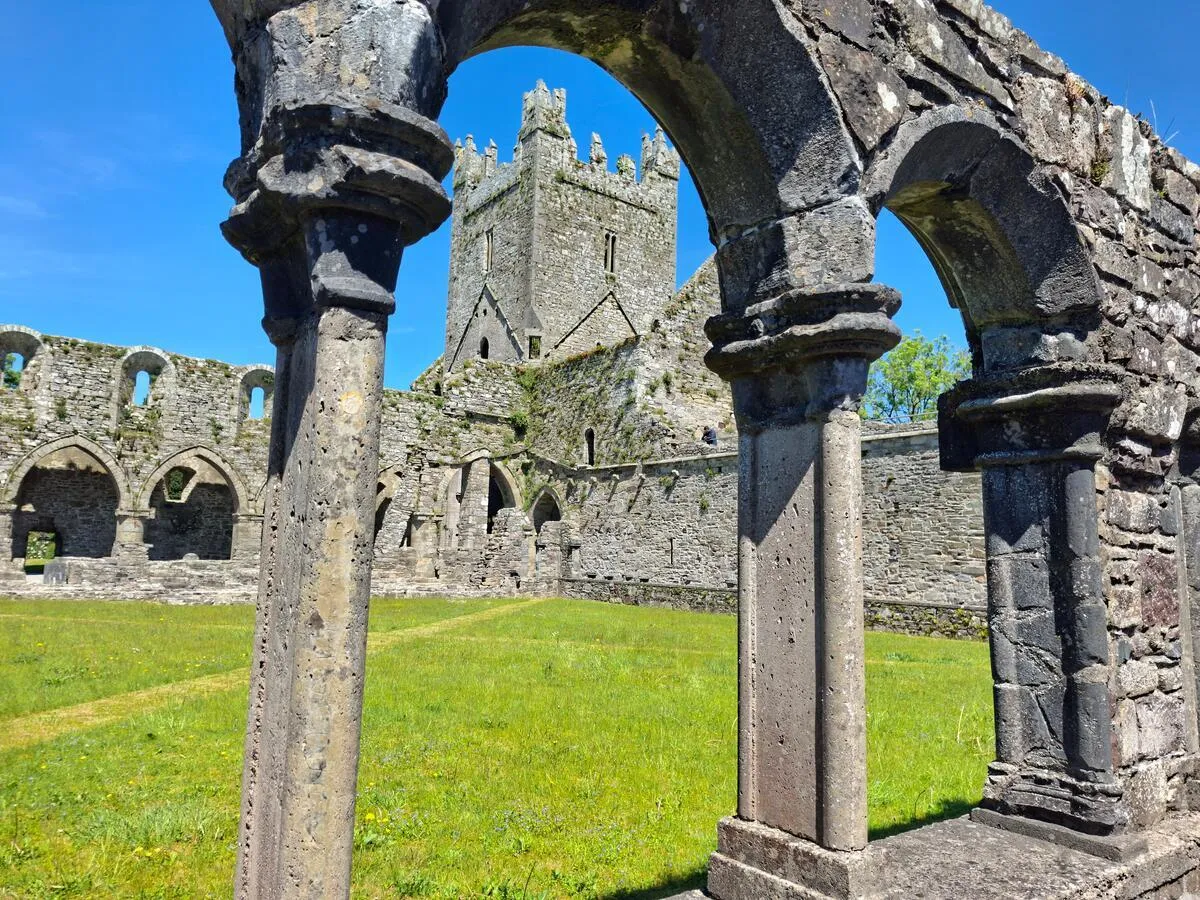
A 12th-century Cistercian abbey ruin about 20 minutes south of Kilkenny city. The cloister carvings are extraordinary - detailed figures of knights, bishops, and mythical creatures. One of the finest monastic ruins in Ireland. The guided tour from the visitor centre is worth taking for the detail you would otherwise miss.
Village Full guide Inistioge
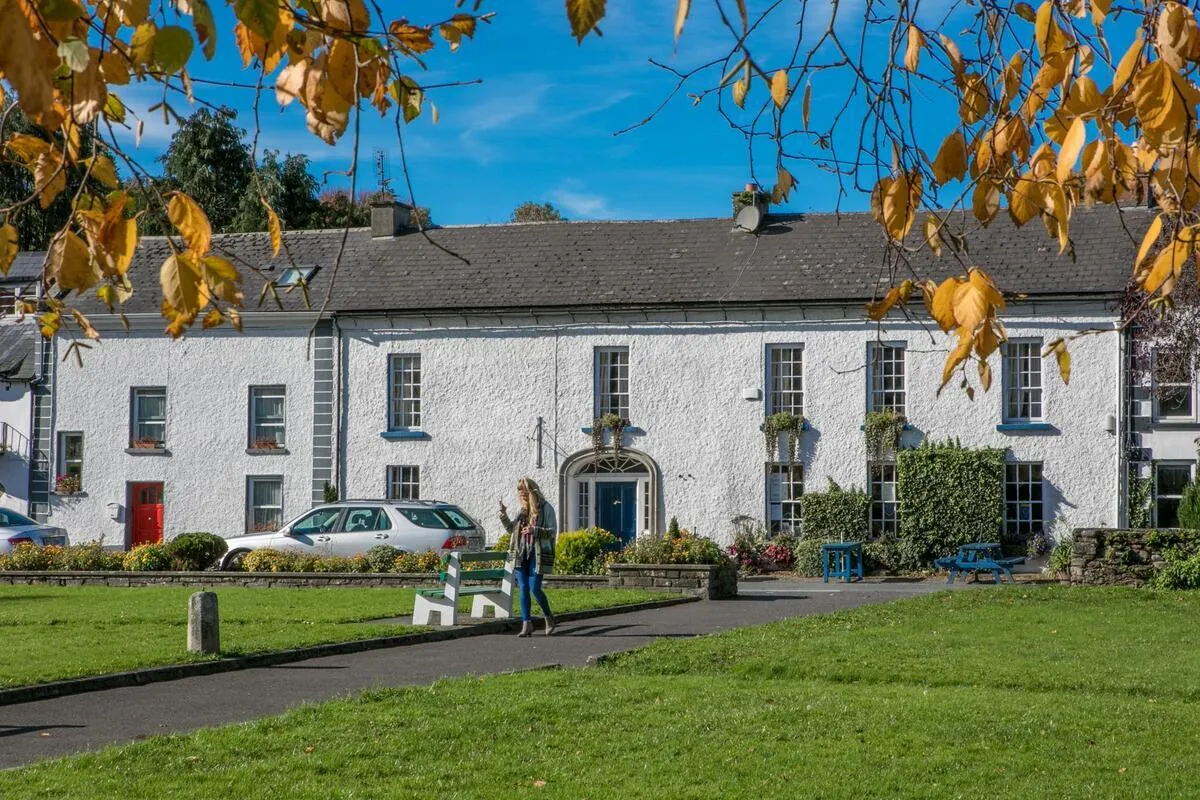
A village on the River Nore that looks like a film set because it literally is one - Circle of Friends and other productions have used it. The tree-lined square, the 10-arched bridge, and Woodstock Gardens above the village combine into something unreasonably pretty. The riverside walk is excellent. Go midweek to avoid the day-trip crowds.
Food & Drink Full guide Smithwick's Experience
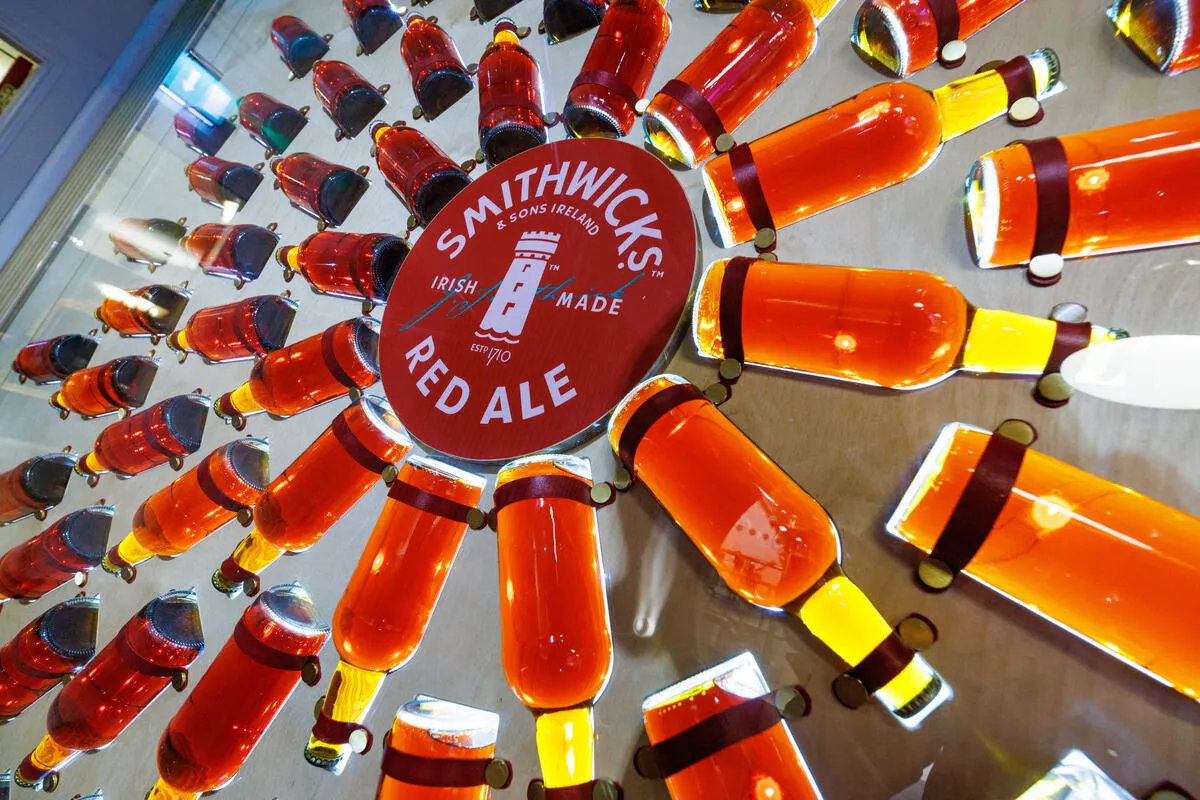
A visitor centre on the site of the Smithwick's brewery, which has been operating here since 1710 (making it the oldest brewery site in Ireland). The tour is well done - more atmospheric than the Guinness Storehouse and less crowded. You learn about the brewing history and the Franciscan abbey that preceded the brewery. The tasting at the end is included.
Where to Base Yourself
Kilkenny city is the base. Stay in the city for heritage, food, and nightlife. Thomastown and Mount Juliet for a countryside alternative with Jerpoint Abbey on the doorstep.
Kilkenny City
The only real base and a genuine city-break destination. The castle, the Medieval Mile, the craft and design scene, and the pubs and restaurants all reward at least two nights. The Kilkenny Design Centre in the castle stables is excellent for crafts and gifts. Langton's, Kyteler's Inn, and the numerous medieval laneways give the nightlife genuine character.
Thomastown
A small market town on the Nore, home to Jerpoint Abbey and the Jerpoint Glass studio. A quieter alternative to Kilkenny city with a growing craft and food scene. Grennan Mill Craft School is here. Good base for the southern half of the county and the Nore Valley.
Getting There & Around
From Dublin
About 1.5 hours via the M9 motorway. Fast, direct, and easy. Kilkenny is one of the most accessible heritage destinations in Ireland from Dublin.
From Cork
About 1.5 hours via the M8 and N76. Another straightforward drive. Kilkenny sits perfectly between Dublin and Cork.
From Belfast
About 3 hours via the M1 south to Dublin, then the M9. Longer than it looks on a map but motorway most of the way.
By Train
Irish Rail runs Dublin to Kilkenny (MacDonagh station) several times daily. About 1 hour 40 minutes. The station is a 15-minute walk from the city centre. The Waterford line also stops here.
By Bus
Bus Eireann and JJ Kavanagh run Dublin to Kilkenny frequently. About 2 hours. The bus stop is central. Good connections to Waterford, Cork, and other southern cities.
When to Visit
April through October all work well. Kilkenny is inland and on the drier east coast. The Cat Laughs comedy festival (June) and the Kilkenny Arts Festival (August) are highlights but book out the city. If festivals are not your thing, May, June, and September give the best combination of weather and availability.
Where to Stay
Kilkenny city has good hotel range and character B&Bs. Mount Juliet is the luxury countryside option. Festival weeks are a different market - book months ahead.
Lyrath Estate, Kilkenny City
A country estate on the edge of Kilkenny city with 170 acres of parkland, a spa, and a contemporary art collection. Close enough to walk into town but set apart in its own grounds. The spa is one of the best in the southeast. The rooms in the original house have more character than the extension. Good value outside festival weeks.
Hotels
Good range in the city from budget to luxury. Mount Juliet near Thomastown is the standout country estate. Festival weeks command premium pricing - book very early for August.
B&Bs
Excellent options in and around the city and in the villages of the Nore Valley. Many are in period buildings with genuine character. Book directly for best rates.
Self-catering
Growing range of countryside cottages and city apartments. The Nore and Barrow valleys have some lovely riverside options. Good for families and longer stays.
Finding Your Kilkenny Roots
Kilkenny's heritage is Norman and Butler. The Butler family held the castle and the earldom of Ormonde for over 500 years, shaping the city and county more profoundly than any other family shaped any other place in Ireland. The medieval city was one of the most important in the country - the Confederation of Kilkenny governed Catholic Ireland from here in the 1640s. The Statutes of Kilkenny in 1366 attempted to prevent the Normans 'going native'. If your surname is Butler, Walsh, Brennan, Phelan, or Comerford, the Kilkenny roots run deep.