County Kildare
Ireland's horse capital and the flat, fertile heartland of Leinster. The Curragh's vast racing plains, the Japanese Gardens at the National Stud, Castletown's Palladian grandeur, and canal-side towns with more character than their commuter-belt reputation suggests. Close enough to Dublin to visit in a day, interesting enough to stay longer.
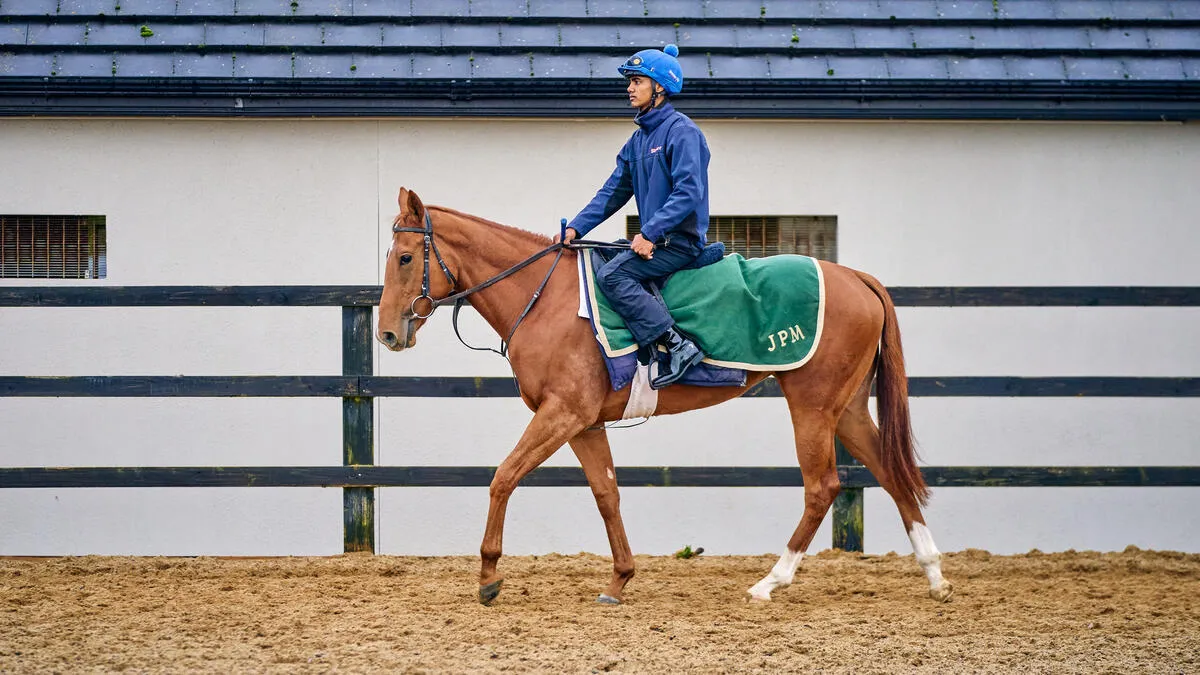
Kildare is horse country. The Curragh plain - a vast, flat expanse of short grass in the centre of the county - has been used for horse training and racing for centuries, and the industry built around it defines the county. The Irish National Stud and Japanese Gardens are the visitor-facing side of a world that is otherwise behind locked gates and long driveways. If you have any interest in horses, this is one of the most important places in the global thoroughbred industry.
But Kildare is more than horses. Castletown House near Celbridge is the grandest Palladian house in Ireland. The canal towns of Robertstown, Sallins, and Athy have a quiet charm. The Bog of Allen covers the western half of the county and has its own desolate beauty. And Kildare's proximity to Dublin means it has excellent food and accommodation options that serve both the commuter population and the racing crowd.
Kildare is flat. If you are expecting dramatic landscapes, look elsewhere. What it offers is heritage, horses, and accessibility - nothing in the county is more than an hour from Dublin. The motorway network (M4, M7, M9) makes Kildare one of the best-connected counties in Ireland. Race days at the Curragh and Punchestown transform the county - book accommodation well ahead if your visit coincides.
Below you'll find my complete Kildare intelligence - where to base yourself, what's genuinely worth your time, and the practical stuff that the tourism brochures conveniently skip. Everything from first-hand experience.
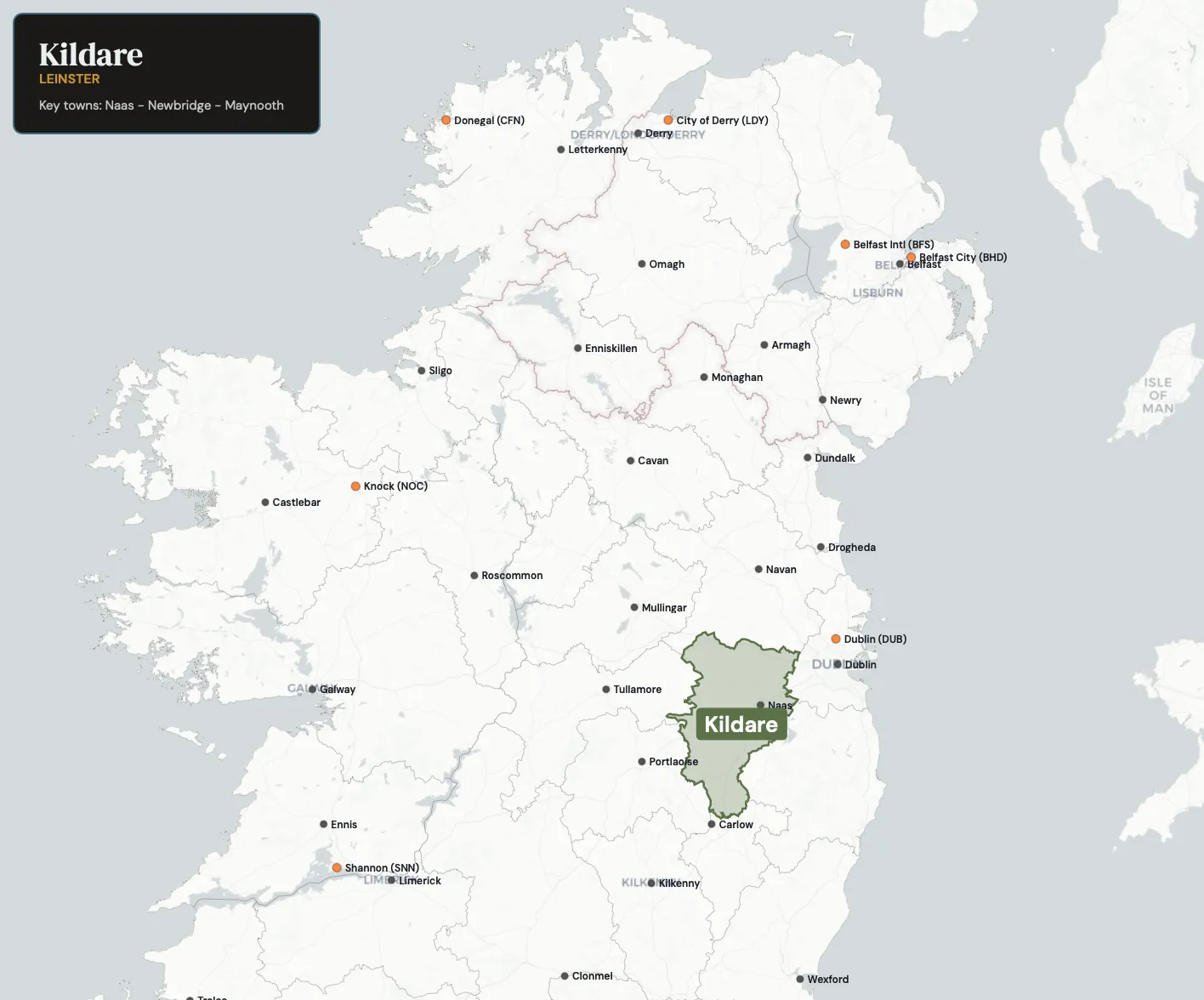
Where is County Kildare?
Signature Destinations
The places that make Kildare worth the drive. Arranged by genuine impact, not alphabetical order.
Gardens Full guide Irish National Stud & Japanese Gardens
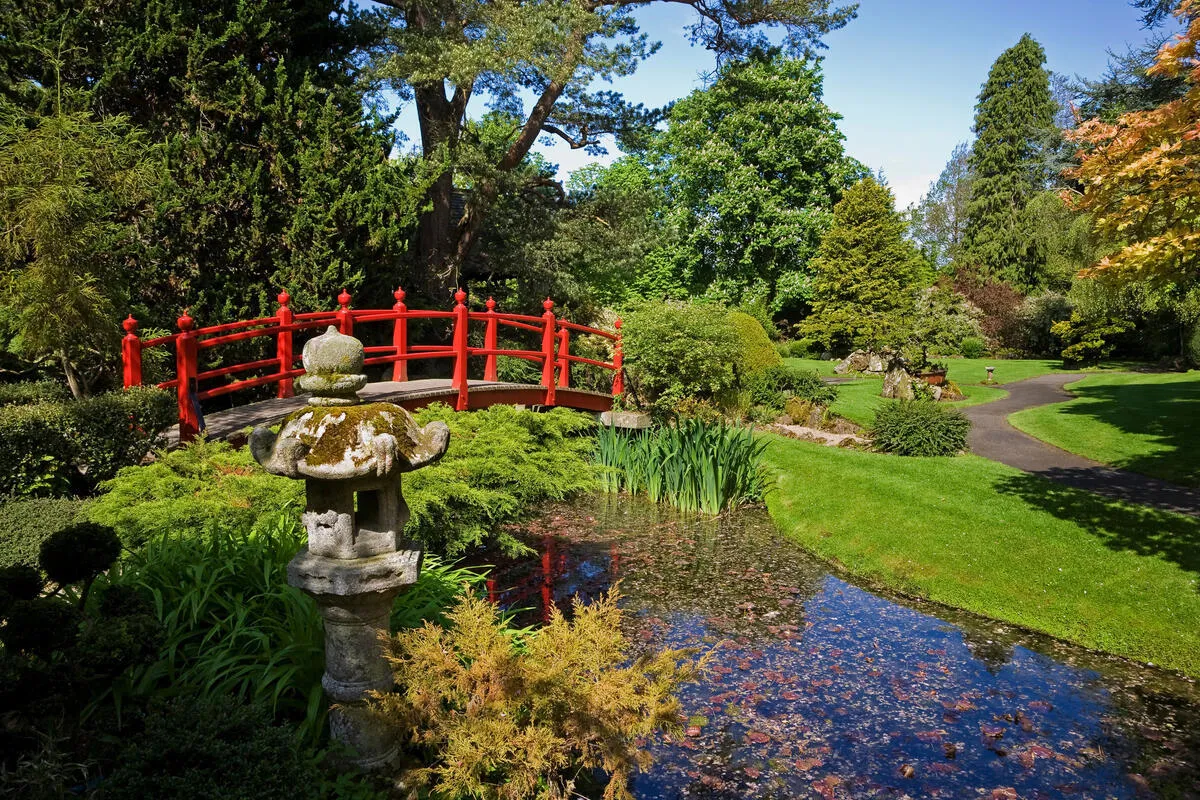
The National Stud is a working thoroughbred breeding farm that opens its paddocks to visitors. Seeing a stallion worth tens of millions of euros standing in a field is a disorienting experience. The Japanese Gardens next door, created between 1906 and 1910, are among the finest in Europe. St Fiachra's Garden adds a contemplative third space. All three are on one ticket.
Heritage Full guide Castletown House
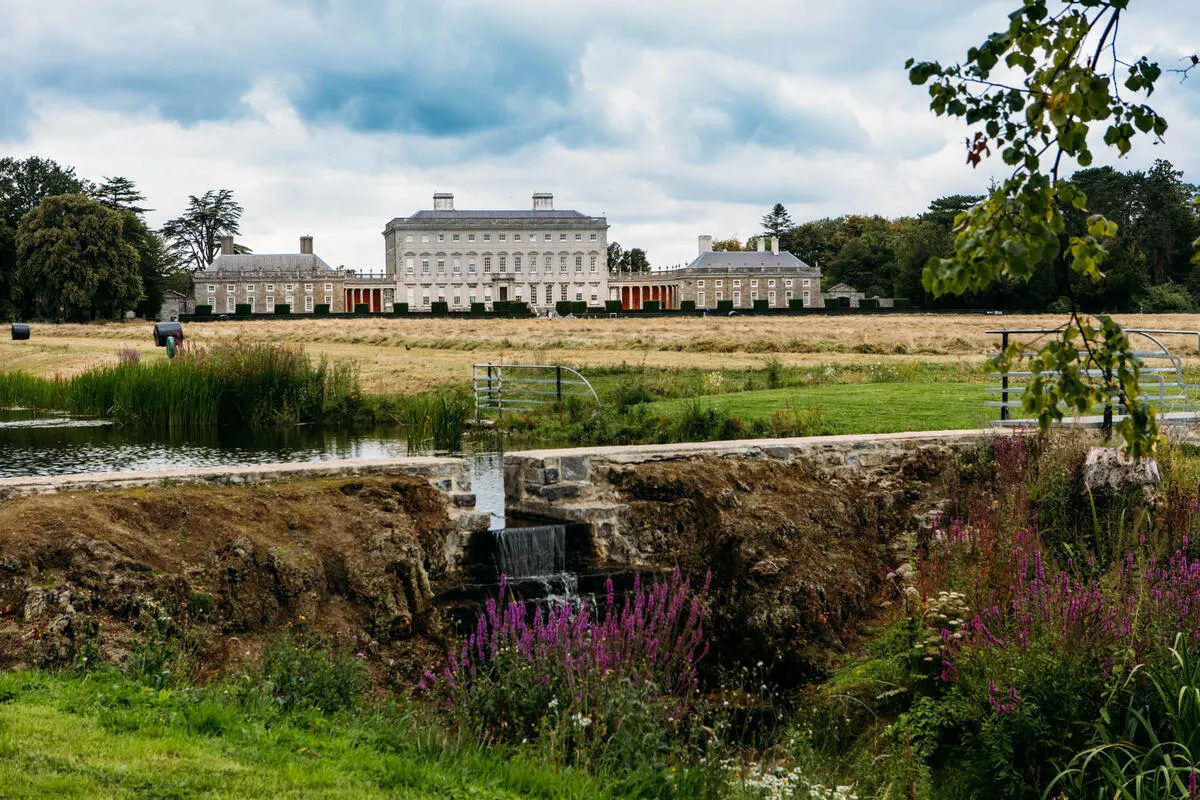
The largest and earliest Palladian house in Ireland, built in the 1720s for William Conolly, Speaker of the Irish House of Commons. The long gallery is extraordinary. The Wonderful Barn folly in the grounds is exactly as eccentric as its name suggests. Free entry to the house (OPW), and the parkland is open for walks. Fifteen minutes from Dublin's M50.
Racing Full guide The Curragh
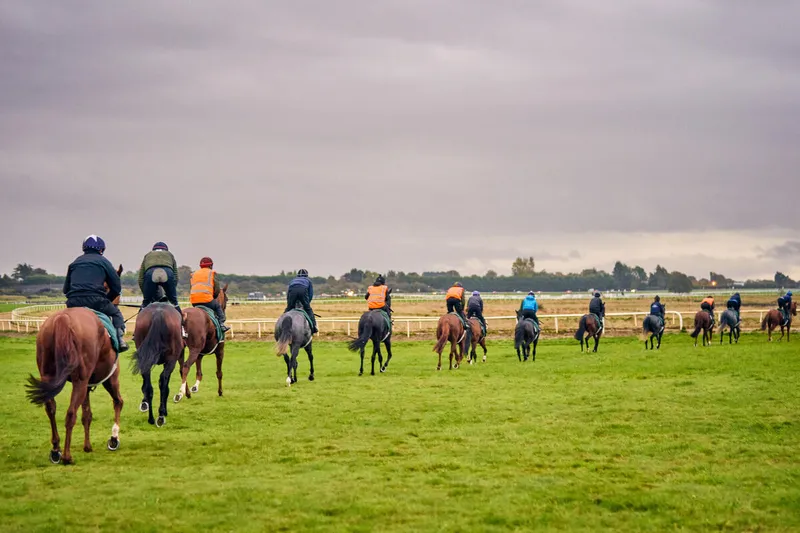
A 5,000-acre plain of common land that has been used for horse racing since at least the 18th century. The Curragh Racecourse hosts all five Irish classics. Even outside race days, driving across the Curragh is an experience - the vast, open grassland with horses training in the early morning mist is unique in Ireland. The military camp on the edge adds another layer of history.
Shopping Full guide Kildare Village
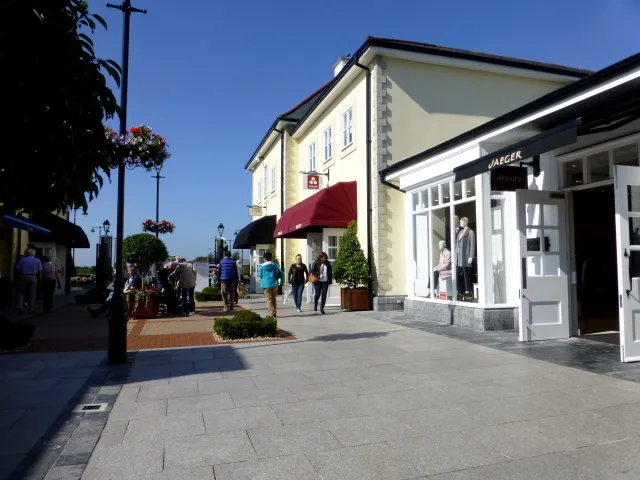
An outlet shopping village on the edge of Kildare town with discounted luxury and high-street brands. Not a heritage destination, but it draws visitors from across Ireland and is one of the most visited retail destinations in the country. If shopping is your thing, it is well laid out and the discounts are genuine. Parking is free.
Natural Full guide Bog of Allen
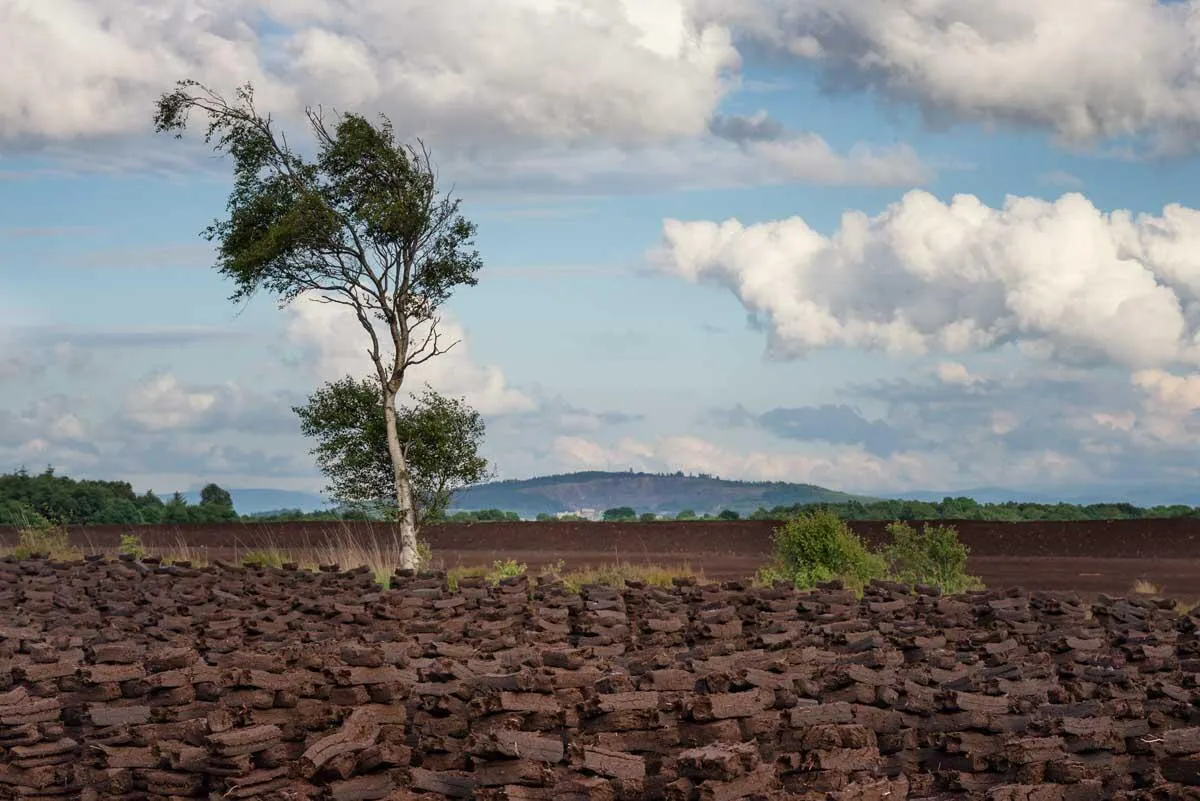
The largest raised bog complex in Ireland, covering much of western Kildare and extending into neighbouring counties. The Bog of Allen Nature Centre near Lullymore offers guided walks and an insight into a landscape that most people drive past without a second glance. Peatland ecology, industrial heritage, and a vast sky. An acquired taste, honestly, but a real one.
Where to Base Yourself
Naas is the practical base with the best services. Kildare town is closest to the National Stud and the Curragh. Maynooth has the most character and the best transport links to Dublin.
Naas
The county town and the most substantial base. Good restaurants, a few decent pubs, and excellent motorway access to Dublin and everywhere else. Not a tourist town as such, but it works well as a base with more character than an airport hotel and more services than the smaller towns.
Kildare Town
A small heritage town with a round tower, a cathedral, and proximity to both the National Stud and Kildare Village. St Brigid's Cathedral is worth a visit and the round tower can be climbed. The town is compact and walkable. Accommodation is limited but there are a few good options nearby.
Maynooth
A university town with a genuine campus atmosphere, a medieval castle ruin, and the seminary that trained most of Ireland's Catholic clergy for 200 years. The Royal Canal towpath walk is pleasant. Good cafe and restaurant scene driven by the student population. Twenty-five minutes from Dublin by train.
Getting There & Around
Dublin Airport (DUB)
About 45 minutes to an hour from most of Kildare via the M50 and M4/M7. The most convenient airport. Kildare is effectively Dublin's western commuter belt, so airport transfers are straightforward.
From Dublin
About 45 minutes to Naas via the M7, 30 minutes to Maynooth via the M4. The motorway network makes Kildare one of the most accessible counties in Ireland. Traffic at peak commuter hours can be heavy.
From Belfast
About 2.5 hours via the M1 south to Dublin and then the M50/M7. Straightforward motorway driving almost the entire way.
By Train
Multiple rail lines cross Kildare. The Dublin-Cork line stops at Kildare town and Newbridge. The Dublin-Galway/Westport line stops at Maynooth and Sallins. The Dublin-Waterford line serves Athy. Kildare is one of the best-connected counties by rail in Ireland.
By Bus
Excellent bus connections from Dublin to all the main Kildare towns. Bus Eireann, Dublin Bus, and private operators all serve the county. The commuter services are frequent and reliable.
When to Visit
April through October for the best experience. The flat racing season runs from March to November, with the Irish Derby in late June as the highlight. The National Stud and gardens are open year-round but best in spring and summer. Kildare is on the dry east coast and gets less rain than most of Ireland.
Where to Stay
Kildare has a strong hotel scene driven by the racing industry and Dublin proximity. The K Club sets the luxury standard. The towns offer good mid-range and B&B options.
The K Club, Straffan
A luxury resort on a 550-acre estate along the River Liffey. Two championship golf courses, a spa, and the kind of manicured grounds that make you forget you are forty minutes from Dublin. The Ryder Cup was held here in 2006. Not cheap, but it is one of the finest resort hotels in Ireland. Midweek and off-season rates bring it within reach.
Hotels
Good range thanks to the racing and Dublin commuter trade. The K Club near Straffan is the luxury option. Naas, Newbridge, and Maynooth all have solid mid-range choices.
B&Bs
Plenty of options across the county. Many are in countryside settings between the towns. Quality is generally high and prices are reasonable for the Leinster area.
Self-catering
Canalside cottages and farmhouse rentals are available, though the range is smaller than rural counties further west. Good option for families visiting multiple Dublin-area attractions.
Finding Your Kildare Roots
Kildare's heritage runs from St Brigid's 5th-century monastery to the Anglo-Norman Pale and the great estates of the 18th century. The county was within the English-controlled Pale for centuries, giving it a different character to the Gaelic west. The Fitzgerald Earls of Kildare were the most powerful Anglo-Norman family in Ireland. If your surname is Fitzgerald, Lawlor, Dunne, Nolan, or Byrne, the Kildare connection is worth investigating.