The Bogside Murals: Derry's People's Gallery
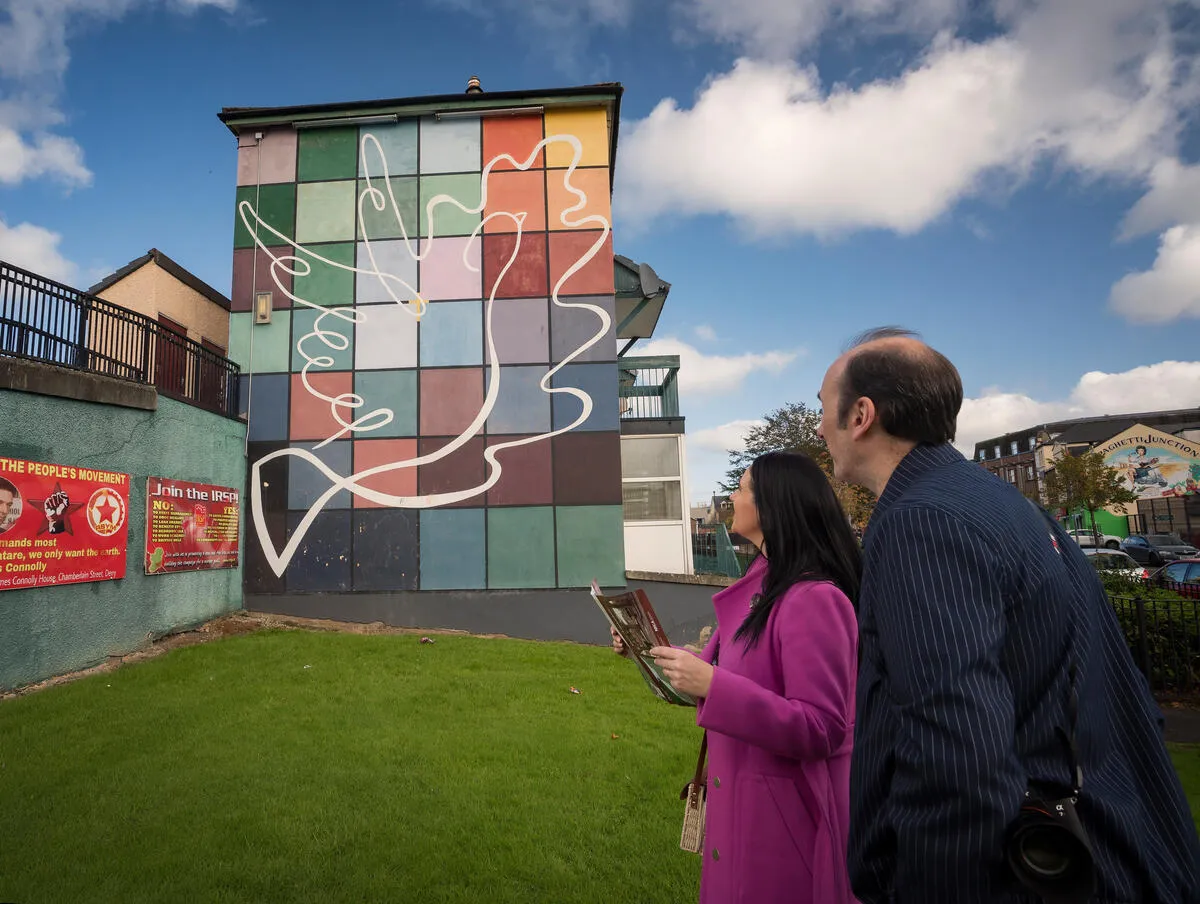
The Bogside Murals - collectively known as the People's Gallery - are twelve large murals painted on the gable ends of houses in the Bogside, the nationalist neighbourhood below Derry's city walls. They depict key events from the Troubles: Bloody Sunday, the Battle of the Bogside, the hunger strikes, civil rights marches, and the peace process. This is not tourism in the conventional sense. It is one of the most powerful pieces of public art in Europe, and walking the murals with a local guide is an experience that stays with you. Free to view at any time.
What to Expect
The murals are spread across the gable ends of houses in the Bogside, mainly along Rossville Street and Lecky Road. You can walk the full route in about 45 minutes unguided. But this is one of the strongest recommendations in this guide: take a guided tour. The Bogside Murals without context are large, colourful paintings on walls. With a guide, they become the most affecting heritage experience in Northern Ireland.
The murals were painted between 1997 and 2001 by three local artists known as "The Bogside Artists" - Tom Kelly, Kevin Hasson, and William Kelly. Each depicts a specific event or theme: the boy with the petrol bomb during the Battle of the Bogside (1969), the girl banging a bin lid as a warning (a real practice during raids), Bloody Sunday (1972), the hunger strikers, the civil rights marches, and ultimately the dove of peace.
The most photographed is the "Petrol Bomber" - a teenage boy in a gas mask with a petrol bomb. The most moving is "The Death of Innocence" - depicting 14-year-old Annette McGavigan, killed by a soldier's bullet in 1971. The "Bloody Sunday" mural shows a group of men carrying a body, based on the famous photograph.
The Museum of Free Derry on Rossville Street provides essential context. Exhibits include personal testimonies, photographs, and artefacts from the civil rights movement and Bloody Sunday. Allow an hour.
The honest negatives: this is heavy, sombre material. Visitors with strong unionist sympathies may feel the murals present a one-sided narrative - they were painted by nationalist artists and the perspective is nationalist. Some of the murals are showing their age and deteriorating. The Bogside itself is a residential area, not a tourist zone - be respectful of the people who live here. And without a guide, you will miss most of what the murals mean.
How to Get There
The Bogside is directly below the western section of Derry's city walls, a 10-minute walk downhill from the Diamond. The most natural route is to walk the city walls first, look down into the Bogside from above, then descend to walk the murals at street level.
Free Derry Tours operates guided walks starting from the Museum of Free Derry on Rossville Street. Martin McCrossan City Tours also covers the Bogside as part of wider city walking tours. Book online or just turn up.
If driving, use city centre car parks rather than trying to park in the Bogside itself. The area is walkable from all central hotels.
Where to Stay Nearby
Stay in Derry city centre - the Bogside is a 10-minute walk from any central hotel. See the County Derry hub for full accommodation options.
Inside the walls, 10 minutes walk from the Bogside. The best hotel in the city.
Check availability →What Else is Nearby
A Note on the History
The Bogside has been a nationalist neighbourhood since the 17th century - the area outside the walls where Catholics settled when excluded from the walled city. During the Troubles, it became one of the most politically significant places in Northern Ireland. The Battle of the Bogside (1969) was one of the events that triggered the deployment of British troops. Bloody Sunday (30 January 1972), when British soldiers shot 26 unarmed civilians during a civil rights march, killing fourteen, happened on Rossville Street where the murals now stand.
The "Free Derry Corner" gable end - painted with "You Are Now Entering Free Derry" - dates from 1969 and has been maintained continuously since. It is one of the most recognised political statements in Irish history.
Frequently Asked Questions