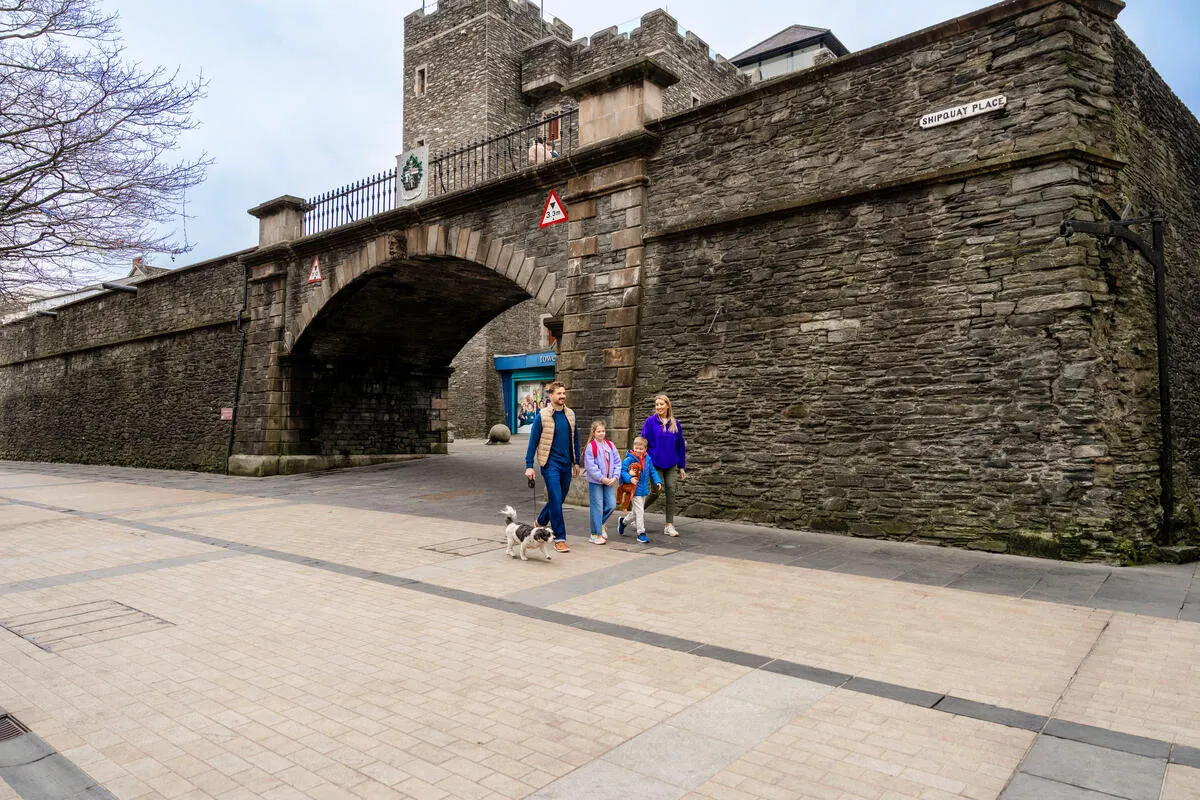
Derry's City Walls: Walking the Most Complete Walls in Europe
Derry's city walls are the most complete set of city walls in Ireland or Britain. Built between 1613 and 1619, never breached, never demolished, still standing at their full 1.5 km circuit with the original gates and bastions intact. You can walk the top of the walls in about 45 minutes, looking down into the Bogside on one side and the city centre on the other, and in that single walk you get a physical sense of the city's history that no museum can replicate. Free to walk at any time. If you do nothing else in County Derry, do this.
What to Expect
Start at Bishop's Gate on the south side and walk clockwise. This puts the Bogside on your left as you reach the western section, which is where the walls become most historically charged. The cannons are still in position on the bastions, pointing outward. The views from the top explain immediately why this site was strategically vital - the city sits on a hill with the Foyle below, and the walls gave a clear line of sight in every direction.
The western stretch overlooking the Bogside is where you can see the murals from above. The "You Are Now Entering Free Derry" gable end is visible from the walls. This section is heavy with history - it was from here that events of Bloody Sunday in 1972 were witnessed. A guide transforms this stretch from a nice walk into something genuinely powerful.
The northern section passes the Tower Museum and looks out over the Guildhall and the river. The east side overlooks the Fountain, the last remaining Protestant enclave within the walls. The contrast between the two sides - visible and tangible from the top of the walls - tells the story of the city without anyone needing to explain it.
The honest negatives: the walls are not wheelchair accessible at any point. The steps up are steep and the surface is uneven - slippery when wet. Without a guide, the historical layers are invisible - you see cannons and nice views but miss why it matters. There is no signage worth speaking of on the walls themselves. And on cruise ship days, the walls can be uncomfortably crowded.
How to Get There
The walls are in the centre of Derry city. From any central hotel, you walk. Bishop's Gate is the most common starting point - 5 minutes from the Diamond (the city's central square).
From Belfast, Derry is about 1.5 hours via the A6. From Dublin, about 3 hours via the N2/A5 through Omagh. City of Derry Airport is 15 minutes away but has limited routes.
City centre parking is available at Foyleside Shopping Centre or William Street NCP. The bus station on Foyle Street is a 5-minute walk from the walls.
Combine the walls with the Bogside Murals (10 minutes walk down from the walls) and the Tower Museum inside the walls for a full morning of Derry's history.
Where to Stay Nearby
Stay in Derry city centre - everything is walkable. See the County Derry hub for full accommodation options.
Inside the walls on Bishop Street. The best hotel in the city - beautifully restored, excellent bar, rooftop terrace with city views.
Check availability →What Else is Nearby
A Note on the History
The walls were built between 1613 and 1619 by the Irish Society, a consortium of London guilds who funded the Plantation of Ulster. They are the reason the city's official name is Londonderry - the London prefix comes from the London guilds, not from the English capital. The walls were besieged three times during the Williamite War, most famously during the Siege of Derry in 1689, when the city held out for 105 days against Jacobite forces. The cry "No surrender" from that siege became one of the most politically charged phrases in Northern Irish history.
The walls survived the Troubles intact. Their role shifted from military to symbolic - they physically divided the city, with the nationalist Bogside outside the walls and the unionist city centre within. Walking the walls today, you walk that line.
Frequently Asked Questions