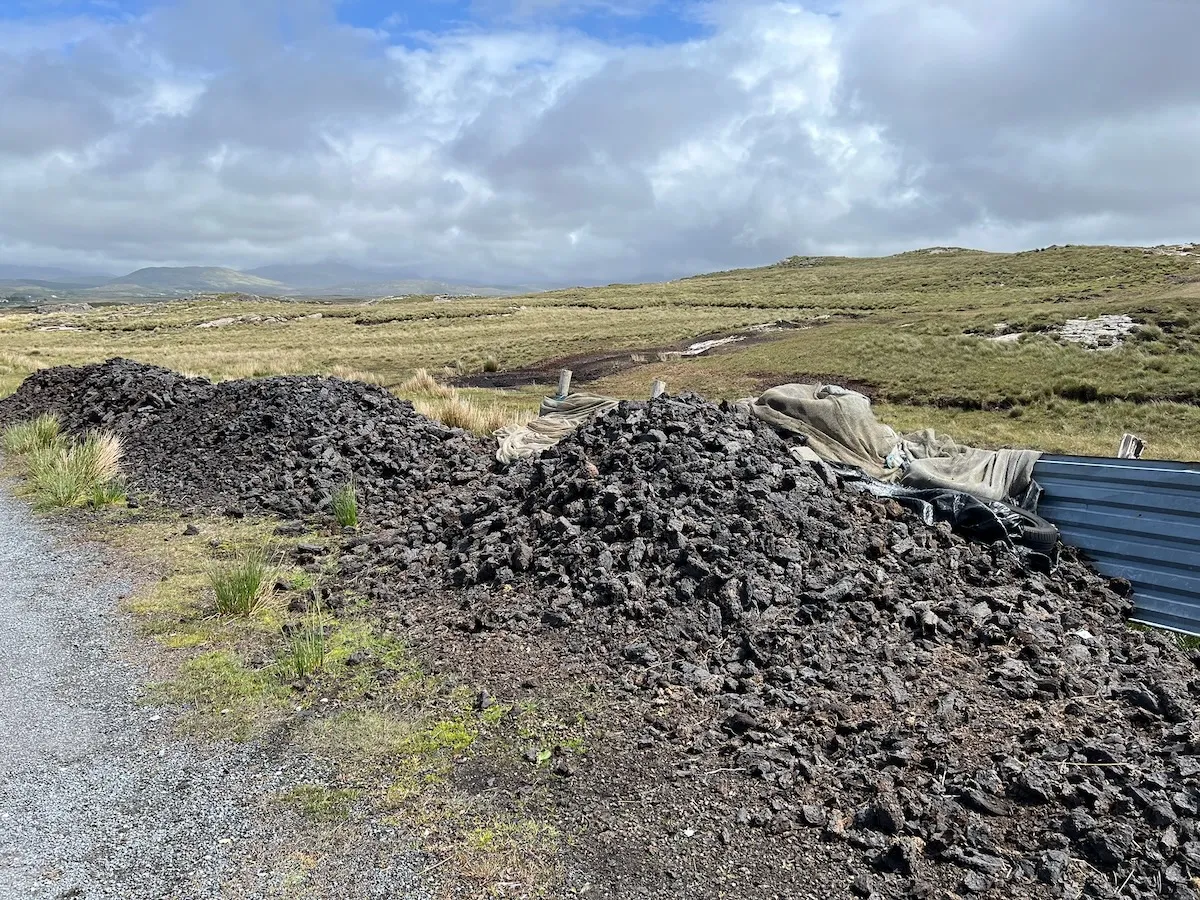
Connemara is not a town or a single attraction. It is an entire landscape - roughly 2,000 square kilometres of bog, mountain, lake, and coastline in western County Galway. The N59 from Galway city through Oughterard, Maam Cross, and on to Clifden is the spine of it. Most visitors drive it in a day trip from Galway and see plenty. But Connemara rewards slowness in a way that few parts of Ireland can match.
The mistake most people make is treating it as a scenic drive. You tick off Kylemore Abbey, photograph the Twelve Bens, and head back to Galway for dinner. That gives you the postcard version. The real Connemara is the side roads - the Sky Road above Clifden, the coral strand at Ballyconneely, the silence of the Inagh Valley at dusk. You need at least two days. Three is better.
What to Expect
The N59 from Galway to Clifden takes about 90 minutes without stops. You will stop. The road passes through Oughterard - a fishing town on Lough Corrib worth a coffee - before climbing into open bogland at Maam Cross. This is the junction where you choose: north toward Leenane and Killary Fjord, or west toward the coast and Clifden.
West is where most people go, and rightly so. The landscape shifts from brown bog to green valleys to rocky coastline within 30 kilometres. The Twelve Bens mountain range sits to the north, reflected in a chain of small lakes. On a clear day the light here is extraordinary. On a grey day - which is most days - it has a moody beauty that photographs better than sunshine.
Clifden is the unofficial capital of Connemara. A small town of colourful shopfronts, good restaurants, and excellent pubs. It fills up in summer but never feels overwhelmed. From Clifden, the Sky Road is a 16-kilometre loop that climbs to over 150 metres with views of the offshore islands. This is the single best short drive in Connemara and most visitors miss it entirely because it is not on the N59.
South of Clifden, Roundstone is quieter and arguably prettier. Dog's Bay and Gurteen Bay sit back to back - two white-sand beaches made of coral fragments, not sand. They are genuinely beautiful and genuinely cold for swimming. The water temperature rarely tops 16 degrees even in August.
Connemara National Park near Letterfrack has the Diamond Hill trail - a 6.2-kilometre loop that climbs to 442 metres. The views from the top cover the Twelve Bens, the Atlantic, and on a clear day, the Aran Islands. Allow 2-3 hours. The visitor centre at the base is free, well run, and has a decent cafe.
Is It Worth It?
Two thousand square kilometres, and the mistake is treating it as a drive. The N59 from Galway through Oughterard and Maam Cross to Clifden is the spine, but the Sky Road above Clifden and the coral strand at Ballyconneely are where it stops being a postcard. The National Park is free and Kylemore Abbey is EUR 16. A full day is the minimum and two to three days does it justice.
The catch: Connemara's weather is terrible. The west coast catches everything the Atlantic throws at it. Rain is not a possibility, it is a certainty. You will get wet. Bring proper waterproofs and plan indoor alternatives. Pack accordingly. The upside is that the rain clears fast and the post-rain light is often the best light you will see anywhere in Ireland.
How to Get There
From Galway city, take the N59 west. The drive to Clifden is 80 kilometres and takes about 90 minutes. This is not a motorway - it is a two-lane road through open countryside, and you will be behind a tractor at some point. Accept it.
Bus Eireann route 419 runs from Galway to Clifden three times daily. It takes about two hours and costs around EUR 15 each way. Useful if you want to base yourself in Clifden without a car. But Connemara without a car means missing the best bits - the Sky Road, Roundstone, the Inagh Valley. Renting a car is strongly recommended.
From Dublin, it is a 3.5-hour drive via the M6 to Galway, then the N59. You could do it as a very long day trip but you would be exhausted. Stay overnight in Clifden or Roundstone instead.
Where to Stay Nearby
Clifden is the obvious base - the most choice of hotels, restaurants, and pubs. Roundstone is quieter and closer to the beaches. For the full County Galway accommodation picture, the county hub has more options.
Right in the centre of Clifden with spacious rooms and good food. The old railway station building has character. Ideal base for the Sky Road and Derrygimlagh.
Check availability →What Else is Nearby
A Note on the History
Connemara was one of the areas hardest hit by the Great Famine of the 1840s. The population collapsed and never recovered. The stone walls and abandoned cottages you see across the bog are not decorative - they are the remains of a community that starved or emigrated. The Connemara Heritage Centre in Letterfrack sits in a former industrial school, itself a dark chapter in Irish social history.
The Irish language survived here when it died in most of Ireland. Connemara is part of the Gaeltacht - the officially Irish-speaking region. You will see bilingual signs and hear Irish spoken naturally in shops and pubs, particularly around Carraroe and Spiddal. It is not a tourist performance. It is how people live.
Frequently Asked Questions