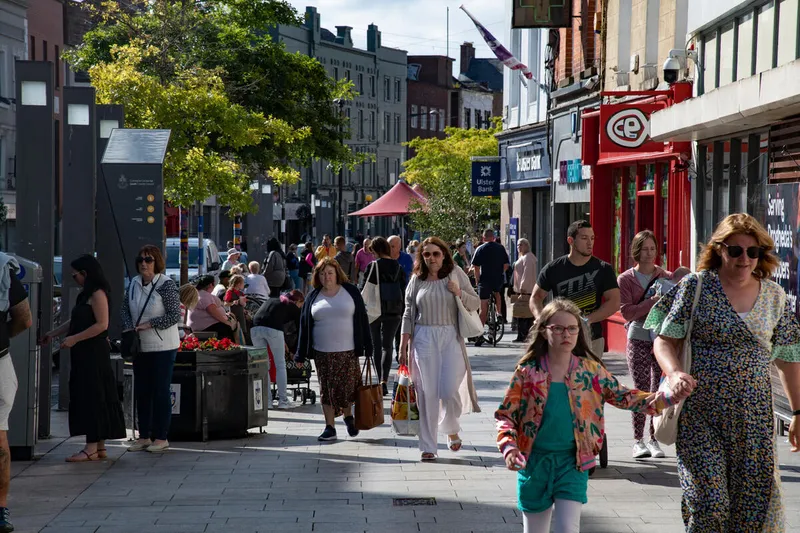
Drogheda is the largest town in County Louth and the natural gateway to the Boyne Valley. It sits on the River Boyne about 50 km north of Dublin, which means most visitors drive through it on the way to Newgrange without stopping. That is a mistake. Drogheda has a Norman fort with panoramic views, medieval gates that survived Cromwell, and a craft beer scene that has quietly become one of the best in Ireland.
The town has layers of history stacked on top of each other. Vikings, Normans, Cromwell, the Battle of the Boyne - they all left their mark. But Drogheda is not a museum piece. It is a working town with good restaurants, independent shops, and enough going on to fill a solid day before or after the Boyne Valley sites.
What to Expect
Start at Millmount, the Norman motte and Martello tower on the hill south of the river. The views from the top take in the town, the river, and the Boyne Valley stretching inland. The Millmount Museum in the old barracks below is small but well done - the industrial heritage section and the Cromwell display are particularly good. The craft workshops in the courtyard are worth a look.
Walk down into town and find St Laurence's Gate, a 13th-century barbican gate that is one of the finest surviving medieval gates in Ireland. It survived Cromwell's siege of 1649, which is more than can be said for much of Drogheda. The Highlanes Gallery nearby is free and has a decent collection of Irish art in a beautifully restored former church.
The craft beer scene is the unexpected highlight. Bru Brewery is based just outside town and their taproom is worth the visit. Jack Cody's Brewing Company distributes from Drogheda. Several pubs in town carry local craft beers that you will not find in Dublin. The food scene has improved enormously in recent years - the restaurants around West Street and Narrow West Street are the ones to look for.
The Battle of the Boyne visitor centre at Oldbridge is 5 km west of town and covers the 1690 battle that decided the fate of the British and Irish crowns. The grounds are free to walk. The visitor centre costs EUR 5 and the exhibition is better than you might expect.
Is It Worth It?
Free to walk, fifty kilometres from Dublin, and almost everyone drives straight through on the way to Newgrange. Drogheda has a Norman fort at Millmount with a panorama over the whole town, medieval gates that came through Cromwell, and a craft beer scene that has quietly become one of the best in the country. The Millmount Museum is EUR 7 and the Battle of the Boyne visitor centre EUR 5. It works as the base for the Boyne Valley rather than a stop on the way to it.
The catch: Drogheda is a real town, not a postcard. Parts of the centre are scruffy and some of the approaches are dominated by retail parks and traffic. It does not have the instant charm of Carlingford or Kilkenny. You need to know where to look, and the highlights are spread across town rather than concentrated in one area.
How to Get There
Drogheda is 50 km north of Dublin on the M1 motorway - about 45 minutes by car. Irish Rail runs frequent trains from Dublin Connolly to Drogheda MacBride station (30-40 minutes, from EUR 12 return). Bus Eireann route 100/101 also runs regularly from Dublin.
From Drogheda, Newgrange is 10 km west, Monasterboice is 10 km north, and Carlingford is 45 minutes northeast. Drogheda makes a practical base for all the Boyne Valley sites.
Where to Stay Nearby
Drogheda has practical, good-value accommodation. It works well as a base for the Boyne Valley sites and the northern Louth coast.
Georgian house with castle tours and local food tastings. The cooking school is worth booking even if you don't stay. Best accommodation in Louth.
Check availability →What Else is Nearby
A Note on the History
Drogheda was founded by the Vikings in 911 and grew into one of the most important towns in medieval Ireland. The Normans fortified it heavily - the town had walls, gates, and a castle. St Laurence's Gate is the main survivor. The town had its own parliament and mint. It was, for centuries, one of the key English-controlled towns in the Pale.
The siege of 1649 is the darkest chapter. Cromwell's forces breached the walls and massacred an estimated 3,500 people - soldiers and civilians. It remains one of the most controversial events in Irish history. Millmount Fort, which the defenders held longest, still stands above the town as a reminder.
Frequently Asked Questions