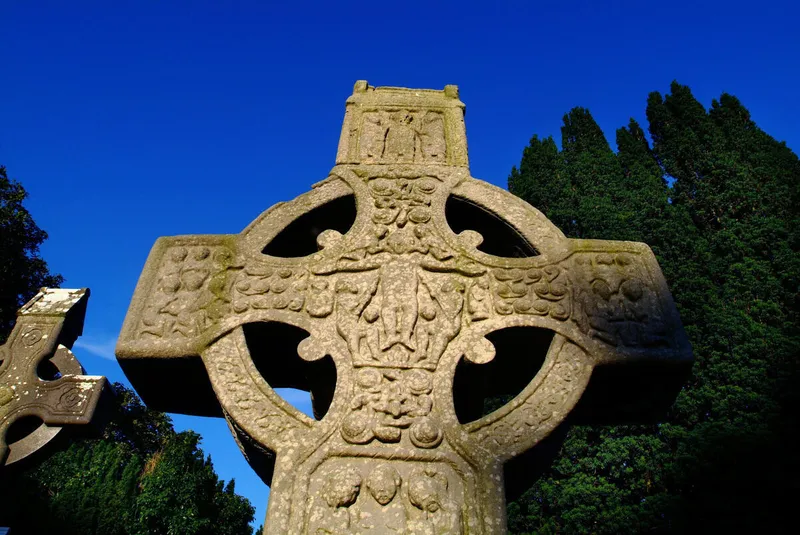
Monasterboice is a 5th-century monastic site in north County Louth with two of the finest high crosses in Ireland. It is free, open dawn to dusk, and barely signposted. You could drive past without knowing it was there, which is exactly what most people do. That is their loss.
Muiredach's Cross is the star - a 10th-century scripture cross with biblical scenes carved in such detail that scholars have been arguing about the panels for over a century. The round tower stands nearby, the graveyard is still in use, and the whole site sits in farmland with nothing around it. No visitor centre, no gift shop, no admission charge. Just the stones and the silence.
What to Expect
The site is compact. You walk through a gate into a graveyard surrounded by a low wall, and the high crosses are right there. Muiredach's Cross is the tallest, standing over 5 metres. The carvings cover both faces and the sides - Old Testament scenes on the east face, New Testament on the west. The detail is extraordinary given these were carved in stone over a thousand years ago. Adam and Eve, Cain and Abel, the Last Judgement, the arrest of Christ. Bring binoculars or a zoom camera to see the upper panels properly.
The West Cross is taller but more weathered. A third cross, the North Cross, is a stump. The round tower is intact to about 28 metres but you cannot enter it. Two ruined churches sit within the enclosure, both medieval. The graveyard around them is still active - modern headstones sit alongside medieval grave slabs.
The atmosphere is the thing. There is no fence, no ticket desk, no audio guide, no one telling you where to stand. You are alone with stones that have been standing here since before the Normans arrived. On a quiet morning with the light coming through the trees, it is one of the most affecting heritage sites in Ireland.
Is It Worth It?
Two of the finest high crosses in Ireland, free, dawn to dusk, and barely signposted. Muiredach's Cross is the reason to stop: a 10th-century scripture cross carved in enough detail that scholars have argued over the panels for more than a century. The round tower stands beside it, the graveyard is still in use, and the whole site sits in farmland off a rural road between Drogheda and Dundalk. Thirty to forty-five minutes, and early or late light does far more for the carving than midday.
The catch: there is no interpretation on site. Without a guidebook or prior research, the cross panels are beautiful but mysterious. A small information board gives the basics but does not explain individual carvings. The site is entirely outdoors and exposed - in rain, it is a wet and brief visit. And the location off a rural road means it is genuinely easy to miss.
How to Get There
Monasterboice is just off the M1 motorway between Drogheda (10 km south) and Dundalk (15 km north). Take the Dunleer exit and follow the signs - they exist but are small. The site is down a narrow lane off the main road. A car is essential.
Most visitors combine Monasterboice with Newgrange and Drogheda as a Boyne Valley day. It works as a 30-minute stop on the way between Dublin and Carlingford.
Where to Stay Nearby
Monasterboice is a stop, not a base. Stay in Drogheda or Carlingford and drive over.
Georgian house with castle tours and local food tastings. The cooking school is worth booking even if you don't stay. Best accommodation in Louth.
Check availability →What Else is Nearby
A Note on the History
Monasterboice was founded in the 5th century by St Buite, a follower of St Patrick. It grew into an important monastic centre and scriptorium. The high crosses were carved around 900-923 AD - Muiredach's Cross bears an inscription asking for a prayer for Muiredach, probably an abbot of the monastery.
The monastery declined after the Cistercians founded nearby Mellifont Abbey in 1142, drawing monks and patronage away. The site was never completely abandoned - the graveyard remained in use - but by the medieval period the buildings were ruinous. The crosses survived because they were too heavy to move and too sacred to destroy.
Frequently Asked Questions