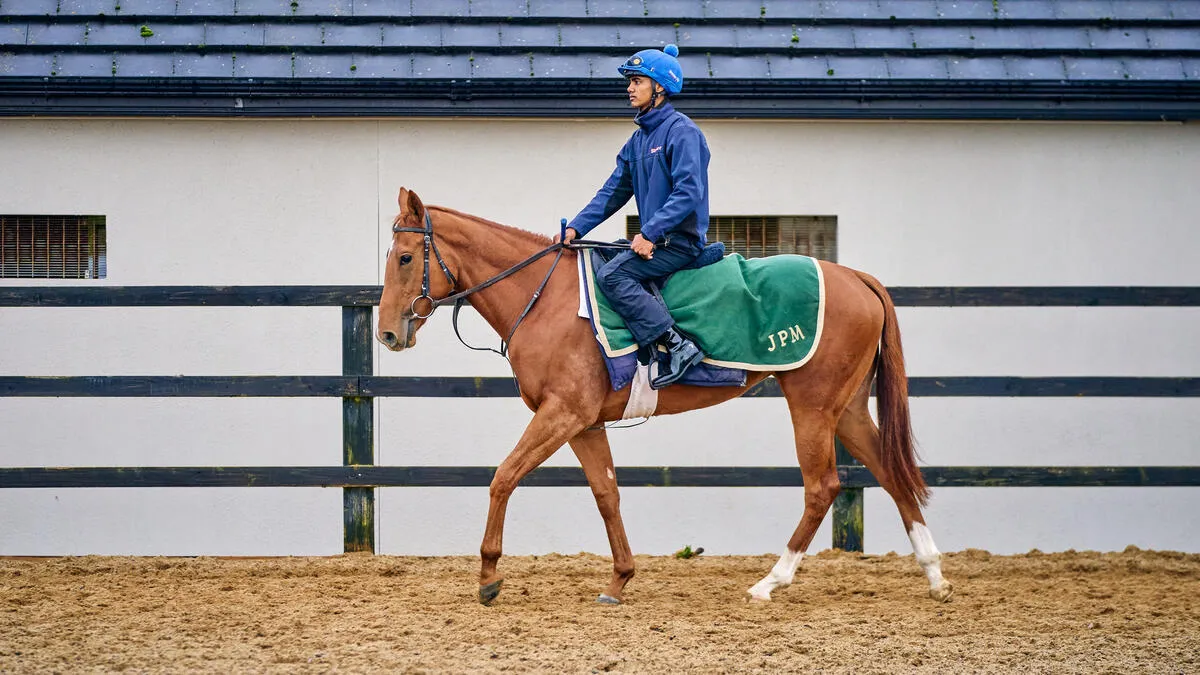
The Curragh is not a town or a village. It is 5,000 acres of open grassland in County Kildare where sheep wander freely and racehorses have trained for centuries. That alone makes it unlike anywhere else in Ireland.
I first came across the Curragh during my university years at Maynooth in the mid-90s. I was heading southwest on the motorway and there it was - this vast, flat expanse with no hedgerows, no walls, no fences. Just green space stretching to the horizon with horses dotted across it.
If you are at all interested in Ireland's horsey heritage, the Curragh is where it all comes together. The racecourse hosts the five Irish Classics. The training grounds produce more Group 1 winners than anywhere else in the country. And on an early morning you can watch strings of racehorses working their gallops right from the roadside.
It is 40 minutes from Dublin. You do not need to rearrange your itinerary to fit it in.
What to Expect
The scale catches you off guard. You drive through Kildare's hedged countryside and then the landscape opens into this enormous treeless plain. Sheep graze on common land - they have ancient grazing rights here - and the whole place has a stillness unusual for somewhere so close to Dublin.
If you are taking the motorway towards the southwest, you pass through Kildare anyway. The Curragh is not a detour. It is a stop you can make without losing time on your route.
The racecourse is the centrepiece. It hosts all five Irish Classics, and the atmosphere on a big race day is properly electric. The Irish Derby in late June draws the biggest crowds. I would actually recommend a smaller midweek meeting if you want to enjoy it without being shoulder-to-shoulder. You get closer to the action and the queues are shorter.
Behind-the-scenes tours are worth booking if they are running. You get access to the jockeys' changing room, the weigh room, and the VIP balcony overlooking the Curragh plains.
The morning gallops are the real insider experience. Before 9am, strings of thoroughbreds work across the training grounds. No ticket required. No crowds. Just you and several million euros worth of horseflesh thundering past. Most visitors to Ireland have no idea this is even possible.
The military camp is visible across the plain too. The Irish Defence Forces have been based here since 1922. You cannot visit it, but it adds to the sense that this landscape has been important for a long time.
Is It Worth It?
Five thousand acres of open grassland with no fences, and no charge to stand on it. Sheep graze the Curragh under ancient common rights and racehorses have trained here for centuries, on a treeless plain that opens out of hedged Kildare countryside right beside the M7. The racecourse hosts all five Irish Classics, entry starts at EUR 15 and under-18s go free. Behind-the-scenes tours, when they are running, get you into the jockeys' changing room, the weigh room and the VIP balcony over the plains.
My gripe is that outside of race days, the racecourse area itself is fairly dead. There is no cafe, no visitor centre, nothing to anchor a visit around. Time your trip to a race meeting or go early enough to catch the training gallops.
How to Get There
The Curragh sits alongside the M7 motorway. From Dublin, exit at Junction 12 or 13. The drive takes about 40 minutes in clear traffic.
By train, Kildare station is on the Dublin-Cork and Dublin-Limerick lines. Irish Rail runs regular services from Heuston Station, about 40 minutes. From Kildare station, the racecourse is a 10-minute taxi ride. On race days, a complimentary shuttle bus runs from Kildare town and station to the racecourse gates.
The Curragh is 5 minutes from Kildare Village. You could combine a morning at the races with an afternoon of shopping.
For visitors doing a day trip from Dublin, the Curragh works well as part of a wider Kildare loop. A rental car gives you the most flexibility, especially for catching the early morning training gallops.
Where to Stay Nearby
There is no accommodation on the Curragh itself. Kildare's main towns are all within 15 minutes. Naas has the best range of hotels and restaurants.
Four-star hotel in Naas on its own grounds with a decent spa. 15 minutes from the Curragh.
Check availability →What Else is Nearby
A Note on the History
The Curragh has been used for horse racing and military training since at least the 17th century. The plain itself is far older. Archaeological evidence suggests it was grazed and settled in the Bronze Age. The name comes from the Irish "Currach", meaning a marshy or wet place.
The common grazing rights here are genuinely ancient. Local sheep farmers can graze their flocks on the plain without charge, and they do. It is one of the few places in Ireland where communal land use has survived intact.
The British Army established a permanent camp here in the 1850s. After independence in 1922, the Irish Defence Forces took over. The camp remains an active military base.
For racing, the Curragh is to Ireland what Newmarket is to England. The racecourse was formally established in 1727, making it one of the oldest in the world. Every Irish Classic has been run here.
Frequently Asked Questions