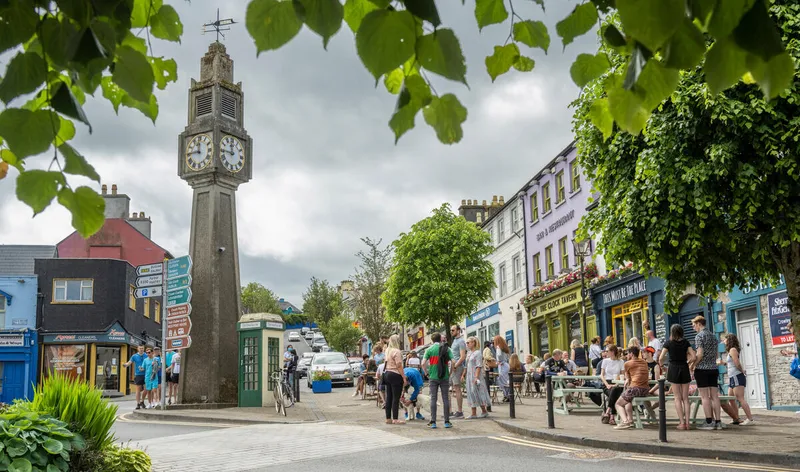
Westport is one of the few planned Georgian towns in Ireland and it shows. The streets are clean, the buildings are well kept, and the tree-lined Mall running alongside the Carrowbeg River gives the town a sense of order that most Irish towns lack. It's County Mayo's main tourist base for good reason.
What makes Westport different from other attractive Irish towns is that it actually delivers on the basics. The restaurants are genuinely good. The trad music is real - not a performance for tourists. The location is ideal for reaching Clew Bay, Croagh Patrick, Achill Island and the Great Western Greenway. And unlike some well-known spots on the Wild Atlantic Way, it has the accommodation and infrastructure to handle the visitor numbers.
You could spend a comfortable three days here without running out of things to do.
What to Expect
The Octagon is the centre of town - a small square where several streets converge. From here you can walk to most things within ten minutes. Bridge Street is where the pubs and restaurants cluster, and it gets lively from mid-afternoon onwards in summer.
Matt Molloy's is the most famous pub in town. Matt Molloy is the flutist from The Chieftains, and his pub hosts trad music sessions nightly. The music is in the back bar - arrive by 9pm if you want a seat. The front bar is a perfectly good pub in its own right. The Porter House also runs nightly trad sessions and won Best Music Pub in 2022. For non-trad evenings, there are several good wine bars and craft beer spots.
The Mall is Westport's best feature for a morning walk. It's a tree-lined boulevard following the Carrowbeg River through the centre of town. Designed by James Wyatt in the 18th century, it still functions as intended - a place to walk and sit. The stone bridges and mature trees make it one of the most pleasant streets in the west of Ireland.
Westport House is a ten-minute walk from the town centre. The house itself is a 300-year-old estate with original furnishings, and the guided tours are well done. Outside, the Pirate Adventure Park is aimed squarely at families with younger children - rides, a zip line, pedal boats. It's a separate ticket and not of interest to adults without children.
For food, An Port Mor on Bridge Street serves the best seafood in town. Sage is a reliable option for modern Irish cooking. The Helm at Westport Quay is worth the ten-minute walk for waterfront dining. Booking is essential at all three in summer.
The main downside is that Westport knows it's popular. Accommodation prices in July and August are steep, and the town gets crowded on summer weekends. Parking in the centre can take time.
How to Get There
Westport is 260km west of Dublin, roughly 3.5 hours by car via the N5. The road is good quality most of the way, though the final stretch through Castlebar can be slow. From Galway, it's about 1.5 hours on the N17 and N5.
Irish Rail runs a direct train from Dublin Heuston to Westport. The journey takes about 3.5 hours and runs several times daily. The station is a short walk from the town centre. This is one of the more scenic rail routes in Ireland.
Bus Eireann route 21 connects Dublin to Westport (4 hours). Citylink also runs a Galway-Westport service. Both stop in the town centre.
Ireland West Airport Knock is 55 minutes east. If you're flying in, renting a car at the airport is the most flexible option for exploring Mayo. Without a car, you can reach Westport by bus from Knock but onward travel to Achill, Clew Bay and Croagh Patrick requires either a car or organised tours.
Where to Stay Nearby
Westport has the best accommodation range in County Mayo. From four-star hotels on the Mall to B&Bs on the edge of town, you'll find something at most price points. Book early for July and August - the town fills up.
Four-star on the Castlebar Road, walking distance to everything. Spa, pool, and a reliable restaurant. Popular for a reason.
Check availability →What Else is Nearby
A Note on the History
Westport was designed in the 1770s by the architect James Wyatt, commissioned by the Browne family who owned the Westport estate. Unlike most Irish towns, which grew organically around a crossroads or a church, Westport was planned from scratch. The Mall, the Octagon, and the grid of streets radiating outward are all deliberate.
The Browne family were one of the few Catholic aristocratic families to hold onto their land through the Penal Laws. Westport House, their seat, has been open to the public since the 1960s. The original house dates to the 1730s and sits on the foundations of an earlier O'Malley castle - Grace O'Malley's family.
During the Great Famine, Westport's population dropped dramatically. The workhouse on the Castlebar Road processed thousands. Today, the town's prosperity makes those years feel distant, but the history is there if you look for it.
Frequently Asked Questions