Getting around Ireland is easier than you might think, but your choice of transport will shape your entire trip. I've travelled this island by car, bus, train, and occasionally thumb, and each method has its place depending on what you want to see and how much flexibility matters to you.
The short version? If you want to explore beyond Dublin and Belfast, you'll need a car. Ireland's most beautiful places aren't on train lines, and whilst buses reach more destinations than trains, they're slow and infrequent once you leave major routes. But if you're sticking to cities or following the main tourist corridor, public transport works fine and saves you the stress of driving on the left.
Here's what you need to know about each option, plus what I'd recommend based on different travel styles.
Driving in Ireland: Freedom at a Price
Renting a car gives you the freedom to stop whenever you want, explore remote coastal roads, and visit places that buses don't reach. It's the only practical way to see the Wild Atlantic Way, the Ring of Kerry, or pretty much anywhere rural at your own pace.
The Reality of Irish Roads
Irish roads aren't difficult, but they're different. You'll be driving on the left, which takes adjustment if you're from a right-hand-drive country. The bigger challenge is the roads themselves - narrow, winding, and bordered by stone walls or hedges that feel uncomfortably close. Motorways are fine, but secondary roads require concentration and patience.
Rural roads often lack hard shoulders. You'll meet oncoming traffic on roads that feel barely wide enough for one car, never mind two. Pulling into hedges or reversing to a wider spot is just part of the experience. Driving in towns means navigating medieval street layouts never designed for cars.
That said, millions of visitors drive here every year without incident. Take it slow, especially for the first day or two, and you'll adjust. The views are worth the effort.
Costs
Car rental starts around £25 to £40 per day for a small car, but prices spike in summer and around holidays. Book early for better rates. Petrol is expensive - expect to pay £1.50 to £1.70 per litre. On a week-long trip covering 1,000km or so, budget £120 to £150 for fuel.
Insurance is where costs add up. Basic coverage is included, but excess can be £1,500 or more. You can buy down the excess for around £10 to £15 per day, or use a third-party policy if your credit card doesn't cover it. Tolls on motorways add another £10 to £20 for a typical trip.
Parking in cities costs £2 to £4 per hour. Dublin is notoriously expensive and difficult - if you're spending several days in the capital, skip the car entirely and pick it up when you leave.
When a Car Makes Sense
A car is essential if you want to:
- Drive the Wild Atlantic Way or coastal routes
- Visit multiple small towns and rural attractions
- Explore at your own pace without checking timetables
- Stay in countryside B&Bs or remote hotels
- Travel as a group (splitting costs makes it economical)
It's less essential if you're only visiting Dublin, Belfast, Galway, and Cork - all of which are connected by decent bus and train services.
For more detail on rental companies, insurance, and driving tips, see our complete guide to car rental in Ireland.
Buses: Cheap, Slow, and Limited
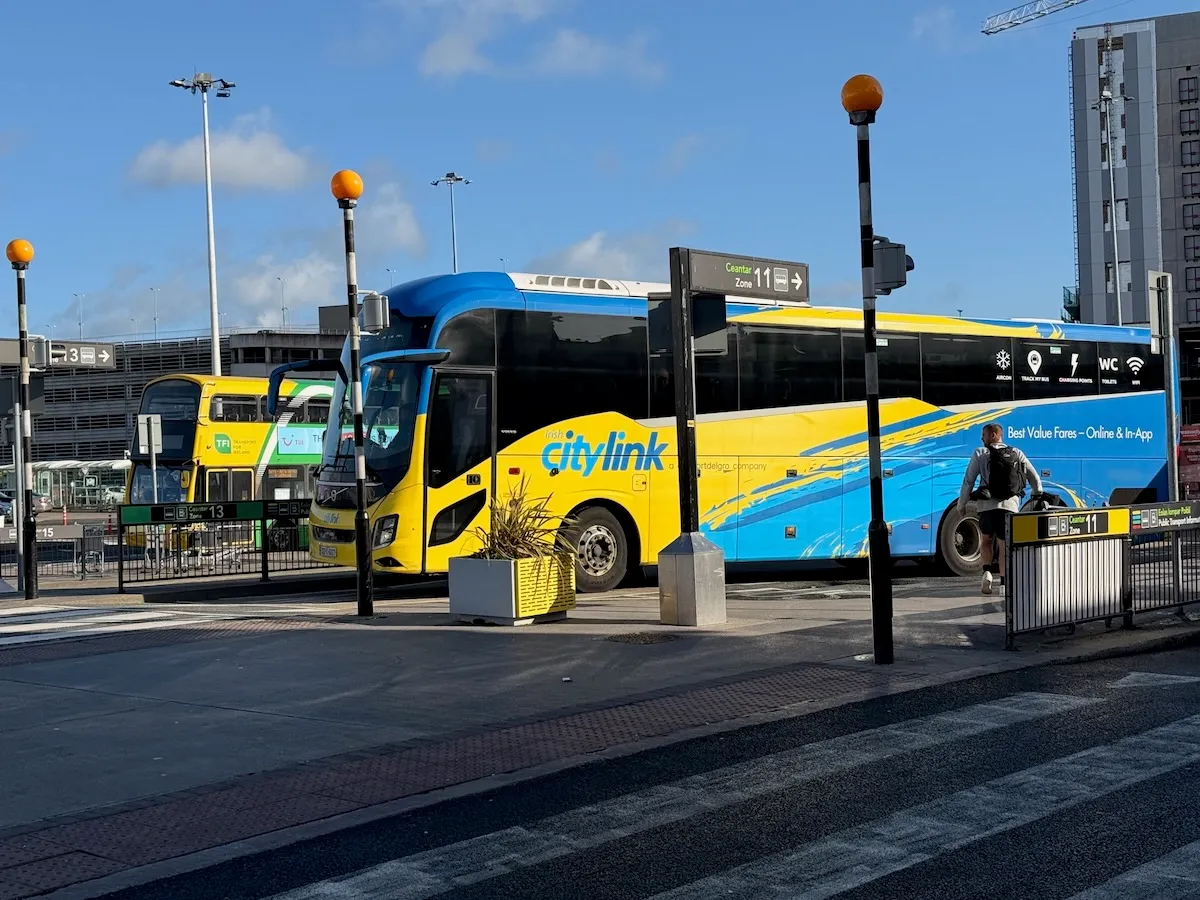
Bus Éireann is the main operator in the Republic, with some routes handled by private companies like GoBus and Aircoach. In Northern Ireland, Translink runs most services. Buses reach more places than trains, including smaller towns and some rural areas, but frequency is poor outside major routes.
The Good
Buses are affordable. Dublin to Galway costs around £15 to £20, compared to £30+ by train. You can buy tickets online or pay the driver (cash or card, though drivers prefer exact change). The buses themselves are modern and comfortable enough.
Direct routes between major cities (Dublin to Cork, Dublin to Galway, Dublin to Belfast) run several times daily and work fine if you're happy with fixed schedules.
The Reality
Once you leave main corridors, buses become impractical. Services to smaller towns might run twice a day, or only on weekdays. If you miss the 9am bus and the next one is at 5pm, that's your day gone. Connections between rural areas without passing through a city hub are rare.
Journey times are long. Dublin to Galway takes 2.5 to 3 hours by car but closer to 3.5 hours by bus due to stops. Getting from, say, Killarney to Donegal requires multiple connections and takes most of a day.
Weekend and holiday schedules often change, and services to tourist spots like the Cliffs of Moher or Dingle Peninsula are seasonal and infrequent.
When Buses Work
Buses make sense for:
- City-to-city travel when you don't need flexibility
- Budget travellers willing to work around limited schedules
- Single long-distance journeys (Dublin Airport to Galway, for example)
They're frustrating if you want to visit multiple rural locations or explore at your own pace.
Trains: Comfortable but Inflexible
Irish Rail (Iarnród Éireann) runs trains in the Republic, whilst Translink operates Northern Ireland's limited network. Trains are comfortable and faster than buses on routes they serve, but the network is small and focused on connecting Dublin to other cities.
Where Trains Go
From Dublin, you can reach Cork, Galway, Belfast, Limerick, Waterford, and Sligo by direct train. That's essentially it. There's no train to Killarney, Dingle, Donegal, the Cliffs of Moher, or most of the west coast. The network is hub-and-spoke, with Dublin at the centre - getting between two non-Dublin destinations often means backtracking through the capital.
Belfast connects to Dublin and Derry, but Northern Ireland's rail network is tiny. You can't train to the Giant's Causeway or the Mourne Mountains.
Costs and Practicality
Trains are more expensive than buses. Dublin to Galway is £30 to £40 for a flexible ticket, though advance fares can be cheaper. First class isn't worth the premium unless you need guaranteed seating or want the slightly nicer carriage.
Trains are faster and more comfortable than buses, and you avoid traffic. Dublin to Cork takes about 2.5 hours by train compared to 3+ hours by bus. You'll also get better views - the line along the coast near Dublin or through the countryside towards Cork is lovely.
But the limited network means trains only work if your destinations happen to align with where trains go. If you're visiting Galway, Dublin, and Belfast, trains are fine. If you want to see the Wild Atlantic Way, trains won't help.
When Trains Work
Trains are ideal for:
- Dublin to Cork, Galway, or Belfast journeys
- Travellers who don't want to drive and are visiting cities only
- Day trips from Dublin (to Killarney via Cork, or Belfast)
They're useless for exploring rural areas or the coast.
Tours and Private Drivers: Let Someone Else Handle It
If you don't want to drive but still want to see beyond cities, organised tours or private drivers are worth considering. Day tours from Dublin, Galway, or Belfast cover popular spots like the Cliffs of Moher, Giant's Causeway, Ring of Kerry, and Wicklow Mountains.
Companies like Wild Rover Tours, Paddywagon, and Rabbie's run full-day coach tours for £40 to £60 per person. You'll visit major sites with a guide, though you're on someone else's schedule and sharing a bus with 40+ people.
Private drivers are the Smart Luxury option. For £250 to £350 per day, you get a car and driver who takes you where you want, when you want. You avoid the stress of driving yourself, and drivers often share local knowledge you wouldn't get otherwise. It's expensive for solo travellers but reasonable for couples or small groups.
Flying Within Ireland: Only for Specific Routes
You can fly between Dublin, Cork, Shannon, Belfast, and a few smaller airports, but it's rarely worth it. Flights are infrequent, and by the time you factor in getting to the airport, security, and baggage, you've lost any time advantage over driving or taking a bus.
The exception is the Aran Islands, where small planes from Galway (via Aer Arann Islands) are faster and sometimes more reliable than ferries. But for mainland travel, ignore domestic flights.
Ferries and Boats: Coastal and Island Travel
Ferries connect the mainland to Ireland's islands - the Aran Islands, Skellig Michael, Rathlin Island, and smaller spots. Most run seasonally (April to October) and depend on weather. Book ahead for Skellig Michael, which is extremely popular and limited by permits.
Ferry times are fixed, so your schedule becomes less flexible. But if you're visiting islands, it's your only option.
Cycling: Scenic but Challenging
Ireland is increasingly bike-friendly, with greenways (off-road cycling paths) opening in places like Waterford, Mayo, and Kerry. Cycling the greenways is lovely, flat, and family-friendly.
Cycling on roads is harder. Traffic can be heavy, roads are narrow, and Irish weather makes multi-day cycling tours a gamble. If you're an experienced cyclist and prepared for rain, the Wild Atlantic Way and quieter coastal roads are stunning. For casual cyclists, stick to greenways or rent bikes for short trips around towns.
What I'd Recommend
Here's what makes sense based on your trip:
You want to see the Wild Atlantic Way, Ring of Kerry, or rural Ireland: Rent a car. There's no practical alternative.
You're visiting Dublin, Galway, Cork, and Belfast only: Use buses or trains. You'll save money and avoid the hassle of city parking.
You want flexibility but don't want to drive: Hire a private driver or join organised day tours from your base city.
You're on a tight budget: Buses are cheapest, but you'll sacrifice time and flexibility.
You're travelling solo and want to meet people: Organised tours give you built-in social opportunities.
You're short on time: A car is fastest and gives you control over your schedule.
Personally, I'd rent a car for anything beyond city-hopping. Irish roads take adjustment, but the freedom to stop at viewpoints, explore back roads, and visit places buses don't reach makes the difference between a good trip and a great one. Just take it slow, especially on narrow rural roads, and you'll be fine.
If you're nervous about driving, consider hiring a car for just part of your trip - base yourself in Dublin without a car, then rent one when you head west. That way you avoid city driving but still get flexibility where it matters.
Practical Tips
Book early: Car rentals, especially automatics, sell out in summer. Reserve at least a month ahead.
Check your insurance: Understand what's covered and what isn't. Damage to tyres, windscreens, and undercarriage is often excluded.
Download offline maps: Mobile signal is patchy in rural areas. Google Maps works offline if you download regions in advance.
Allow extra time: Irish roads are slower than motorways. A journey that looks like 2 hours on a map might take 3 once you account for narrow roads and stops.
Park smart: In cities, use park-and-ride facilities or hotel parking. Street parking is expensive and hard to find.
Don't stress about the left side: It feels strange for a day, then becomes normal. The bigger adjustment is narrow roads, not which side you're on.
Moving Between the Republic and Northern Ireland
The border between the Republic of Ireland and Northern Ireland is invisible - no checkpoints, no passport control, nothing. You'll cross it without noticing unless you're watching for road signs changing from kilometres to miles.
Car rentals from the Republic usually allow travel to Northern Ireland (check your agreement). You'll need separate insurance if you're renting in Northern Ireland and driving south, though most companies include it.
Buses and trains cross the border regularly. The Dublin to Belfast train is direct and straightforward. Currency changes from euros to pounds, but most places near the border accept both.
Final Thoughts
Ireland is small enough that you can see a lot in a week, but transport choices shape what you'll actually experience. A car gives you freedom and access to the best landscapes. Public transport keeps costs down but limits where you can go. Tours and drivers remove the stress but put you on someone else's schedule.
Think about what matters most - flexibility, budget, or convenience - and choose accordingly. And if you're unsure, rent a car. The roads take adjustment, but you'll see far more of Ireland's beauty than you would from a bus window on a fixed schedule.
Ready to plan your route? Check out our 7-day Ireland itinerary for a practical breakdown of what to see and where to stay, or read our guide to driving in Ireland for everything you need to know about rentals, insurance, and road rules.
Affiliate links support this site and come at no cost to you. Thanks for booking through them if you find them helpful.