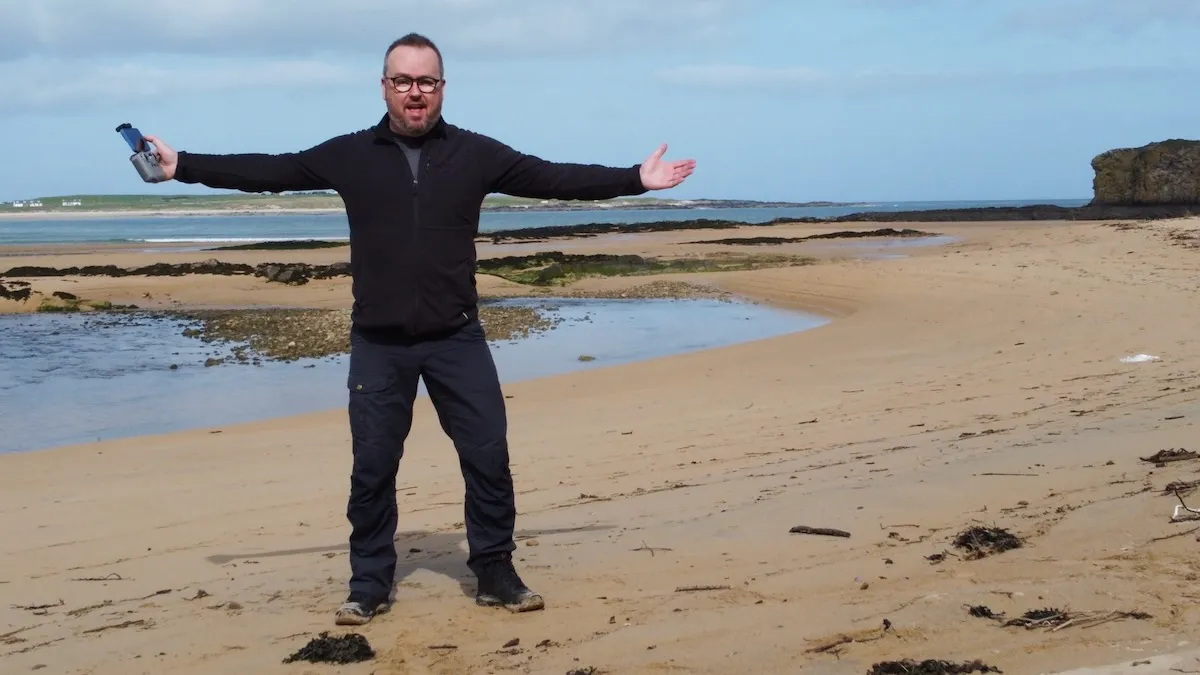
An Ireland road trip is the best way to see the island on your own schedule. You can stop when you want, take the back roads, and wake up in places most tour buses never reach. I've driven every county, including the full Wild Atlantic Way in a camper van, and I still get asked the same things by US and Canadian visitors: Is driving on the left really that hard? Do I need a manual? What about tolls and fuel? This guide answers those questions with the practical logistics you need before you go.
This guide covers: Choosing your route, driving on the left, manual vs automatic, Irish road types, distances and drive times, fuel and tolls, and what to pack. For picking up the car, insurance, and where to rent, see my full guide to car rental in Ireland.
Disclosure: This post contains affiliate links. If you book through them, I earn a small commission at no extra cost to you. Full disclosure policy.
Why Drive in Ireland?
Public transport works well in Dublin and between major cities, but once you leave the main corridors you're on your own. The Wild Atlantic Way, the Cliffs of Moher, the Dingle Peninsula, and most of the north aren't served by trains. Buses exist but timetables are built for locals, not for visitors who want to stop at a viewpoint or spend an extra hour in a village. A rental car gives you freedom and is the only realistic way to do a classic 7-day Ireland itinerary or a 10-day loop without a tour.
If you're nervous about driving, you're not alone. Most first-timers adapt within a day or two. The tips below are what I tell friends before they land.
Choosing Your Route
Your route depends on how many days you have and what you want to see. Two patterns work well for first-time visitors.
Classic south and west loop: Dublin to Kilkenny, Kerry (Ring of Kerry or Dingle), Cliffs of Moher, Galway, back to Dublin. This is the backbone of my 7-day Ireland itinerary and my 10-day Ireland itinerary. You get coast, mountains, and cities without crossing the island twice.
Adding the north: If you have 10 days or more, add Belfast, the Causeway Coast, and the Giant's Causeway. The north has its own character and the Antrim coast is one of the best drives on the island. My Northern Ireland guide covers where to stay and what to see.
Best time of year: May, June, and September give you long daylight hours and fewer crowds. My best time to visit Ireland guide breaks it down by month.
Driving on the Left: What to Expect
You've heard it a hundred times: Ireland drives on the left. Here's what actually helps.
Give yourself a quiet first drive. Don't pick up the car at Dublin Airport and immediately tackle city traffic. Either take a bus or taxi into Dublin and pick up the car on Day 2 or 3 (after you've seen the city), or pick up at the airport and drive straight out on the M50 to a quieter area. My 7-day and 10-day itineraries both assume you don't need a car in Dublin for the first day or two.
Roundabouts are your friend. Ireland uses roundabouts everywhere. Remember: you enter by turning left and giving way to traffic already on the roundabout (coming from your right). Once you're on, you're flowing with everyone else. It feels odd at first, then it clicks.
Narrow roads. Outside the motorways and main national routes, you'll meet single-lane roads with passing places. Slow down, pull in when you see a passing bay or when someone flashes you, and don't rush. On very narrow boreens (farm lanes), one car may need to reverse. The person nearest a passing place usually reverses.
Patrick's Tip: On narrow roads, the car closest to a passing bay or wider spot reverses. If you're not sure, a quick wave or flash of the lights usually sorts it. Locals are used to visitors; no one expects you to be perfect.
Speed limits. They're in kilometres per hour. Motorways 120 km/h, national roads 100 km/h, regional roads 80 km/h, and in towns 50 km/h or 30 km/h. Signs are white with a red circle. Stick to them: speed cameras and Garda checks are real.
Manual vs Automatic
Most rental cars in Ireland are manual transmission. If you're from the US or Canada and only drive automatic, you have two choices: book an automatic well in advance, or learn to drive manual before you go. Do not assume you'll "pick it up" on the way from the airport. Shifting with your left hand while staying on the left side of the road in an unfamiliar car is a lot to handle at once.
Book an automatic early. Automatics are in shorter supply and cost more. Compare car rental prices here and filter for automatic. Book as soon as your dates are set, especially for summer.
If you're comfortable with manual, you'll have more choice and often lower prices. Just confirm the car type when you book and again at pickup.
Irish Road Types: Motorways, National Roads & Boreens
Motorways (M) are dual carriageway, signed in blue. The M50 rings Dublin; the M7/M8 runs to Limerick and Cork; the M4 goes west to Galway. They're straightforward and feel familiar.
National roads (N) are the main arteries between towns. Some are dual carriageway, many are single carriageway with occasional overtaking lanes. Speed limit 100 km/h unless signed otherwise.
Regional and local roads (R, L) get narrower. These are the roads that take you through villages, along the coast, and into the countryside. Expect bends, hedges, and the occasional sheep or tractor.
Boreens are unclassified lanes, often single track with grass up the middle. You'll meet them on peninsulas, in the Burren, and in rural areas. Go slow, use passing places, and enjoy the fact that you're somewhere most tourists never see.
Patrick's Tip: Google Maps and Apple Maps work well for navigation, but they can suggest shortcuts down farm lanes. If the road looks like a driveway and your gut says no, take the longer route. You'll still get there.
Distances and Drive Times
Ireland is small, but roads are rarely straight and speed limits are lower than on US interstates. Plan for roughly 50-60 km per hour average on national and regional roads when you include stops and bends.
Don't pack more than 3-4 hours of driving in a single day if you want time to stop. My 10-day Ireland itinerary keeps most driving days under 3.5 hours for that reason.
Fuel: Petrol, Diesel & Where to Fill Up
Petrol is "gas" or "unleaded"; diesel is diesel. Rental cars are usually diesel in Ireland (better fuel economy). Check the cap or ask at pickup. Putting the wrong fuel in is expensive and dangerous; if in doubt, ask.
Pay at the pump is common. You can use a card or, at many stations, pay inside. In rural areas, some smaller stations may prefer card over large notes. Fill up before you head into remote peninsulas or the north; stations are fewer and farther between.
Prices vary by location and brand. As of 2026, expect roughly €1.50-1.70 per litre for petrol and diesel (check current rates locally). Republic of Ireland uses euros; Northern Ireland uses pounds sterling. If you're crossing the border, see my guide to credit cards and money in Ireland.
Tolls: M50 and Other Motorways
M50 (Dublin ring road): If you use the M50 between junctions 6 and 7, you must pay the toll. There are no toll booths; your licence plate is photographed. You have until 8pm the following day to pay online at eflow.ie or by phone (0818 501050 or +353 1 461 0122). Cost for a car is around €3.80 (pay-as-you-go). If you don't pay in time, you'll get a penalty notice. Set a reminder on your phone as soon as you've used the M50.
Other tolls: The M3 (Dublin-Cavan), M4 (Dublin-Galway), M6 (Galway-Ballinasloe), M7/M8 (Dublin-Limerick-Cork), and others have traditional toll plazas where you pay with card or cash. Amounts are usually €2-3 per car. Keep some change or a card handy.
Patrick's Tip: If you're doing a lot of motorway driving in the Republic, check eflow.ie for a visitor/tourist account. You can pre-register your rental and sometimes get slightly lower rates and easier payment.
What to Pack for the Road
A few things make an Ireland road trip smoother: layers (weather changes fast), a phone holder for the car, and a plug adapter if you're charging devices. I've put together a full Ireland packing list for your whole trip; for the car specifically, make sure you have:
- Driver's licence: You need a valid licence from your home country. An International Driving Permit (IDP) is recommended by some rental companies and required by others; check when you book. See car rental in Ireland for details.
- Phone and charger: For maps and emergency calls.
- Cash and card: Some rural car parks, tolls, or small cafes prefer cash. My credit cards in Ireland guide covers what works where.
Where to Stay Along the Way
Base yourself in a few spots rather than moving every night. Two nights in Dublin, two in Killarney or Dingle, two near the Cliffs of Moher or Doolin, two in Galway: that pattern keeps driving manageable and gives you time to explore. I've written where to stay in Dublin, where to stay in Galway, and where to stay in Northern Ireland to help you choose. Search hotels and apartments across Ireland.
Summary: Your Ireland Road Trip Checklist
- Route: Pick a loop that matches your days (e.g. 7-day or 10-day itinerary).
- Car: Book early, choose automatic if you need it, and read my car rental guide for insurance and pickup tips. Compare prices here.
- Driving: Left-hand side, roundabouts (give way to the right), narrow roads (use passing places). Take the first day easy.
- Tolls: Pay M50 by 8pm the next day at eflow.ie; other tolls are pay-at-plaza.
- Fuel: Fill up before remote areas; diesel is common for rentals.
- Packing: Licence (and IDP if required), phone, charger, layers. Full list: Ireland packing list.
An Ireland road trip is one of the best ways to see the island. Plan your route, book your car, and then enjoy the drive. If you've got questions about itineraries, best time to visit, or getting from Dublin Airport to the city, I've got guides for those too.
Frequently Asked Questions
How many days do you need for an Ireland road trip?
Seven days is enough for a classic loop (Dublin, south and west, back to Dublin). Ten days gives you more breathing room and time for the Aran Islands or Connemara. Two weeks lets you add the north and Donegal. My 7-day and 10-day Ireland itineraries are built for first-time visitors.
Is it difficult to drive in Ireland?
Driving on the left and narrow roads take some getting used to, but most visitors adapt within a day or two. Stick to quiet roads for your first drive, use passing places on narrow lanes, and don't rush. Roundabouts are everywhere; give way to traffic on your right.
Do I need an automatic or manual car for Ireland?
You can do either. Most rentals are manual; automatics are fewer and cost more, so book early if you need one. Don't try to learn manual on arrival while also adjusting to left-hand driving.
How do I pay the M50 toll in Ireland?
The M50 uses camera-based tolling. Pay by 8pm the day after you use it at eflow.ie or by phone (0818 501050). Cost is around €3.80 for a car. Other Irish motorways have traditional toll plazas where you pay with card or cash.
What are the speed limits in Ireland?
Speed limits are in km/h: 120 on motorways, 100 on national roads, 80 on regional roads, 50 or 30 in built-up areas. Signs show the limit in a red circle. Speed cameras and Garda checks are used.
Should I pick up my rental car at Dublin Airport?
You can, but your first drive will be busier. Many visitors take a bus or taxi into Dublin, spend a day or two without a car, then pick up the car when they're ready to leave the city. That way you're not learning left-hand driving in airport traffic.
Is petrol or diesel more common for rental cars in Ireland?
Diesel is more common for rental cars in Ireland because of better fuel economy. Check your rental agreement and the fuel cap; using the wrong fuel can damage the engine and void insurance.
FAQ schema (JSON-LD) for WordPress:
{ "@context": "https://schema.org", "@type": "FAQPage", "mainEntity": [ { "@type": "Question", "name": "How many days do you need for an Ireland road trip?", "acceptedAnswer": { "@type": "Answer", "text": "Seven days is enough for a classic loop (Dublin, south and west, back to Dublin). Ten days gives you more breathing room and time for the Aran Islands or Connemara. Two weeks lets you add the north and Donegal." } }, { "@type": "Question", "name": "Is it difficult to drive in Ireland?", "acceptedAnswer": { "@type": "Answer", "text": "Driving on the left and narrow roads take some getting used to, but most visitors adapt within a day or two. Stick to quiet roads for your first drive, use passing places on narrow lanes, and don't rush. Roundabouts are everywhere; give way to traffic on your right." } }, { "@type": "Question", "name": "Do I need an automatic or manual car for Ireland?", "acceptedAnswer": { "@type": "Answer", "text": "You can do either. Most rentals are manual; automatics are fewer and cost more, so book early if you need one. Don't try to learn manual on arrival while also adjusting to left-hand driving." } }, { "@type": "Question", "name": "How do I pay the M50 toll in Ireland?", "acceptedAnswer": { "@type": "Answer", "text": "The M50 uses camera-based tolling. Pay by 8pm the day after you use it at eflow.ie or by phone (0818 501050). Cost is around €3.80 for a car. Other Irish motorways have traditional toll plazas where you pay with card or cash." } }, { "@type": "Question", "name": "What are the speed limits in Ireland?", "acceptedAnswer": { "@type": "Answer", "text": "Speed limits are in km/h: 120 on motorways, 100 on national roads, 80 on regional roads, 50 or 30 in built-up areas. Signs show the limit in a red circle. Speed cameras and Garda checks are used." } }, { "@type": "Question", "name": "Should I pick up my rental car at Dublin Airport?", "acceptedAnswer": { "@type": "Answer", "text": "You can, but your first drive will be busier. Many visitors take a bus or taxi into Dublin, spend a day or two without a car, then pick up the car when they're ready to leave the city. That way you're not learning left-hand driving in airport traffic." } }, { "@type": "Question", "name": "Is petrol or diesel more common for rental cars in Ireland?", "acceptedAnswer": { "@type": "Answer", "text": "Diesel is more common for rental cars in Ireland because of better fuel economy. Check your rental agreement and the fuel cap; using the wrong fuel can damage the engine and void insurance." } } ] }