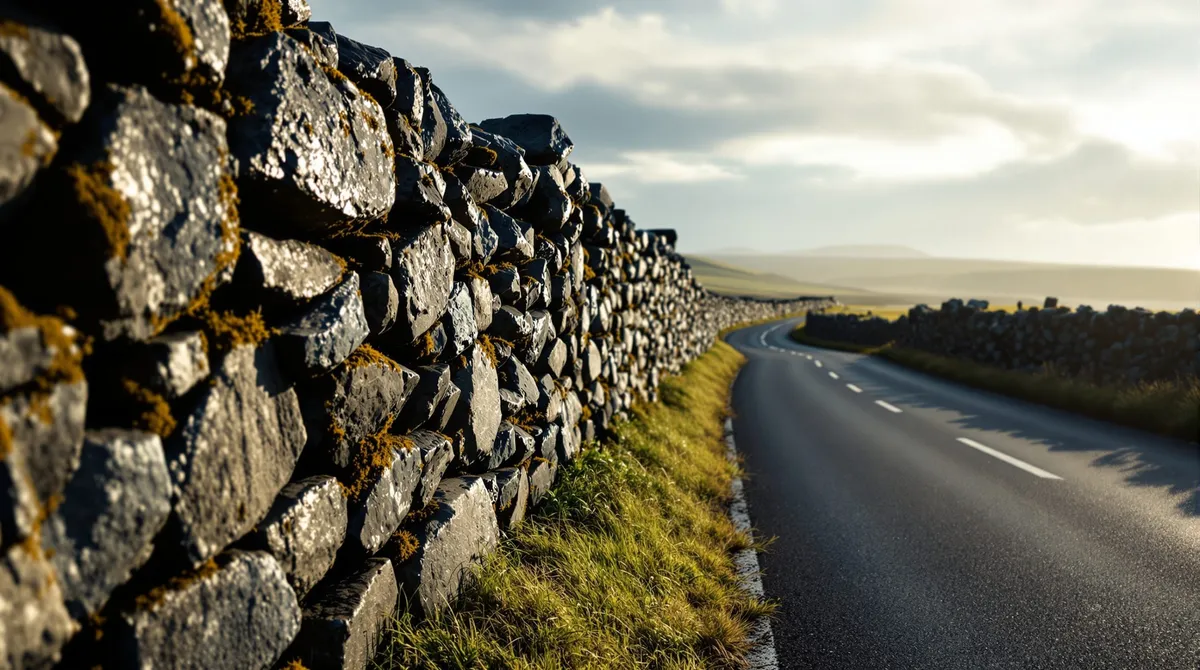
The Wild Atlantic Way doesn't announce itself with a dramatic "now the adventure begins" sign. It begins the first time you meet an oncoming car on a lane the width of your hotel hallway, bordered by stone, fuchsia, and a hedge that's been trimming Irish mirrors for decades. You'll be driving on the left, sitting on the right, and if you're tired, your instincts will try to betray you at every junction. The good news is you don't need rally-driver reflexes. You need a small car, a slower pace than the speed limit suggests, and a system for handling blind bends, pull-outs, and weather that changes between songs on the radio. Get those right and the "oh shit roads" become less of a threat and more of a story you'll tell with pride, preferably after you've returned the rental with both mirrors intact.
Before you turn the key: documents, rentals, and why "small" is a safety feature
You don't need a visa for standard tourism if you're arriving from the US, EU, or UK, but you do need a valid driver's licence and your passport covering the duration of your stay. An International Driving Permit is recommended but not mandatory. Most rental desks accept a standard UK or US licence without fuss. What matters more is choosing the right vehicle: economy or compact models are essential, not merely economical. The Wild Atlantic Way's single-track sections weren't designed for SUVs, and you'll spend half your time reversing to pull-outs if you rent anything larger than a Ford Fiesta.
Manual transmissions are cheaper, expect €25 to €60 per day depending on season and provider, but automatics reduce cognitive load when you're already managing left-side driving, unfamiliar road signs, and a gear shift operated with your non-dominant hand. Book through reputable firms like Alamo, Hertz, or Sixt via aggregators such as Discover Cars, and pay for full coverage insurance without negotiation. Fuel runs approximately €1.40 to €1.60 per litre for petrol or diesel, so budget accordingly for a 1,600-mile route. Before you leave the rental lot, disable any automatic lane-centering or lane-assist features. These systems expect defined lanes and will cheerfully steer you into a hedge on roads where the "lane" is wherever the grass hasn't grown yet.
Left-side driving without panic: the first 30 minutes that set your whole trip
The first half-hour determines whether you'll spend the next two weeks white-knuckling the wheel or actually enjoying the scenery. Find an empty car park before you hit public roads. Supermarket lots work well. Rehearse basics: turning left from junctions (stay in the left lane, not your instinctive right), navigating roundabouts clockwise, and checking mirrors from the right-hand seat where your spatial reference points have all shifted. Your passenger now sits closest to oncoming traffic, which feels wrong until you've done it for a day.
Roundabouts are the real test. Enter from the left, yield to traffic from your right, and exit without drifting into the wrong lane. It sounds simple until fatigue sets in around hour three, when your autopilot tries to revert to home-country habits. This is why automatic transmissions help beginners: one less task competing for attention when you're already translating every junction in real time. Set a "keep left" mantra and repeat it at every turn until it becomes muscle memory. Fatigue kills more rental cars than weather does, so if you're jetlagged, limit your first driving day to 50 miles and stop before you're tired, not after.
The narrow-road reality: reading road types, meeting traffic, and using pull-outs like a local
Standard roads carry an 80 km/h speed limit, but narrow winding routes, the majority of the Wild Atlantic Way, demand 40 to 50 km/h regardless of what the sign says. You'll recognise these by high hedges, stone walls close enough to scrape paint, and single-lane sections where two cars can't pass without one reversing to a pull-out. Then there are the "oh shit roads," identifiable by grass growing down the centre line and room for exactly one vehicle. These require a system: keep your car centred, check mirrors constantly, and tap your horn before blind bends to alert oncoming traffic.
When you meet another car on a single-track stretch, the vehicle closest to a pull-out reverses. If you're equidistant, the car travelling uphill has priority. They're already working harder. Tour buses and tractors get automatic right-of-way because they can't reverse as easily as you can. Never attempt overtaking on these roads unless you have a clear, widened section and at least 200 metres of visibility. The locals drive faster because they know every bend and pothole. You don't, so let them pass and resist the urge to match their pace. Patience here isn't politeness. It's survival.
Follow the Wild Atlantic Way signs, or trust Google Maps into a sheep lane?
The brown Wild Atlantic Way signs with the wave logo are your primary navigation tool, and they're abundant enough that you can follow the route without a GPS. Google Maps is useful for town-to-town planning and finding accommodation, but it will occasionally suggest "shortcuts" down lanes that exist only in a cartographic sense. Think grass tracks, farmyard gates, and sheep who haven't seen a car since 2019. Use Maps for macro planning, but when the app conflicts with the brown signs, trust the signs.
Download offline maps before you leave WiFi range, because cell service is patchy in Donegal, Connemara, and most of the coastal stretches between towns. Carry a paper map as backup, not for nostalgia, but because batteries die and signal drops are guaranteed. Build a "no shortcuts" rule into your driving: the official route may add 10 minutes, but those 10 minutes won't involve a three-point turn on a cliff edge. And disable lane-assist features immediately. These systems expect motorways with painted lines, not hedgerows with historical grudges against wing mirrors.
Peak-season bucket list vs safer off-peak roads: what you gain and what you give up
June through August delivers the best weather and the worst traffic, with accommodation costs peaking and narrow roads clogged by campervans piloted by drivers as inexperienced as you. February through May and September through November offer fewer crowds, safer driving conditions, and accommodation rates 30 to 50 per cent lower than summer. The trade-off is weather. Wind and rain are constants, and winter months (December through January) bring genuinely hazardous conditions on coastal roads where gusts can push a small car sideways.
January 2026 sits in the off-season window, meaning you'll find availability and lower prices, but daylight lasts only eight to nine hours. Plan your driving around this: start early, finish by 4 PM, and don't attempt unfamiliar roads after dark. Smaller villages reduce services in winter, so book accommodation in advance rather than assuming you'll find something on arrival. The minimum duration for the full 1,600-mile route is 12 days, but three to four weeks is realistic if you want to drive without stress and actually stop to see things. Daily mileage should never exceed 100 miles on narrow coastal roads. Double that if you're on motorways, but you're not here for motorways.
Weather-aware pacing and smart stops: where beginners should practise (and where to avoid bottlenecks)
Rain and wind reduce your safe speed by 20 to 30 per cent, and coastal roads offer no protection from Atlantic gusts that arrive without warning. Visibility drops fast in squalls, so slow down before you think you need to and resist the temptation to "make up time" when conditions improve. Practice roads include Achill Island's route to Keem Beach, a winding single-track climb with dramatic views and low traffic, and Donegal's access roads to Silver Strand Beach and Slieve League Cliffs, where you'll encounter every road type the Wild Atlantic Way offers without the pressure of tour-bus convoys behind you.
Tourist-trap bottlenecks require strategy. The Cliffs of Moher are overcrowded and overpriced. If you must visit, arrive between 7 and 8 AM or skip them entirely in favour of Slieve League, which is higher, emptier, and free. Galway city centre is a pedestrian maze with parking designed to punish cars. Park on the outskirts and walk in. Dingle Town becomes a summer car park. Stay in Ventry or Dunquin instead, where you'll find quieter roads and authentic coastal villages without the coach-tour crowds. Build a safety checklist: mirrors adjusted, lane-assist off, phone charged, offline maps downloaded, horn tested, and a rule that you stop driving the moment you feel tired rather than pushing through to the next town. The Wild Atlantic Way rewards caution, not bravery.
[Planning] Recommended Ireland Toolkit
Luxury ($$$): The Galmont Hotel & Spa - Located in Galway, this hotel offers parking and is convenient for walking into the city center. [check availability & prices →]
Mid-Range ($$): The Lane Hotel - Situated in Killarney, this hotel provides a central base for exploring the Ring of Kerry. [check availability & prices →]
Budget ($): Kinlay House Eyre Square - A hostel in Galway city center, offering affordable rates and proximity to transport. [check availability & prices →]
Consider a guided tour for certain segments of the Wild Atlantic Way to reduce driving stress.
Cliffs of Moher Tour from Galway - This tour handles the driving, allowing you to experience the Cliffs of Moher without navigating coastal roads yourself. [check availability & prices →]
Ring of Kerry Tour from Killarney - A full-day tour covering the scenic Ring of Kerry, removing the need for self-driving on challenging routes. [check availability & prices →]