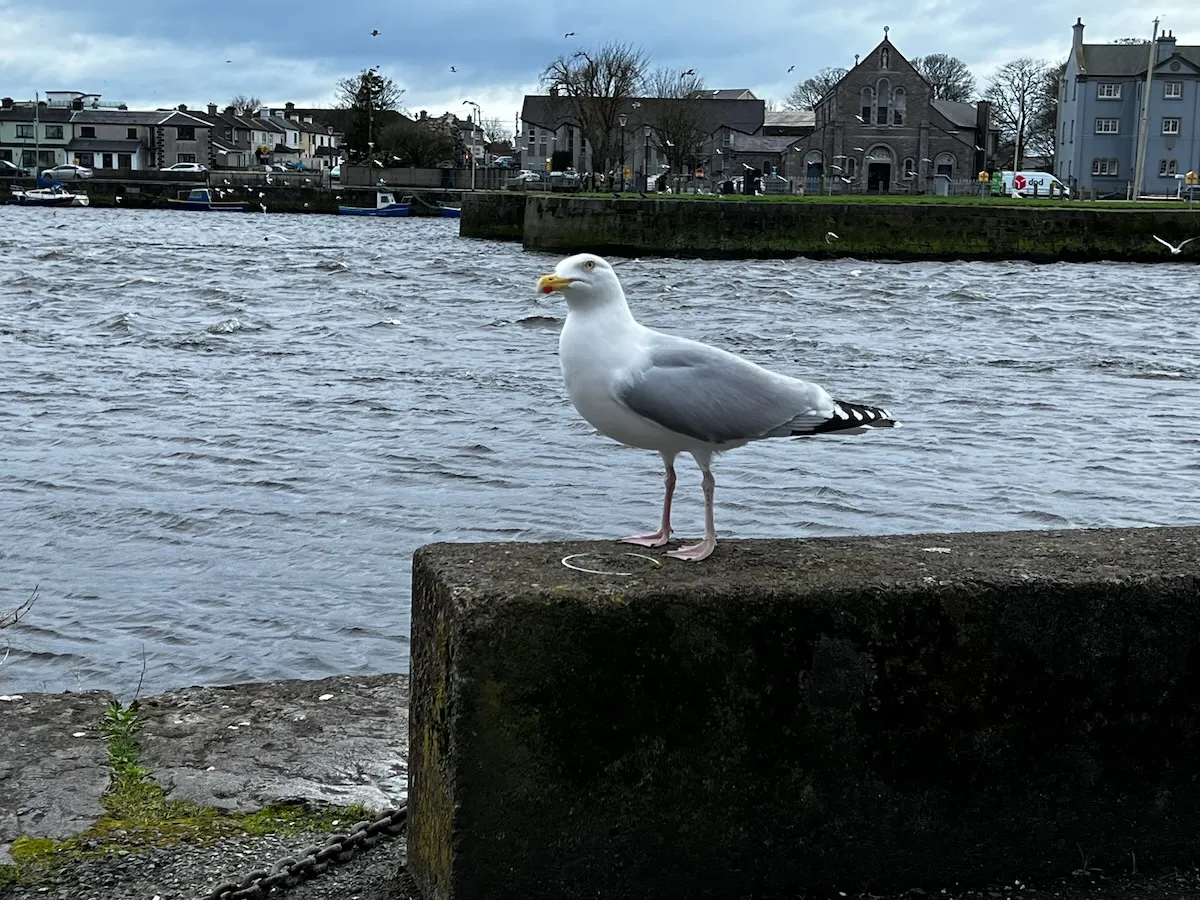
Galway has a way of winning people over quickly. It's compact enough to explore on foot, lively enough to feel energetic, and perfectly positioned for some of Ireland's most spectacular day trips. Whether you're here for a weekend or using it as a base for exploring the west, these are the experiences that make Galway memorable.
We receive a commission for any products you purchase using our links, at no extra cost to you. More info...
In Galway City
Walk the Latin Quarter
The Latin Quarter is Galway's medieval heart - narrow cobbled streets lined with colourful shopfronts, buskers who are genuinely talented, and an energy that shifts between relaxed and buzzing depending on the time of day. Shop Street, Quay Street, and the surrounding lanes are where you'll find independent boutiques, craft shops, and cafés that aren't part of chains.
Start at Eyre Square and work your way west towards the Spanish Arch. You'll pass street performers, local artists selling their work, and plenty of pubs where traditional music sessions happen most evenings. There's no set route - just wander and see where you end up.
Visit Spanish Arch and Galway City Museum
The Spanish Arch dates back to 1584 when it was part of the city's medieval walls. It's not a major attraction on its own - you'll spend five minutes looking at it - but it's worth seeing for the history and the view across the River Corrib.
Right next door, Galway City Museum is free and covers the city's history from medieval times through to modern Galway. It's well done without being overwhelming, and it gives useful context if you're trying to understand why Galway feels different to other Irish cities.
See Galway Cathedral
Galway Cathedral (officially the Cathedral of Our Lady Assumed into Heaven and St. Nicholas) is surprisingly modern - it was completed in 1965. The architecture is striking, with a large copper dome, beautiful Irish marble, and rose windows that catch the light. It's free to enter, and you can usually walk around quietly even during services.
The location right on the River Corrib is lovely, especially if you're walking along the riverside path from the city centre towards Salthill.
Catch a Traditional Music Session
Galway's music scene is one of the main reasons people visit. Sessions happen because musicians want to play together, not because tourists are watching - which is exactly what makes them special. They're informal, often starting around 9pm or later, and the atmosphere depends entirely on who shows up that night.
Tigh Coili on Mainguard Street is known for excellent traditional sessions. The Crane Bar near the docks has music upstairs most nights. Monroe's Tavern attracts a younger, more energetic crowd. If you're here during term time, you'll find university students packed into these places, which adds to the craic.
Don't expect performances or setlists. Sessions are collaborative, improvised, and sometimes quiet conversations happen between tunes. That's part of the charm.
Stroll Salthill Promenade
Salthill is Galway's seaside suburb, about 15 to 20 minutes' walk from the city centre (or a short bus ride). The promenade stretches along Galway Bay with views across to the Burren and, on clear days, the Aran Islands.
It's popular with locals for walks, runs, and the tradition of "kicking the wall" at Blackrock - a small ritual where you touch the diving board at the end of the prom before turning back. Salthill has cafés, fish and chip shops, and a more relaxed vibe than the Latin Quarter. It's a good place to clear your head after a busy day in the city.
Shop at Galway Market
Galway Market runs every Saturday (and sometimes Sundays in summer) in the square beside St. Nicholas' Church. It's a proper market - local food producers, crafts, second-hand books, jewellery, and street food stalls selling everything from crepes to Thai curries.
It gets busy, but it's worth going if you're in Galway on a weekend. You'll find things you won't see elsewhere - handmade goods, organic vegetables from local farms, and occasionally live music. It's very much a local market rather than a tourist-focused one, which is why it works.
Eat Well
Galway's food scene has grown significantly in the past decade. Ard Bia at Nimmo's does excellent brunch and turns into a fine dining restaurant at night. Aniar has a Michelin star and focuses on wild Irish ingredients. McDonagh's is the go-to for fish and chips - it's been there since 1902 and still delivers. Kai is inventive, seasonal, and always busy, so book ahead.
If you're here in September, the Galway International Oyster Festival is one of Ireland's best food events. Just be aware that finding accommodation in Galway becomes significantly harder during festival weekends.
Day Trips from Galway
Galway's location makes it the ideal base for exploring the west of Ireland. Most of these trips can be done independently by car or with organised tours from the city centre.
Cliffs of Moher
The Cliffs of Moher are about 90 minutes south of Galway and are one of Ireland's most visited natural attractions. The cliffs rise 214 metres above the Atlantic, and on a clear day you can see the Aran Islands, Galway Bay, and the Twelve Bens mountains in Connemara.
The site gets crowded in summer, so arrive early (before 10am) or later in the afternoon. If you're driving, you'll pay for parking at the visitor centre. There are coastal walks in both directions from the main viewing area if you want to escape the crowds.
Aran Islands
The Aran Islands sit in Galway Bay and feel like stepping back in time. Irish is the first language, stone walls crisscross the landscape, and traditional life is still very much alive. Inishmore (Inis Mór) is the largest and most visited island.
Ferries run from Galway city or from Doolin on the Clare coast. The crossing takes about 40 minutes. Once on the island, most people rent bikes and cycle around, stopping at Dún Aonghasa (a prehistoric cliff fort), the Worm Hole (a natural rectangular pool), and various beaches and pubs.
It's a full day trip. Bring layers - the islands are exposed to Atlantic weather, and conditions can change quickly.
Connemara
Connemara is the wild, mountainous region northwest of Galway city. It's all dramatic landscapes - the Twelve Bens mountain range, boglands, lakes, and some of the most remote roads in Ireland. The Sky Road near Clifden is particularly stunning, especially late in the day when the light hits the coast.
Kylemore Abbey is the main visitor attraction in Connemara - a 19th-century castle turned Benedictine monastery, set against a lake and mountains. The Victorian Walled Garden is beautifully maintained, and the abbey itself is worth seeing, though it can feel touristy in summer.
Connemara works best as a full-day driving loop or as part of a longer stay in the west. Public transport is limited, so you'll need a car or an organised tour.
The Burren
The Burren is a karst limestone landscape in north Clare that looks almost lunar - grey rock stretching for miles with wildflowers somehow growing in the cracks. It's geologically unique and home to ancient sites like Poulnabrone Dolmen (a 5,000-year-old portal tomb) and the Aillwee Caves.
The Burren is about an hour from Galway and works well combined with a trip to the Cliffs of Moher. If you're interested in archaeology, botany, or just unusual landscapes, it's worth the detour.
Practical Tips
Getting to Galway: About 2.5 hours from Dublin by bus or train, one hour from Shannon Airport by car.
Getting around: Galway city centre is compact and walkable. If you're driving, park your car and explore on foot - parking in the city can be tricky.
How long to stay: Two to three nights gives you time to see the city and do one or two day trips. If you're using Galway as a base for exploring the west, plan for four or more nights.
When to visit: Summer is busiest with the best weather but also the highest prices. Spring and autumn offer better value and fewer crowds. Winter is quiet but many attractions outside the city run reduced hours. Read our complete guide to the best time to visit Ireland for more detail.
Where to stay: The city centre puts you within walking distance of everything, though it can be noisy at night. Salthill is quieter and still close. Check our detailed guide to where to stay in Galway for specific recommendations.
Final Thoughts
Galway works because it doesn't try too hard. It's not polished or pretending to be something it's not. The music is genuine, the food is good, the people are friendly without being performatively Irish, and the access to spectacular scenery is unmatched.
Don't rush it. Give yourself time to wander, stumble into a session, sit by the river with a coffee, and let the city reveal itself. That's when Galway is at its best.
For more detail on what makes Galway special and where to base yourself, read our complete Galway travel guide.
Affiliate links support this site and come at no cost to you. Thanks for booking through them if you find them helpful.