
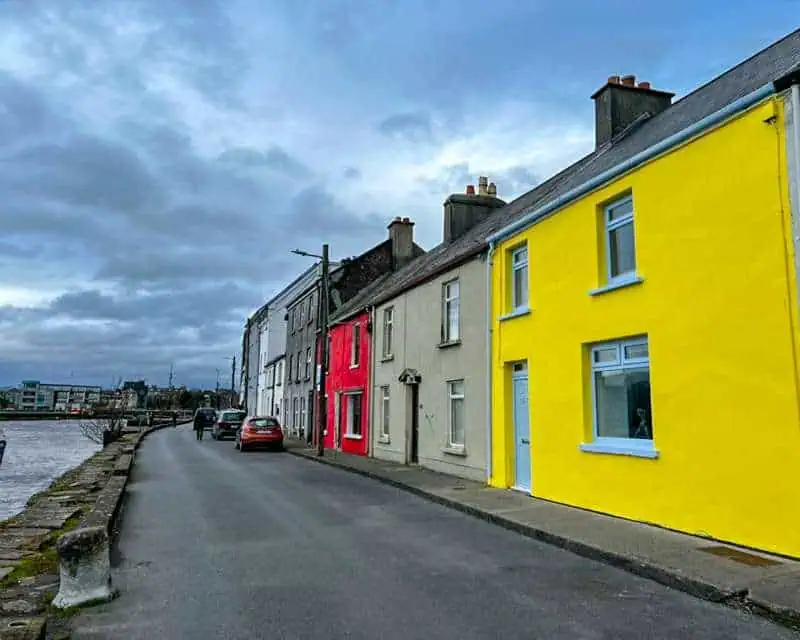
 I love how each house has its own colour on this Galway street.
What You're Missing
Seven days means making tough choices. Here's what this itinerary doesn't include:
- Northern Ireland and the Giant's Causeway - It's 3.5 hours from Dublin and would require at least 2 extra days to do properly. Save it for a future trip or consider a separate Northern Ireland itinerary.
- Connemara and Kylemore Abbey - Spectacular scenery west of Galway, but adding it means either cutting something else or spending more time driving on Day 7 (this could work if you keep the Cliffs of Moher super tight).
- Wicklow Mountains beyond Glendalough - Beautiful hiking and scenery, but you're already seeing mountains in Kerry, so it's give and take.
- Cork City - Ireland's second-largest city has great food and culture but it's hard to fit it into this tight loop.
- The Burren - Unique limestone landscape in Clare. If you have extra time on Day 7, you could detour through the Burren between Doolin and Galway, but it's tight.
If you want to include any of these alternative options, you'll need to cut something from the main route - most likely either the Ring of Kerry or Dingle. It's an embarrassment of riches!
Practical Tips
Driving
Irish roads can be narrow, winding, and often bordered by stone walls or hedges. The biggest adjustment isn't driving on the left - it's the width of the roads and the speed of local drivers. Take your time, especially on rural roads, and use pull-in spaces to let faster traffic pass.
Quick Guide:
- Motorways (M-roads) are fine - wide, well-maintained, with tolls.
- National roads (N-roads) vary - some are good, some are narrow.
- Regional roads (R-roads) are often single-track with passing places.
Allow more time than Google Maps suggests. A journey that looks like 1.5 hours might take 2 hours once you account for narrow roads, slow-moving tractors, and stops for photos.
Read our complete guide to car rental and driving in Ireland for insurance tips, rules of the road, and rental advice.
Compare Car Rental Prices
Accommodation
Book accommodation at least 4 to 6 weeks ahead if travelling in summer (June to August) or around major holidays. September and October are also popular. Spring and winter give you more flexibility, but always book Dublin and Galway ahead - they fill up regardless of season.
Weather
Irish weather is unpredictable. We can have sunshine, rain, wind, and fog in the same day. To be fair, that's not every day, but be prepared. Pack layers, a waterproof jacket, and comfortable walking shoes that can handle wet conditions.
Don't let rain ruin your plans - it's part of the experience. Some of Ireland's best moments happen in misty, moody conditions. Read more in my Essential Packing Guide for Ireland.
When to Go
- Best weather: May, June, and September offer the best combination of decent weather and manageable crowds.
- Peak season: July and August are busiest and most expensive. Expect crowds at major attractions and fully booked accommodation.
- Shoulder season: April, May, September, and October give you better value, fewer tourists, and still-reasonable weather.
- Off-season: November to March is cheapest and quietest, but daylight is limited (sunset by 4-5pm), many rural attractions close, and weather is cold and wet.
Read my complete guide to the best time to visit Ireland for month-by-month recommendations.
Budget
By necessity, this is a very rough rule of thumb and prices can vary wildly, particularly in the height of peak season.
Car rental: €300 to €600 for the week, depending on car size and insurancePetrol: €150 to €200 for ~1,100kmAccommodation: €100 to €200 per night for mid-range hotels or B&BsFood: €40 to €70 per person per dayAttractions: €10 to €25 per person per site
Total per person for the week: €1,500 to €3,000+, depending on accommodation standards and how much you spend on food and activities.
Alternative: Start in Galway
If you arrive early in Dublin and don't want to waste half a day waiting for hotel check-in, consider this alternative:
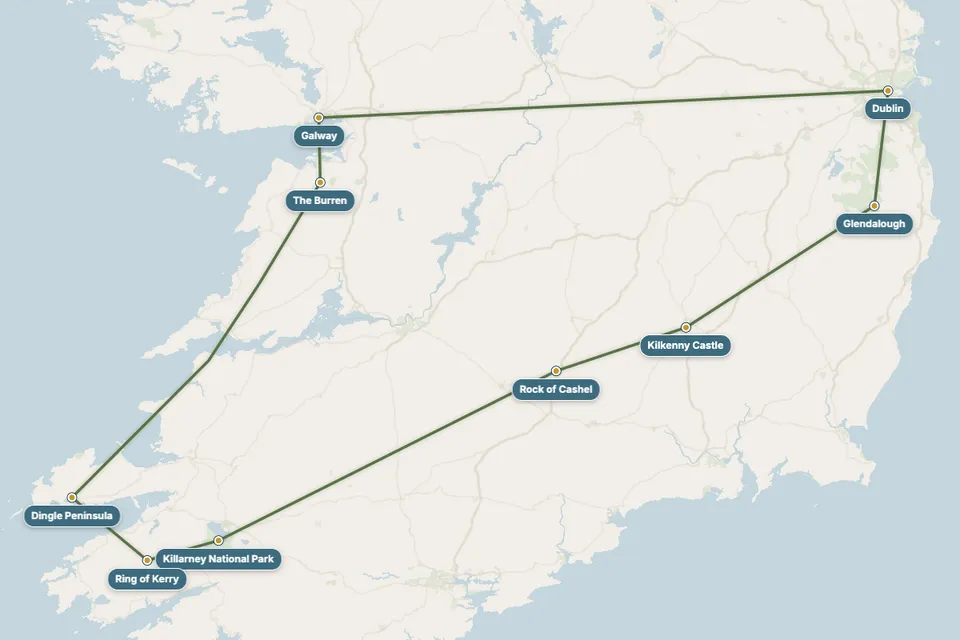
Pick up your rental car at Dublin Airport and drive straight to Galway (2.5 hours). Spend Days 1-2 in Galway instead of Dublin, then work the route in reverse: Galway → Cliffs → Dingle → Ring of Kerry → Kilkenny → Glendalough → Dublin (Days 6-7).
This gets you out of Dublin immediately, eases you into Irish driving on motorways before tackling narrow coastal roads, and ends your trip in Dublin where you're already close to the airport for departure.
The downside? You miss Dublin's energy at the start of your trip, and Day 7-8 becomes a scramble to see the city before flying home.
Final Thoughts
Seven days in Ireland is tight but doable if you're comfortable with a fast pace and changing accommodation most nights. You'll see the major highlights: city history, monastic ruins, medieval streets, coastal drama including the Cliffs and a chance for some nights out, music and craic!
But you'll also spend a lot of time in the car, and you'll miss some of Ireland's quieter, less-visited corners. If you can stretch to 8 or 10 days, you'll have breathing room to slow down, add the North of Ireland or Connemara, and actually relax rather than just seeing everything on a tick list (with the best of intentions).
Ireland rewards slow travel - lingering in pubs, stumbling into music sessions, stopping at random viewpoints, chatting with us friendly locals. This itinerary gives you the highlights, but the real magic happens when you have time to wander without a schedule.
If 7 days is what you have, please come! Follow this route and you'll see a lot of Ireland. Just know that you'll leave wanting to come back. And sure, that's not a bad thing!
Ready to start planning? Check out my guides where to stay in Dublin, and guide to Galway for more detailed recommendations.
Before you set off, make sure you've checked my guide on what to pack for Ireland. Layers and waterproofs are non-negotiable.