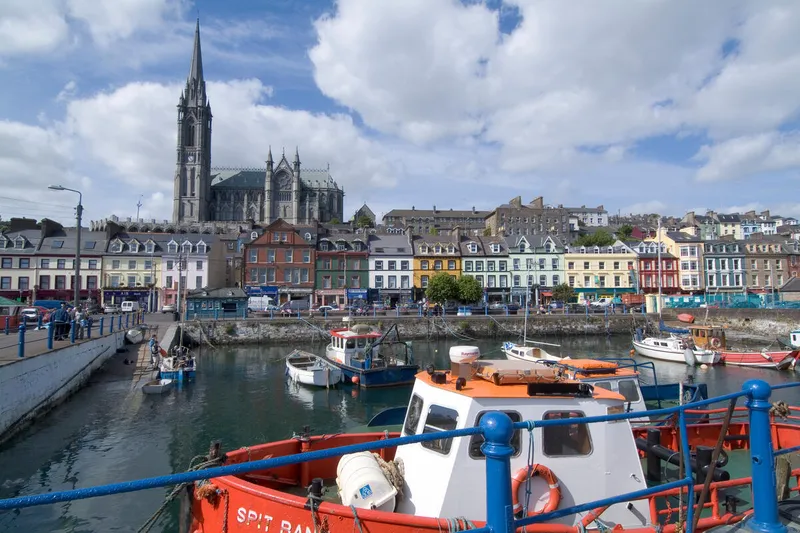
Cobh is the town that saw 2.5 million people leave Ireland and never come back. Between the Famine ships of the 1840s and the last emigrant vessels of the 1950s, this harbour was the final glimpse of Ireland for a quarter of the island's population. It was also the last port of call for the Titanic on 11 April 1912. The heritage centre does not sentimentalise any of this.
The town itself sits on a steep hill overlooking Cork Harbour - one of the largest natural harbours in the world. The rows of colourful houses climbing up to St Colman's Cathedral make it one of the most photographed towns in County Cork. Twenty minutes from Cork city by train, it is one of the most scenic short rail journeys in Ireland.
What to Expect
You arrive at Cobh by train - this is the right way to do it. The line from Cork Kent station hugs the harbour edge, crosses the water, and deposits you at the old railway station where emigrants once queued for tickets to America. The station building itself is now the Cobh Heritage Centre, which means you step off a train and straight into the story.
The Heritage Centre focuses on emigration and the Lusitania sinking. It is well done, direct, and avoids the sentimentality that plagues many Irish heritage sites. Allow 90 minutes. The Titanic Experience on the waterfront is separate and covers the ship's final stop in Cobh. It uses the original White Star Line ticket office. You get a boarding pass with the name of an actual passenger and find out at the end whether they survived.
Outside the museums, Cobh is a walking town. The steep streets reward the climb with harbour views at every turn. St Colman's Cathedral at the top has a carillon of 49 bells - the largest in Ireland. The Promenade along the waterfront is flat and pleasant. Spike Island, visible across the harbour, runs ferry tours from the town pier.
Is It Worth It?
For more than the Titanic connection, yes. Two and a half million people left Ireland through this harbour between the Famine ships of the 1840s and the last emigrant vessels of the 1950s, and the heritage centre does not sentimentalise any of it. The town earns the walk on its own: colourful terraces climbing to St Colman's Cathedral above one of the largest natural harbours in the world. It is 20 minutes by train from Cork city, and three to four hours covers the town and one museum.
The catch: cruise ships dock regularly and flood the town with day-trippers. When a large ship is in, the waterfront restaurants are packed and the atmosphere shifts from small-town Cork to tourist queue. Check the cruise schedule before you go. Off-season or on non-cruise days, Cobh is a different - and better - experience.
How to Get There
Take the train from Cork Kent station. Trains run roughly every 30 minutes, the journey takes 24 minutes, and a return ticket costs about EUR 8. This is by far the best option. The train runs along the harbour and the final approach to Cobh is genuinely scenic.
If you are driving, it is 20 minutes from Cork city via the N25 and R624. Parking at the waterfront is pay-and-display. There is free parking on residential streets further up the hill, but the walk back down is steep.
From Dublin, Cork is 2.5 hours by car or 2 hours 40 minutes by train. Cobh is a natural half-day addition to a day in Cork.
Where to Stay Nearby
Most visitors do Cobh as a half-day from Cork city. If you want to stay in Cobh itself, options are limited but the waterfront hotels have the best harbour views in the county. See the County Cork hub for wider options.
Right on the waterfront with panoramic harbour views. Victorian character, central location, and you can watch the cruise ships come and go from the bar.
Check availability →What Else is Nearby
A Note on the History
Cobh was renamed Queenstown in 1849 when Queen Victoria visited, and kept that name until 1920. During those 71 years, it was the last piece of Ireland that millions of emigrants saw. The Famine years were the worst - coffin ships left the harbour overcrowded and under-provisioned, and many passengers never reached America.
The Titanic called at Queenstown on 11 April 1912 to collect 123 passengers. Most were in steerage. The tender that ferried them out to the ship is preserved in the heritage centre. The Lusitania sank 18 kilometres off the Old Head of Kinsale in 1915. Cobh was the nearest port and the dead were brought here. The mass grave in the Old Church Cemetery is still maintained.
Frequently Asked Questions