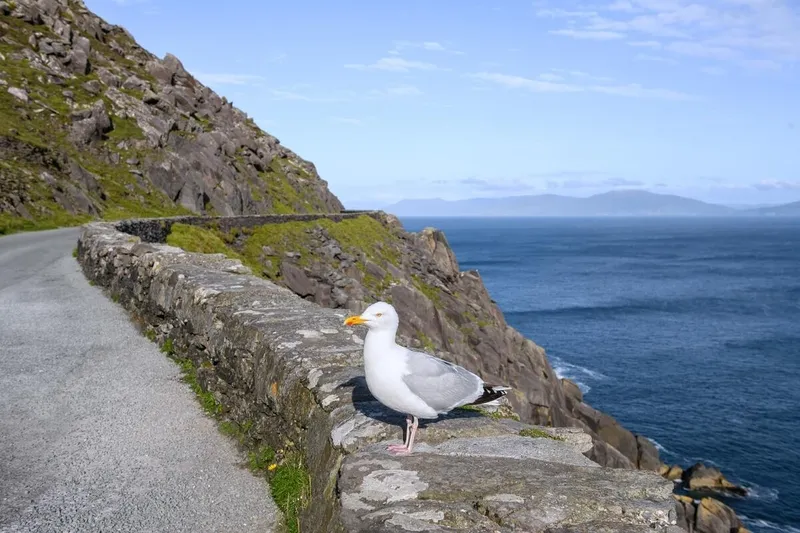
Many locals will tell you the Dingle Peninsula is better than the Ring of Kerry. They have a point. The scenery is equal - wild headlands, island views, mountain passes. But the scale is smaller, the roads quieter, and the town of Dingle is one of the best food towns in Ireland.
The Slea Head Drive is a 48 km loop around the western tip. Conor Pass is the highest mountain pass in Ireland. Between them you get the best of Kerry without the coach traffic that plagues the Ring. If you have one day in Kerry and want to avoid crowds, come here.
What to Expect
Start with the Slea Head Drive from Dingle town. Drive clockwise - same logic as the Ring of Kerry. The loop is 48 km and takes about an hour without stops. You will stop. Coumeenoole Beach is a small cove with big waves. Dunmore Head is the westernmost point of mainland Ireland. Dunquin Pier is a concrete path zigzagging down a cliff face to a tiny harbour where the Blasket Islands ferries depart.
Gallarus Oratory is a stone church shaped like an upturned boat. It has stood watertight for over a thousand years. No mortar. Just perfectly fitted stone. It is free to visit and there is parking beside it.
Conor Pass is the other essential drive. The R560 climbs to 456 metres between Dingle and Castlegregory. On a clear day you can see both sides of the peninsula. The road has a maximum vehicle length of 7.2 metres - no coaches, no campervans beyond the summit. This keeps it blissfully quiet.
Dingle town itself is small enough to walk in twenty minutes but packed with pubs, restaurants, and craft shops. The seafood is excellent. Dick Mack's is the famous pub but there are a dozen good options for traditional music sessions.
Is It Worth It?
A straight alternative to the Ring of Kerry, and quieter for it. The Slea Head Drive is a 48-kilometre loop around the western tip, Conor Pass is the highest mountain pass in the country, and Dingle town is one of the best places to eat in Ireland. All of it is free. Three to four hours does Slea Head, one to two days does the peninsula properly, and driving the loop clockwise keeps you ahead of the coach traffic.
The catch: Fungie the dolphin, who drew visitors for 37 years, died in 2020. The dolphin boat trips no longer exist. Some tourist infrastructure in the harbour still trades on his memory. The town has moved on but the dolphin industry has not entirely.
How to Get There
Dingle is 80 km west of Killarney via the N86 through Annascaul (1.5 hours). The alternative is to come over Conor Pass from Tralee - more dramatic but slower.
From Tralee, the R560 crosses Conor Pass in about 45 minutes. This is the scenic route. Check weather conditions first - the pass can close in winter snow.
There is no train to Dingle. Bus Eireann runs a service from Tralee several times daily. You will want a car for Slea Head Drive and Conor Pass. The roads are narrow but well-maintained.
Where to Stay Nearby
Dingle town is the obvious base. Everything is walkable and the pub scene is excellent. For something quieter, Ventry or Ballyferriter on the Slea Head side offer B&Bs with sea views.
On the edge of Dingle with views over the harbour. Pool and spa. The best hotel in town.
Check availability →What Else is Nearby
A Note on the History
The Dingle Peninsula is a Gaeltacht - an Irish-speaking area. Road signs are in Irish only once you pass west of Dingle town. The Irish name for Dingle is An Daingean. The peninsula has the highest concentration of archaeological sites in Ireland. Over 2,000 monuments survive, from beehive huts to ogham stones to ring forts.
The literary tradition of the Blasket Islands belongs to this peninsula. Tomas O Criomhthain and Peig Sayers wrote in Irish about island life before the evacuation in 1953. Their books are still studied in every school in Ireland. Peig in particular is a rite of passage - and a source of debate about whether compulsory Irish literature helps or hinders the language.
Frequently Asked Questions