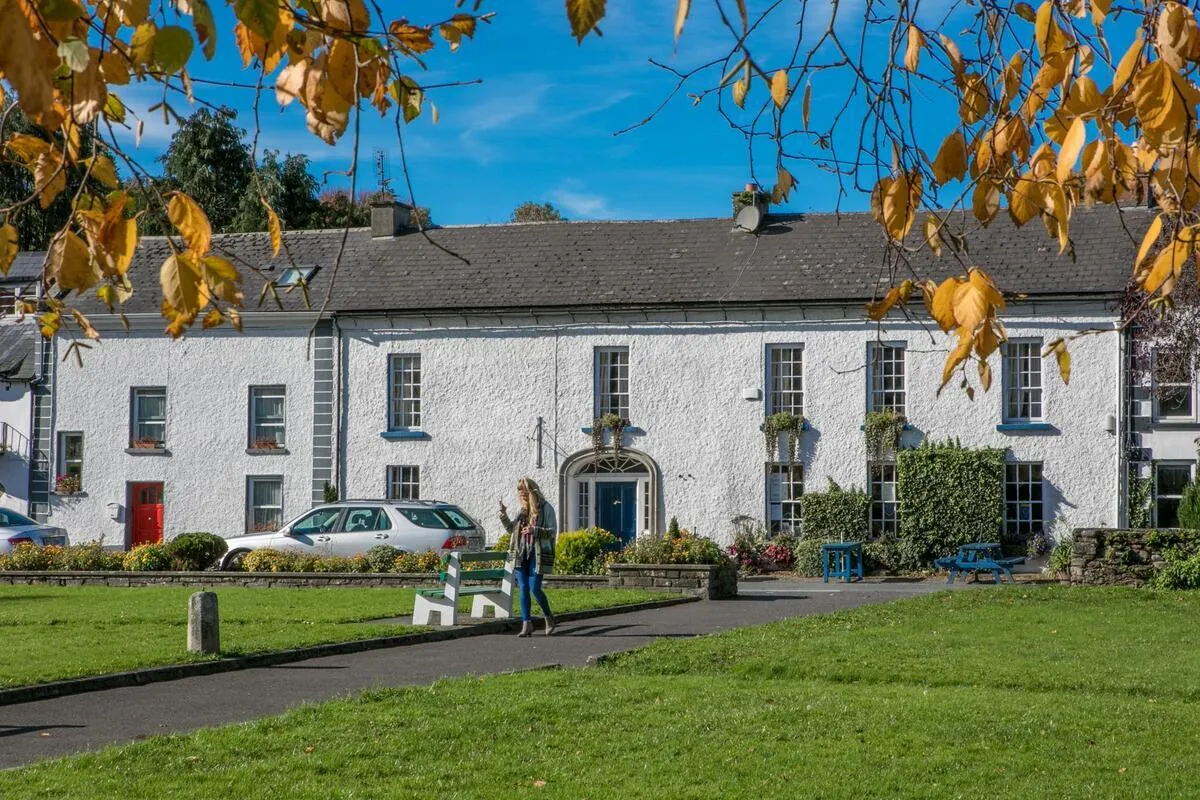
Inistioge (pronounced "inn-ish-TEEG") is the kind of village that makes people pull over and reach for their camera. A 10-arched stone bridge from 1765 crosses the River Nore, lime trees line the village green, and colourful houses cluster around a small square. It has won awards across Europe for its appearance - including a gold medal in the European Entente Florale competition.
The village is small. You can walk the entire thing in 15 minutes. But the surroundings are what make it worth a proper visit. Woodstock Gardens and Arboretum sit on the hillside above the village with over 50 acres of restored Victorian gardens. The River Nore offers salmon and trout fishing, and the Nore Valley Walk provides quiet riverside paths.
If you are exploring County Kilkenny, Inistioge works well as a half-day stop, especially when combined with nearby Jerpoint Abbey (10 minutes by car). Just be aware that this is a small village - dining options are limited, so plan accordingly.
What to Expect
Start at the bridge. The 10-arched stone structure over the River Nore is the defining image of Inistioge, and it looks best from the east bank looking west towards the village. In summer, you will see kayakers and swimmers in the river below. The Nore here is clean and popular with anglers - it is one of the better salmon and trout rivers in the southeast.
The Village
The village green is the social centre, though "social" is relative in a village this small. A handful of houses, two or three pubs, and a cafe make up the commercial offerings. The Woodstock Arms is a good option for a pint or a simple lunch. Film fans may recognise the village - it has appeared in Circle of Friends (1995) and Widows' Peak (1994), both of which used the photogenic streetscape as a backdrop.
Wander the lanes around the green. The houses are well kept, many painted in the bold colours that Irish villages do so well. The parish church of St Colmcille has a modest but attractive interior.
Woodstock Gardens and Arboretum
The main attraction beyond the village is Woodstock Gardens, reached by a steep but short climb (or drive) from the village centre. The estate was once one of the great houses of the region - the main house was burned in 1922 during the Civil War and only ruins remain. But the gardens were restored by Kilkenny County Council and are now one of the best free garden visits in the southeast.
The arboretum has specimen trees from the original 19th-century plantings, including some impressive monkey puzzles and redwoods. The walled garden is partially restored. There is a viewing point above the gardens with panoramic views over the Nore Valley - on a clear day, you can see for miles.
Allow at least two hours for Woodstock. The paths are steep in places and can be muddy after rain, so proper footwear is advisable. There are no refreshments at the gardens, so bring water.
River Nore Activities
The river is the other draw. Kayaking tours and canoe hire are available in summer - check locally for operators as they change from year to year. Fishing requires a licence (available from local tackle shops or online). The Nore Valley Walk runs along the riverbank and is a gentle, flat walk suitable for families.
Is It Worth It?
Half a day well spent, and almost all of it free. The 10-arched bridge of 1765 over the Nore is the picture everyone stops for, and the village behind it took a gold medal in the European Entente Florale for how it looks. Woodstock Gardens on the hillside above is 50 acres of restored Victorian planting with monkey puzzles, redwoods and a viewing point over the whole Nore Valley, and entry is free or a small donation. One to two hours for the village, two to three more for Woodstock. Jerpoint Abbey is ten minutes away if you want to make a full day of it.
The catch: Inistioge is small enough to walk in 15 minutes and the dining reflects that, with a pub and a cafe that opens in summer. Plan meals around Thomastown or Kilkenny city if you are here off-season, and note there is no ATM in the village. Woodstock is a steep climb from the centre, the paths turn muddy after rain and there are no refreshments at the top, so bring water and proper shoes. The small car park by the bridge fills on summer weekends, and there is no public transport at all - you need a car.
How to Get There
Inistioge is about 25 minutes south of Kilkenny city by car, mostly on the R700 through rolling farmland. The drive itself is pleasant, winding through the Nore Valley with views of the river. There is a small free car park near the bridge in the village.
From Dublin, allow about two hours. Take the M9 to Kilkenny and then the R700 south. From Waterford, it is about 40 minutes heading northwest. Jerpoint Abbey is only 10 minutes west, so the two combine naturally into a half-day trip.
There is no public transport to Inistioge. The nearest train station is Thomastown (15 minutes by car), which has services on the Dublin-Waterford line. From there, you would need a taxi. A car is really essential here. Compare rental prices for your dates.
What Else is Nearby
A Note on the History
Inistioge takes its name from the Augustinian priory of St Tighearnach, founded here in the early medieval period. The Normans established a borough in the 13th century, and the village grew around the river crossing. The stone bridge that defines the village today dates to 1765, though there has been a crossing point here for far longer.
Woodstock House, above the village, was built by the Tighe family in the 18th century. They were significant local landlords and shaped much of Inistioge's current appearance - the tree-lined green and planned layout are their legacy. The house was burned during the Irish Civil War in 1922, a fate shared by many Anglo-Irish country houses during that period.
The village has been recognised internationally for its appearance. The European Entente Florale gold medal acknowledged not just the flowers but the overall care of the streetscape. It is a status that the residents maintain - Inistioge remains one of the best-kept villages in Ireland, though it wears its good looks lightly.
Frequently Asked Questions