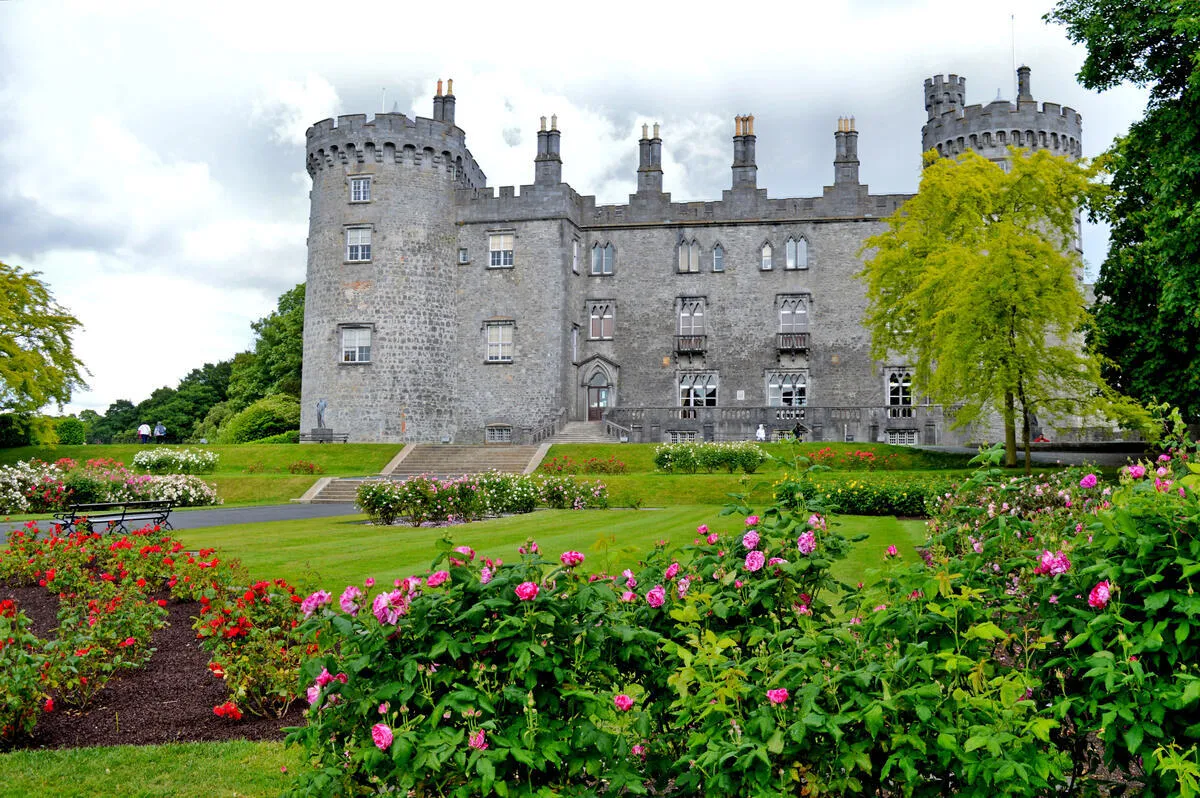
Kilkenny Castle has been the centrepiece of the city since the 12th century. The original Norman fortress was built by William Marshal in the 1190s, and the Butler family held it for nearly 600 years after that. Today it belongs to the state and draws visitors year-round with a mix of restored Victorian interiors, a striking Picture Gallery, and 50 acres of parkland along the River Nore.
What makes it worth a visit is the combination - castle, grounds, and city all within walking distance. You can spend a morning inside the castle on a guided tour, then an afternoon wandering the rose garden, woodland trails, and playground. It sits at one end of Kilkenny's Medieval Mile, so there is plenty to do either side of your visit.
The castle is managed by the OPW (Office of Public Works), which means entry is affordable and free with a Heritage Card. Given the volume of visitors, booking a guided tour slot in advance during summer is a good idea.
What to Expect
The interior tour is the highlight. You can choose between a self-guided visit or a guided tour, and the guided option is worth the extra time. Standard guided tours run about 45 minutes and cover the main rooms. There is also a longer 90-minute experience that takes you into areas not normally open to the public.
The Victorian Period Rooms on the first floor are beautifully restored. Heavy fabrics, ornate fireplaces, and detailed plasterwork give a real sense of how the Butler family lived during the castle's final decades as a private residence. The Chinese wallpaper in the drawing room is particularly striking.
The Picture Gallery
The Long Gallery is the single most impressive room. A painted hammer-beam roof spans the full length, and the walls are lined with family portraits. The restoration here was extensive - the Butlers had let much of the castle fall into disrepair by the time they sold it to the city in 1967 for just GBP 50. The gallery today looks nothing like the crumbling shell they left behind.
Look for the Moorish Staircase on the way up. The cast-iron design with its geometric patterns is unusual for an Irish castle and reflects the Victorian fascination with Islamic art and architecture.
The Parkland
The 50-acre grounds deserve proper time. The formal rose garden is at its best from June to September. Beyond that, woodland trails lead to a man-made lake and open meadow areas. There is a good playground for younger children near the main entrance, and locals use the park for running and walking year-round.
The tearoom in the old kitchen wing is a decent spot for lunch. It gets busy at peak times, so aim for an early or late sitting if you can.
What to Know Before You Go
Photography is allowed in most areas but check signage in individual rooms. Bag sizes may be restricted during busy periods. The castle can feel cold inside even in summer, so bring a layer. If you have a Heritage Card, you skip the ticket queue - just show it at the entrance desk.
Is It Worth It?
EUR 8 for the castle and nothing for fifty acres along the Nore. William Marshal put the Norman fortress up in the 1190s and the Butlers held it for nearly six hundred years after. The interiors are restored Victorian and the Long Gallery is the room people remember: a painted hammer-beam roof running the full length, walls lined with family portraits, and the cast-iron Moorish Staircase on the way up. The rose garden peaks between June and September and woodland trails run down to a man-made lake. Free on a Heritage Card, and it sits at one end of the Medieval Mile.
The catch: there is no car park at the castle. The nearest is the Parade car park, pay-and-display, two minutes away, with Market Yard as the alternative. Only the ground floor is step-free, so the upper rooms including the Long Gallery are up stairs with no lift. The interior stays cold even in summer, so bring a layer. And the tearoom in the old kitchen wing gets busy at peak times, so aim for an early or late sitting.
How to Get There
Kilkenny Castle is in the centre of the city, so getting there is straightforward. If you are driving, the Parade car park is the closest option - a two-minute walk from the castle gates. Market Yard car park is another good choice, about five minutes on foot. Both are pay and display.
Kilkenny is well connected by road. It is about 90 minutes from Dublin via the M9 motorway, and roughly the same from Cork via the M8. From Waterford, it is about 50 minutes. If you are exploring County Kilkenny by car, a rental gives you the most flexibility for reaching places like Jerpoint Abbey and Inistioge on the same trip. Check rental prices here.
Kilkenny also has a train station (MacDonagh Junction) with direct services from Dublin Heuston - the journey takes about 90 minutes. From the station, the castle is a 15-minute walk through the city centre.
What Else is Nearby
A Note on the History
The castle site has been fortified since 1172, when the Norman lord Strongbow built a wooden tower here. His son-in-law William Marshal replaced it with a stone castle in the 1190s, establishing the layout that survives in part today - four corner towers connected by curtain walls around a central courtyard.
The Butler family acquired the castle in 1391 and held it until 1935. Their tenure shaped much of what visitors see now, particularly the Victorian-era renovations. But the family's decline was dramatic. By the mid-20th century, much of the castle was derelict. Roof sections had collapsed and vegetation was growing through the walls.
In 1967, Arthur Butler sold the castle, its contents, and the parkland to the city for GBP 50. The restoration that followed, led by the OPW, took decades and cost millions. The result is a building that tells two stories at once - medieval power and Victorian grandeur, both layered onto the same Norman bones.
Frequently Asked Questions