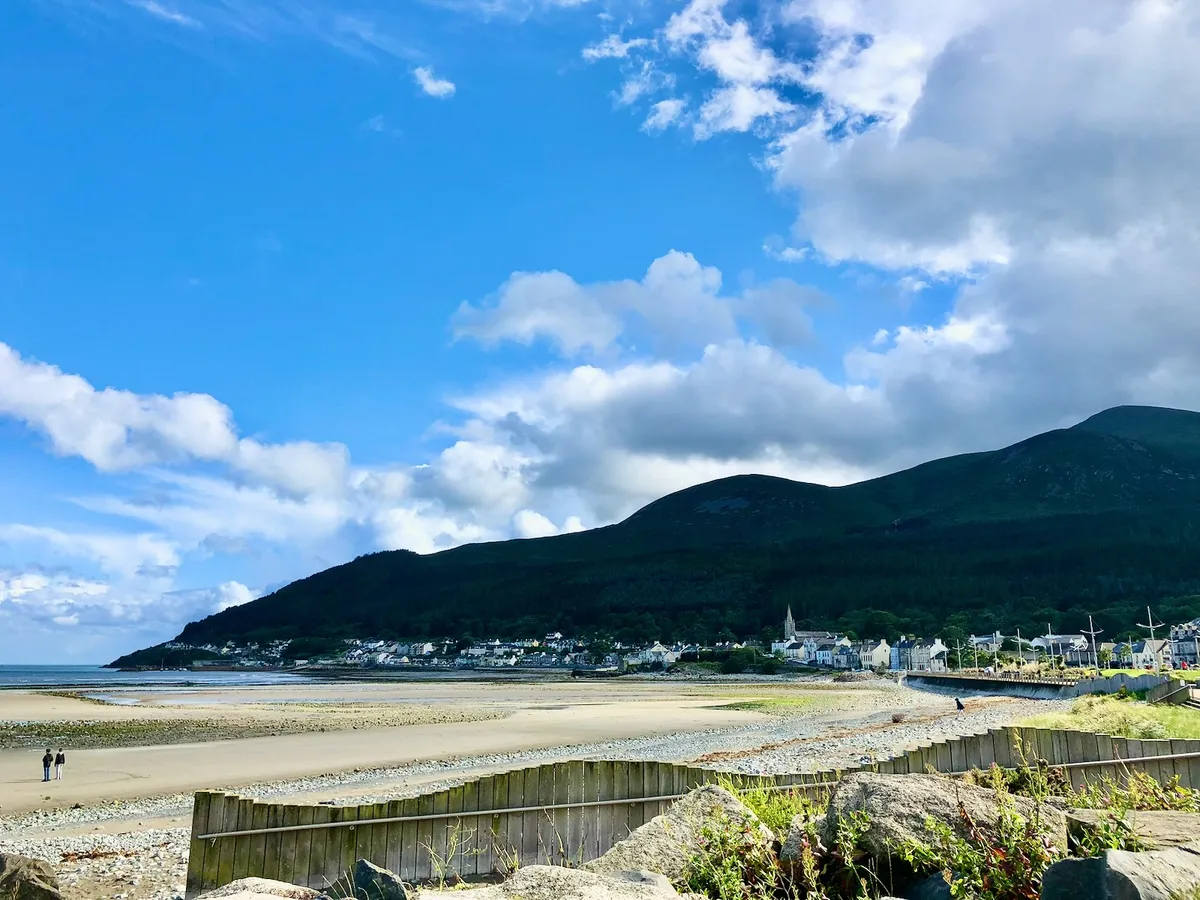
Newcastle sits where the Mourne Mountains meet the sea. It is a small seaside town in County Down with a long beach, a Victorian-era resort hotel, a promenade, and direct access to the best mountain walking in Northern Ireland. The songwriter Percy French captured it in one line: "Where the Mountains of Mourne sweep down to the sea." He was not wrong.
The town works as both a destination and a base. You can spend a morning on Slieve Donard and an afternoon on the beach. Tollymore Forest Park is three miles up the road. Dundrum Castle is four miles north. The food scene has improved. The Slieve Donard Hotel still anchors the seafront with Victorian grandeur.
Newcastle is not flashy. It does not pretend to be a hip coastal village. It is an unpretentious Irish seaside town with a mountain behind it, and that is enough.
What to Expect
The beach is the centrepiece. A wide sweep of golden sand backed by dunes, with Slieve Donard rising directly behind. At low tide you can walk for a mile or more. The promenade runs along the seafront with benches, ice cream shops, and cafes. On a sunny day it fills with families. On a Tuesday in November, you will have it to yourself.
Donard Park is the gateway to the mountains. It sits at the southern edge of town - you can walk there from the main street in ten minutes. The park has paths through mature woodland along the Glen River. Most people pass through on their way up Slieve Donard, but the park itself is a pleasant hour's walk even if you have no intention of climbing anything.
Tollymore Forest Park, three miles west of town, is Northern Ireland's first state forest. The trails wind through mature pine and oak woodland with granite bridges, waterfalls, and river crossings. The Shimna River walk is particularly good. Tollymore was used as a Game of Thrones filming location, but it has been a beautiful forest since long before that. Mountain biking trails and a camping ground make it more than a day-visit proposition.
Royal County Down golf course borders the town. It is regularly ranked among the top courses in the world. Even if you do not play golf, the setting - links fairways with the Mournes as a backdrop - is worth a look from the beach.
Is It Worth It?
The beach and the town are free, and Slieve Donard starts at the end of the street. Newcastle is where the Mournes come down to the sea, exactly as Percy French had it, with a wide sweep of golden sand, a Victorian promenade, and Donard Park a ten-minute walk from the main street as the way into the mountains. Tollymore Forest Park is three miles west at GBP 5 a car, Northern Ireland's first state forest. Royal County Down borders the town and is worth looking at even if you have never held a club. Fifty minutes south of Belfast.
The truth about Newcastle: it is a seasonal town. In summer, it buzzes. In winter, many of the cafes and restaurants close or reduce hours. The amusement arcades on the seafront give it a slightly dated feel. The town centre is functional. But the natural setting - mountains, beach, forest - more than compensates for any lack of cosmopolitan polish. You come here for the landscape, not the nightlife.
How to Get There
Newcastle is about 50 minutes south of Belfast on the A24, then the A2 coast road. From Dublin, it is about two hours via the M1 and A1 through Newry, then the A2 east along the coast.
The main car parks in town are free, though the seafront fills on sunny weekends. Donard Park car park is free and rarely full. Tollymore charges approximately GBP 5 per car.
Ulsterbus route 20 runs from Belfast to Newcastle (about 90 minutes). The bus station is central. From there, the beach, promenade, and Donard Park are all walkable. Tollymore Forest requires a car, bike, or taxi.
Where to Stay Nearby
Newcastle has a good range of accommodation from the grand Slieve Donard to family B&Bs. It is the best base for the eastern Mournes. For the southern Mournes, consider Kilkeel or Rostrevor instead. See the full County Down guide for the wider picture.
The grand Victorian beachfront hotel. Indoor pool, spa, two restaurants. The address in Newcastle.
Check availability →What Else is Nearby
A Note on the History
Newcastle developed as a seaside resort in the late 19th century after the railway arrived. The Slieve Donard Hotel opened in 1898, built by the Belfast and County Down Railway to attract Victorian tourists. It remains the town's most recognisable building.
The name comes from a castle built by Felix Magennis in the 1580s, though nothing remains of it. Percy French wrote "The Mountains of Mourne" in 1896, and the song became so associated with Newcastle that a statue of him sits on the promenade. The song is sentimental, but the view it describes is accurate.
Frequently Asked Questions