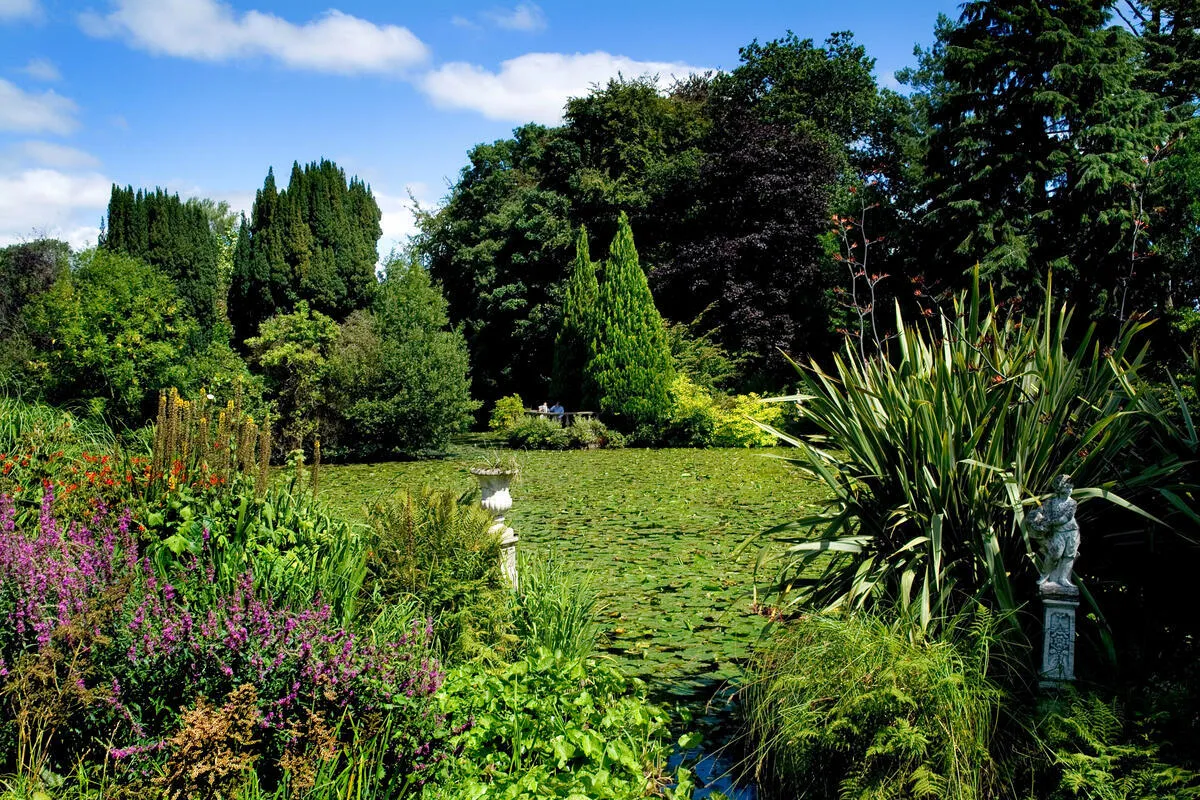
Altamont Gardens sits in the countryside between Tullow and Ballon in south County Carlow. It is 40 acres of formal and wild planting that the garden writer Robert Lloyd Praeger called "the most enchanting garden in the country". That was some time ago, but the claim still holds. Altamont is not the most famous garden in Ireland - Powerscourt and the National Botanic Gardens attract more visitors - but among people who know gardens, it is consistently ranked as one of the best.
The gardens were developed over generations by the North family, and shaped most significantly by Corona North, who spent decades collecting plants from around the world and integrating them into the landscape. When she died in 1999, she left the estate to the nation. The OPW now manages it, and entry is free. This is not a manicured showpiece. It is a garden with wildness in it - the Ice Age Glen drops into a ravine of ancient oaks and ferns, and the paths lead down to the River Slaney through proper woodland. It feels less like visiting a garden and more like being let into someone's life's work.
What to Expect
Give yourself at least ninety minutes. The gardens split roughly into three zones: the formal lawns and borders around the house, the walled garden with its nursery and cafe, and the wilder woodland that descends through the Ice Age Glen to the River Slaney.
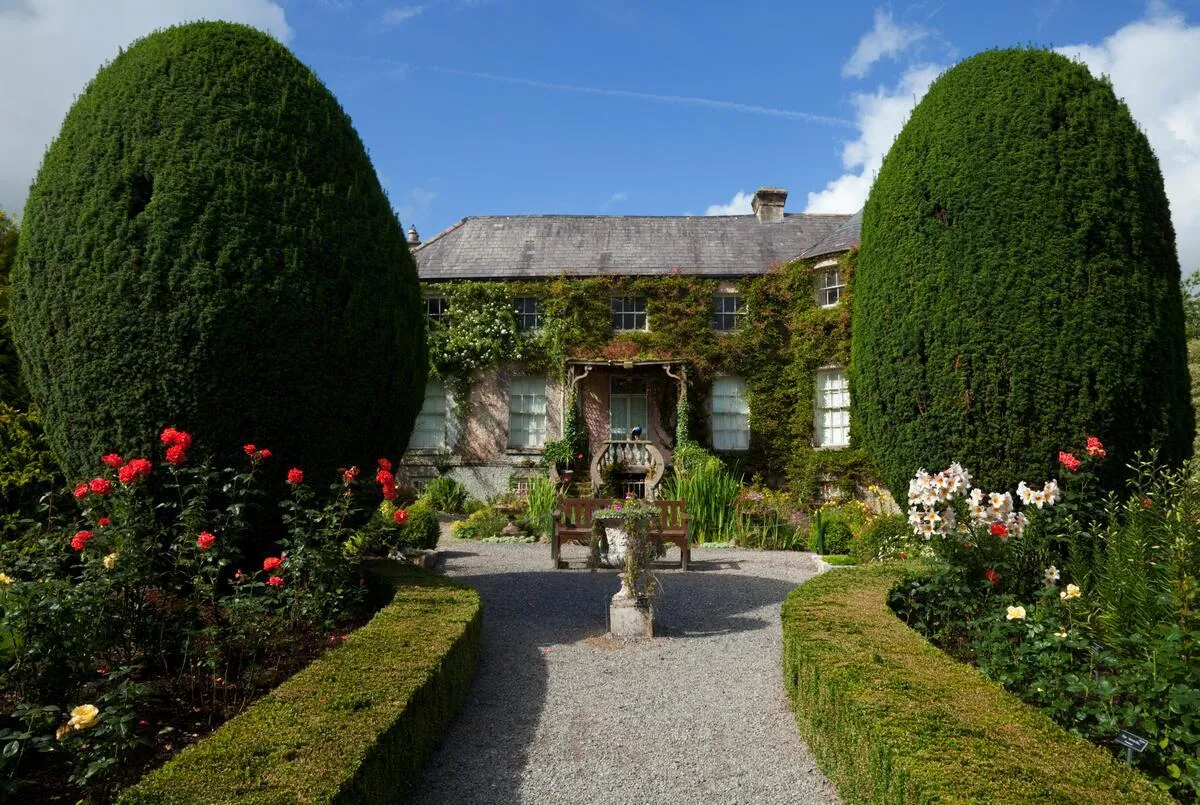
The formal section has sculpted yews, a lake surrounded by rare trees and rhododendrons, and sweeping lawns. It is beautiful in a conventional way. The walled garden, managed by Robert Miller, includes the Corona North Commemorative Border - planted by her gardening friends after her death - and a plant sales area where you can buy specimens grown on site.
The Ice Age Glen is the highlight. A steep path drops into a natural ravine filled with ancient oaks, massive stone outcrops, and shade-loving plants that Corona North planted over decades. The light changes as you descend. At the bottom, paths continue through woodland to the River Slaney, where you can walk along the banks. It is a different world from the manicured lawns above.
The best time to visit depends on what you want to see. Snowdrops carpet the woodland floor in late January and February. Rhododendrons and azaleas peak in late spring. The autumn colours in the glen are exceptional. Even in winter, the structure of the trees and the stone outcrops give the place a stark beauty that most gardens lack.
How to Get There
Altamont Gardens are located at Altamont, Tullow, Co. Carlow (Eircode R93 N882). From Carlow town, take the R724 south towards Tullow - the gardens are signposted after about 20 minutes. From Tullow, head north on the R724 for about 8 kilometres.
There is no public transport directly to Altamont. The nearest town with bus connections is Tullow (8 km away), and Carlow town has a train station with Dublin services. A car is effectively essential. From Dublin, Altamont is about 100 kilometres south on the M9, then R724 - roughly 90 minutes.
Where to Stay Nearby
Most visitors to Altamont combine it with other Carlow attractions in a day trip. If you are staying overnight, Carlow town (25 minutes) has the widest range of accommodation. Tullow (10 minutes) has a handful of B&Bs and is closer.
What Else is Nearby
A Note on the History
The estate dates to the 18th century and was originally part of a larger landholding. The lake was dug during the Famine as a relief work, a common pattern across Irish estates. The current garden layout reflects primarily the work of two generations: the plantings begun in the early 20th century by Corona North's father, and Corona's own half-century of development that followed.
Corona North was an unusual figure in Irish gardening - self-taught, internationally connected, and utterly devoted to the place. She exchanged plants with botanical gardens around the world and planted things that had no business thriving in County Carlow but somehow did. Her legacy is visible in the extraordinary diversity of species and the way cultivated and wild sections blend seamlessly. The OPW has maintained her vision well.
Frequently Asked Questions