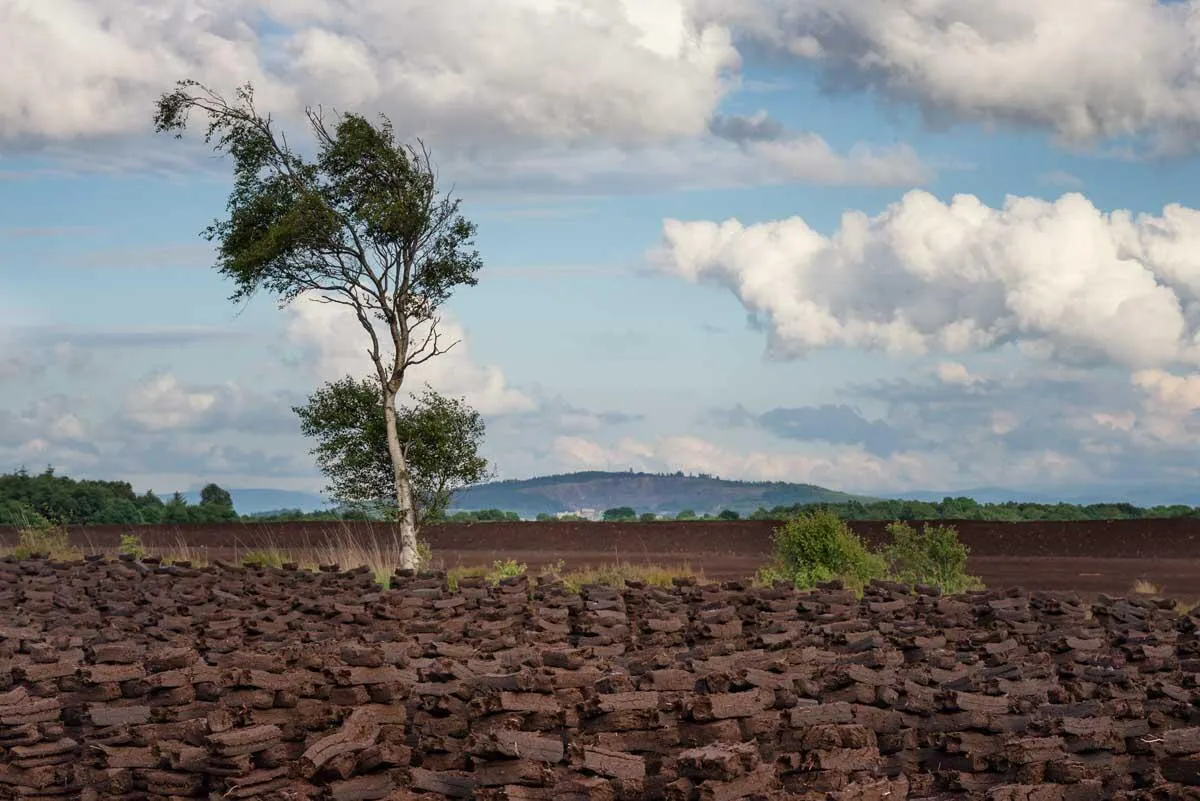
The Bog of Allen is the largest raised bog complex in Ireland. It covers roughly 370 square miles across Counties Kildare, Offaly, Laois, and Westmeath. That makes it enormous. It also makes it almost impossible to "visit" in any conventional sense.
What you can visit is the Bog of Allen Nature Centre at Lullymore in County Kildare. Run by the Irish Peatland Conservation Council, it is the one place where the bog becomes something you can walk through, learn about, and understand. It sits about 50 kilometres west of Dublin, deep in the flat midlands that most tourists drive past.
I went to university at Maynooth in the mid-90s and spent plenty of time in Kildare without ever really exploring the bogs. The Bog of Allen was just the reason the county felt so flat. This guide is written practically - what you will find, how to make it worthwhile, and why it matters more than its modest profile suggests.
What to Expect
You arrive at the Nature Centre and the first thing you notice is the quiet. This is not a dramatic landscape. There are no cliffs, no crashing waves, no Instagram moments. What you get is flat, wet terrain stretching to the horizon. It takes a minute to adjust your expectations.
The centre itself is small and run by the IPCC. Inside, a museum-style exhibition covers peatland ecology - how bogs form, what lives in them, and why Ireland has been destroying them for centuries. The displays are straightforward and educational.
Outside, the self-guided bog walk takes you onto the raised bog on a trail mixing boardwalk sections with rougher ground. You will want proper footwear. Trainers will get soaked. The trail is not long - maybe 30 to 45 minutes - but the ecology is genuinely interesting if you slow down.
Sphagnum moss in half a dozen colours. Bog cotton nodding in the wind. Sundew plants with sticky red tendrils trapping insects. These are carnivorous plants growing wild in Kildare, which most people do not expect from Ireland's flattest county.
The outdoor garden has additional exhibits including a recreated traditional cottage interior and areas for pond dipping. These lean towards families and school groups, but they give useful context.
Lullymore Heritage and Discovery Park is a separate attraction nearby. It is more family-focused with playgrounds and themed trails. It operates independently, so check its own opening times.
Is It Worth It?
The bog itself runs to 370 square miles across four counties, so the Nature Centre at Lullymore is the way in. It is run by the Irish Peatland Conservation Council on a donation basis, fifty kilometres west of Dublin, with an exhibition, a garden and a self-guided trail out onto the bog. An hour and a half to two and a half hours covers the lot.
The catch: the Nature Centre is weekday-only. Monday to Friday, 10am to 4pm. There is no cafe, no gift shop worth mentioning, and the facilities are basic. This is a conservation charity on limited funding, not a commercial attraction. You will not spend a full day here. Plan it as a morning stop on a day that includes other Kildare destinations.
How to Get There
The Nature Centre is at Lullymore West, outside Rathangan. From Dublin, take the M7 towards Limerick and exit at Junction 10 for Rathangan. The drive takes about 50 minutes from Dublin without traffic.
The roads around Lullymore are narrow and rural. Do not rely entirely on your sat nav for the final stretch. There are local signs for both the Nature Centre and the Heritage Park - they are close but separate.
Public transport to Lullymore is effectively non-existent. Bus Eireann serves Rathangan, but the Nature Centre is several kilometres outside town with no connecting service. You need a car.
Parking at the Nature Centre is a small free car park. It rarely fills up.
Where to Stay Nearby
Lullymore is deep rural Kildare with no hotels nearby. The larger towns within 30 minutes are your best options.
University town hotel in Maynooth, 30 minutes from Lullymore. Good base for north Kildare and easy access to Dublin.
Check availability →What Else is Nearby
A Note on the History
Ireland's raised bogs began forming after the last ice age, around 10,000 years ago. The Bog of Allen is the largest - a vast complex of waterlogged peatland that once covered much of the midlands. For centuries, local communities cut turf by hand for fuel. Every household had turbary rights and a family plot.
That changed in the 1940s when Bord na Mona began industrial-scale extraction. Vast areas were drained, cut, and processed into briquettes and power station fuel. By the time environmental awareness caught up, huge tracts of the original bog had been stripped bare.
The sale of peat for burning was banned in Ireland in 2022, with limited exceptions for personal turbary rights. The IPCC has campaigned for bog conservation since the 1980s. What remains is now recognised as ecologically critical - a carbon store, a habitat for specialist species, and a landscape that took millennia to form and decades to destroy.
Frequently Asked Questions