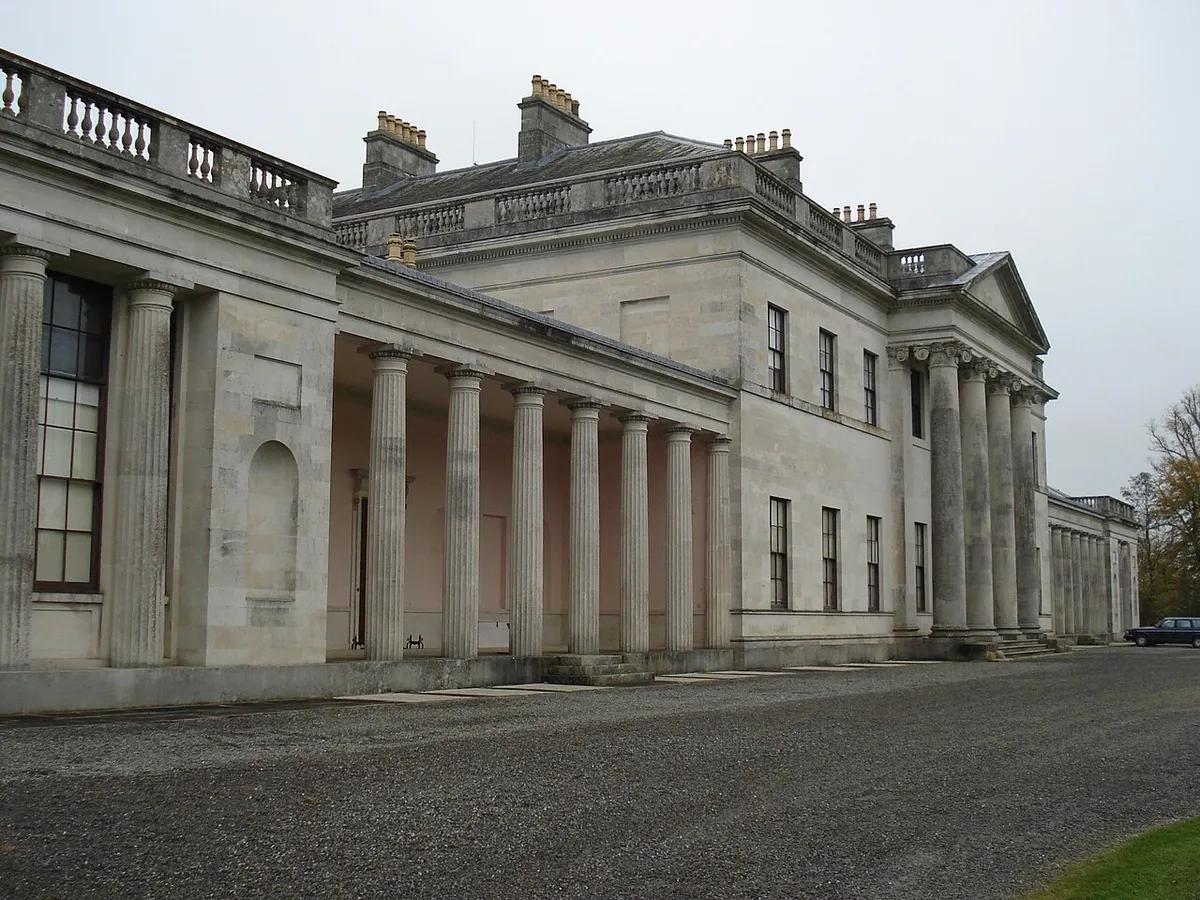
Castle Coole is one of the finest neoclassical houses in Ireland. Built between 1789 and 1798 on the edge of Enniskillen, the mansion sits within a 1,200-acre estate of parkland, lake, and ancient woodland. The Portland stone facade - shipped from Dorset by sea and hauled overland by bullock cart - gives the house a presence that few Irish country estates can match.
The estate belongs to the National Trust and sits in County Fermanagh, a county defined by water, quiet roads, and a pace that suits unhurried exploration. Whether you come for the guided house tour, the lakeside walks, or the resident greylag geese, Castle Coole delivers a straightforward, well-managed heritage visit without overselling itself.
Enniskillen town centre is just 1.5 km away. You can combine the estate with lunch in town and still have the afternoon free for the wider lakelands.
What to Expect
The house tour is guided only - there is no self-guided option. Tours run approximately one hour and take you through the principal rooms, including the oval saloon, the lobby hall with its screen of Doric columns, and the state bedroom. That bedroom was prepared for a visit from King George IV. He never came. The furniture, plasterwork, and Regency fittings remain largely as they were arranged for his anticipated arrival.
Guides are knowledgeable and tend to keep things conversational rather than scripted. You will hear about the Earls of Belmore, the logistics of shipping Portland stone across the Irish Sea, and the slow decline and eventual transfer to the National Trust. If you have questions, ask them - the guides welcome it.
Outside, the 1,200-acre parkland is the real draw for a longer visit. A network of walking trails loops through mature oak woodland and along the lakeshore. The main circular walk takes roughly 45 minutes at an easy pace. Surfaces are a mix of tarmac and gravel - manageable in trainers during dry weather, but muddy after rain. Bring proper shoes if the forecast is uncertain.
The estate lake is home to a colony of greylag geese. This is one of the very few non-migratory flocks in Ireland, meaning the birds are resident year-round rather than passing through. You will see them on or near the water on most visits. Bring binoculars if you have them.
Storm Eowyn caused damage to some estate trees in January 2025. Most trails have been cleared, but check with staff on arrival or look at the National Trust website for any closures before you go.
The courtyard cafe serves decent tea, coffee, and light lunches. It is not a destination restaurant, but it is perfectly fine for a bowl of soup and a scone after the walk. The gift shop stocks the usual National Trust range.
The parkland is open 10am to 5pm year-round. The house opens seasonally, typically Easter through October. Check the National Trust website for exact dates before planning a winter visit - you may find only the grounds accessible.
Is It Worth It?
GBP 11.50 for the house, nothing at all for the 1,200 acres around it. Castle Coole is the finest neoclassical house in Ireland, built between 1789 and 1798 in Portland stone shipped from Dorset by sea and hauled overland by bullock cart. The tour is guided only, about an hour, taking in the oval saloon, the Doric-columned lobby hall, and the state bedroom prepared for a visit from George IV that never happened. Parkland access is free year-round, and two to three hours covers house and grounds together.
One limitation: the house interior involves stairs and narrow corridors. If you have mobility difficulties, parts of the tour will be inaccessible. Phone ahead and the staff will advise on what you can see.
How to Get There
From Enniskillen
Castle Coole sits on the south-eastern edge of Enniskillen, just 1.5 km from the town centre. Follow the A4 towards Dublin and the entrance is signposted on your left. You can walk it in 20 minutes from the main street, though most visitors drive.
From Belfast
Take the M1 west towards Dungannon, then the A4 through Augher and Fivemiletown to Enniskillen. The drive is approximately 2 hours depending on traffic. The route is straightforward motorway and dual carriageway for the first half, narrowing to single carriageway through south Tyrone.
From Dublin
Head north on the M3/N3 through Cavan, then take the N54/A509 to Enniskillen. Allow around 2.5 hours. You cross the border without any stops or checks. Note that you move from euro to sterling pricing once in Northern Ireland.
Car Rental
You do not strictly need a car for Castle Coole alone - Enniskillen has bus connections from Belfast and Dublin. But if you want to explore wider Fermanagh - Florence Court, Marble Arch Caves, the Erne lakelands - a car is essential. Public transport between rural Fermanagh sites is sparse to non-existent.
Where to Stay Nearby
Enniskillen is the obvious base. The town is minutes from Castle Coole and has a good range of hotels, restaurants, and pubs. It also positions you well for day trips across County Fermanagh - Lough Erne, Florence Court, and the Marble Arch Caves are all within 30 minutes.
A 4-star boutique hotel with 28 rooms, a 5-minute walk from Enniskillen town centre and a short drive to Castle Coole. Stylish design throughout, with live entertainment at weekends. GBP 90-110 per night.
Check availability →What Else is Nearby
A Note on the History
Castle Coole was built for Armar Lowry-Corry, the 1st Earl of Belmore, who wanted a house that would outclass anything else in the north-west of Ireland. He hired James Wyatt, the leading English architect of the day, and gave him a brief that prioritised classical purity over local convention.
Wyatt delivered. The house is a textbook exercise in Palladian restraint - symmetrical, proportioned, and faced entirely in Portland stone. That stone came from quarries in Dorset, was shipped by sea to Ballyshannon, and then hauled overland to Enniskillen by bullock cart. The logistics alone took years.
Inside, the rooms reflect a transition from late Georgian to Regency taste. The 2nd Earl refurnished much of the house in the 1820s, adding rich fabrics and gilt furniture. The state bedroom was prepared specifically for a visit from King George IV during his 1821 tour of Ireland. The king went to Dublin and never made it to Fermanagh. The room has remained largely untouched since.
The Belmore family stayed at Castle Coole until the 20th century, when maintenance costs outpaced income. The National Trust took ownership in 1951 and has managed the house and estate since.
Frequently Asked Questions