If you visit one museum in Ireland, make it Kilmainham Gaol. The guided tour through the prison where the leaders of the 1916 Rising were held and executed will reshape how you understand Irish history. It is not a comfortable visit. It is not meant to be.
The gaol opened in 1796 and held everyone from petty criminals to political prisoners for over a century. The 1916 executions in the stone-breakers' yard ended its life as a prison and began its life as a symbol. It is in west Dublin, about 20 minutes from the city centre by bus. Book in advance - it sells out daily.
What to Expect
The tour starts in a modern exhibition space covering the history of the prison and Irish nationalism. Then you enter the gaol itself. The guide leads you through the corridors, cells, and exercise yards. The cells are small, dark, and cold. Many held multiple prisoners at a time during the overcrowded years of the Famine.
The most powerful moments come in the 1916 section. The guide tells you which leaders were held in which cells, what they wrote in their final hours, and how they were executed one by one in the stone-breakers' yard over nine days in May 1916. James Connolly was so badly wounded from the Rising that he was strapped to a chair to be shot. Joseph Plunkett married Grace Gifford in the prison chapel by candlelight hours before his execution.
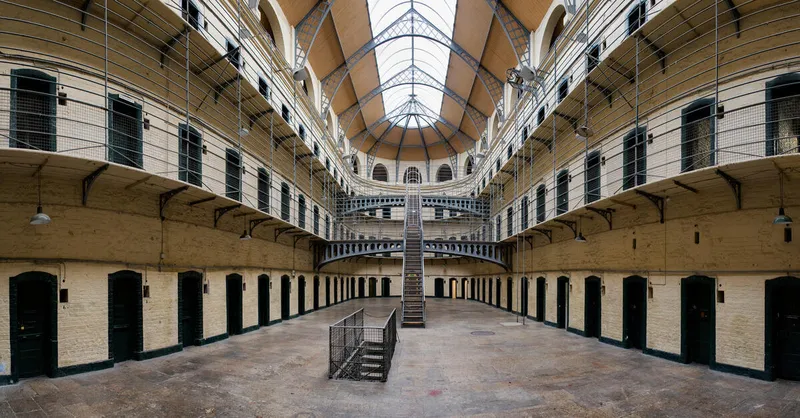
The Victorian east wing - a soaring atrium with iron walkways and cells arranged around a central hall - is architecturally dramatic. It has appeared in films and photographs so often that it feels familiar, but standing in it is different. The acoustics amplify every sound. The light falls through high windows onto bare stone.
Is It Worth It?
No hesitation on this one. EUR 8, or free on a Heritage Card, for 90 minutes inside the prison that held petty criminals and political prisoners from 1796, and where the leaders of the 1916 Rising were executed in the stone-breakers' yard. It is 20 minutes west of the city centre and it sells out daily, so book before you travel rather than after you arrive.
The catch: the guided tour is the only way to see the gaol, and group sizes are large. On a busy day you are shuffled through at pace with 30-40 others. The guide is always excellent but the experience is better with a smaller group. Early morning and weekday slots are quieter. Also: this is a prison that held and executed people. It is not a fun day out. It is important and sobering.
How to Get There
Bus 40 from O'Connell Street or 69 from the city centre to Kilmainham. The Luas Red Line to Suir Road is a 10-minute walk. From Heuston Station, it is a 15-minute walk along the river.
If driving, there is a small car park at the gaol but it fills quickly. Street parking on Inchicore Road is usually available. Dublin public transport is the easier option.
Where to Stay Nearby
Kilmainham is in west Dublin. Any city centre hotel is within 20 minutes by bus. The County Dublin hub has accommodation options across the city.
The closest quality hotel to Kilmainham. Walking distance to the gaol and Heuston Station. Good restaurant.
Check availability →What Else is Nearby
A Note on the History
Kilmainham Gaol opened in 1796 as the county gaol for Dublin. During the 1798 Rebellion, United Irishmen leaders were held here. During the Famine, the gaol was so overcrowded that cells built for one held five. Children as young as seven were imprisoned for theft.
The 1916 executions transformed the gaol from a place of punishment into a symbol of Irish independence. The British military authorities executed 14 of the Rising's leaders here between 3 and 12 May 1916. Public opinion had been largely against the Rising. The executions reversed it. Within six years, Ireland had its own government.
Frequently Asked Questions