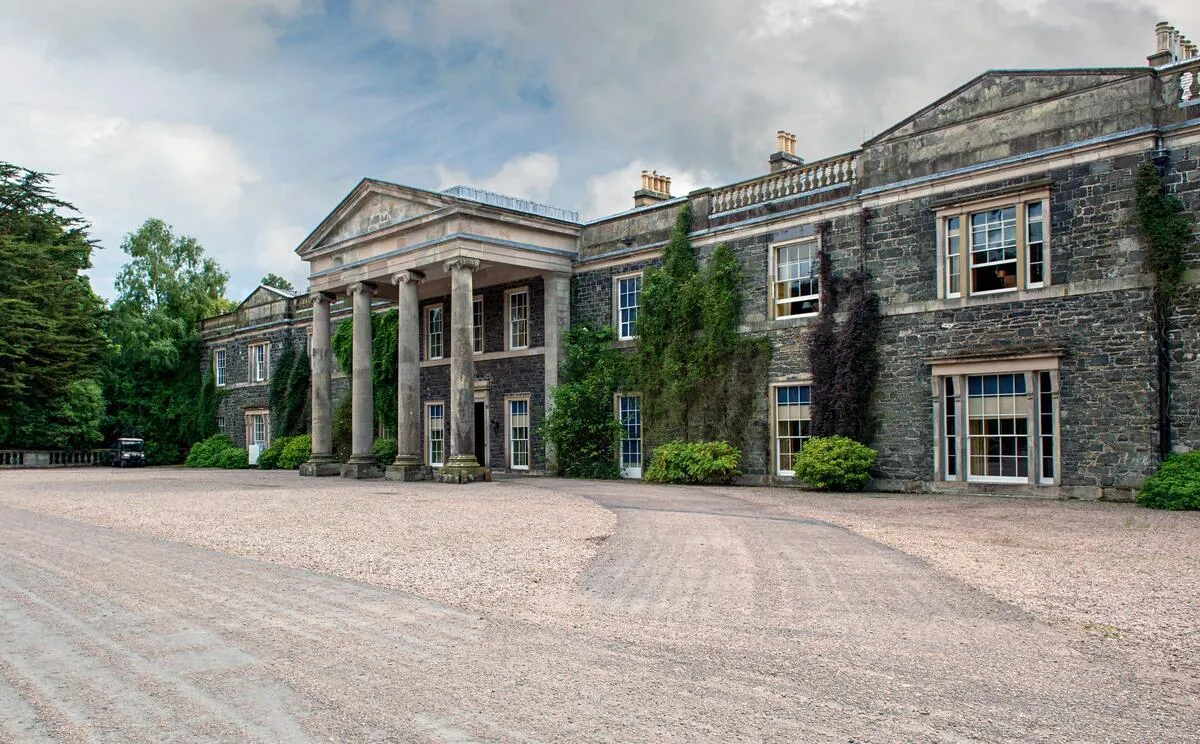
Mount Stewart is a National Trust property on the shores of Strangford Lough in County Down. The gardens are the draw. They are consistently ranked among the top ten gardens in the world, and that ranking is not hyperbole. Edith, Lady Londonderry, designed them in the 1920s with a creativity that bordered on obsession - Italian terraces, a shamrock garden, topiary animals, a sunken garden, and plant collections from every continent.
The house is fine. The gardens are extraordinary. If you visit one National Trust property in Northern Ireland, this should probably be it.
Mount Stewart reopens seasonally from April. It is closed over winter, including the house, gardens, and the Temple of the Winds. National Trust members enter free. For everyone else, expect to pay around GBP 12 to 15 for an adult ticket.
What to Expect
Start with the formal gardens around the house. The Italian Garden is structured and symmetrical - stone terraces, colonnades, and clipped hedges. The Shamrock Garden has a topiary Irish harp and a red hand of Ulster planted in begonias. It sounds kitsch. In person, the craftsmanship is impressive. The Dodo Terrace has stone animal statues that Lady Londonderry designed as caricatures of her political friends. Every statue has a story.
The wider grounds take you through woodland paths down to the lough shore. The Lily Wood is at its best in spring when the bluebells come through. The rhododendrons peak in late April and May. There are specimen trees from Australia, South America, and the Himalayas - the mild microclimate of the lough shore allows plants to grow here that would not survive elsewhere in Northern Ireland.
The house tours are self-guided. The rooms are elegantly furnished with family portraits and period furniture. The political connections of the Londonderry family - Castlereagh was born here - give the house historical weight. But if time is limited, skip the house and spend the time in the gardens.
The Temple of the Winds is a short walk from the main house. It is a small banqueting hall built in 1785, modelled on the Tower of the Winds in Athens. The views from the hilltop across Strangford Lough are the best on the estate. It has been under restoration and may have limited access - check before you visit.
Is It Worth It?
Gardens that make genuine top-ten-in-the-world lists, and free to National Trust members. GBP 12 otherwise. Edith, Lady Londonderry laid them out in the 1920s with something close to obsession: Italian terraces, a shamrock garden, topiary animals, a sunken garden and plant collections from across the globe, all on the shore of Strangford Lough. Woodland paths run down to the water, the Lily Wood is at its best when the bluebells come through, and the Temple of the Winds, built in 1785 on the Athens model, is a short walk from the house. House tours are self-guided.
The negative: Mount Stewart is a seasonal attraction. If you turn up between November and March, you will find it closed. Even in season, it closes on Fridays from April to June. The tea room is pleasant but not exceptional. And the gardens, while world-class, require an interest in plants and design to fully appreciate. If formal gardens are not your thing, this is not the place to discover them.
How to Get There
Mount Stewart is on the A20, about 25 minutes east of Belfast and 10 minutes south of Newtownards on the Ards Peninsula. The entrance is well signposted. There is a large car park at the property - free for National Trust members, paid for others.
The Belfast to Portaferry bus passes close to the entrance. Ask the driver for the Mount Stewart stop. From there it is a short walk to the visitor reception. A car is more convenient, especially if you plan to combine with Strangford Lough or the Ards Peninsula.
Where to Stay Nearby
Newtownards is the nearest town with a range of accommodation. Belfast is only 25 minutes away and offers the widest choice. See the full County Down guide for options around the lough.
Historic country house B&B on the Ards Peninsula. Period rooms, parkland setting. 20 minutes from Mount Stewart.
Check availability →What Else is Nearby
A Note on the History
Mount Stewart has been home to the Vane-Tempest-Stewart family, Marquesses of Londonderry, since the 1740s. Robert Stewart, Viscount Castlereagh, was born here in 1769. He went on to serve as Foreign Secretary and was a key architect of the post-Napoleonic order in Europe.
The gardens are largely the work of Edith, 7th Marchioness of Londonderry, who began redesigning the grounds in 1921. She was a formidable political hostess and a passionate gardener. The gardens she created combined influences from Italy, Spain, and Japan with her own sense of humour - the animal statues are political satire in stone. The National Trust acquired the property in 1977 and has maintained the gardens to her original vision.
Frequently Asked Questions