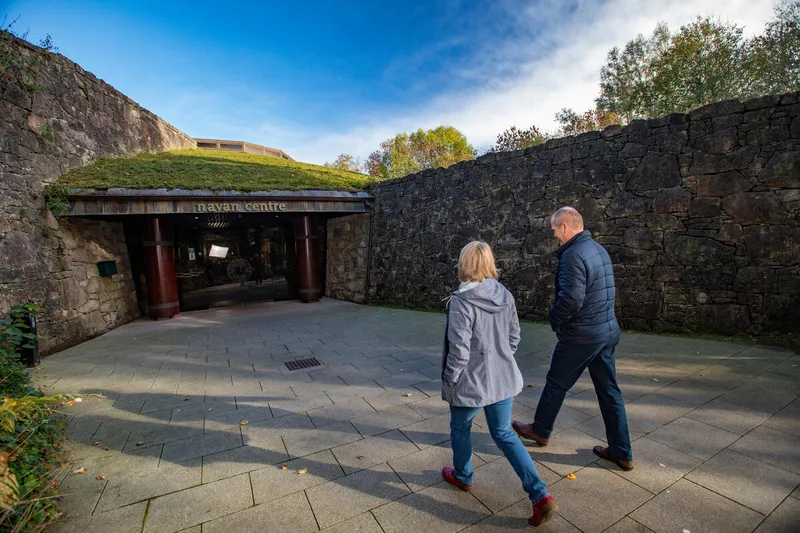
Navan Fort is the most important archaeological site in Ulster and one of the great royal sites of ancient Ireland. Known in Irish as Emain Macha, this was the legendary seat of the Kings of Ulster and the setting for the Cuchulainn cycle - the Iliad of Irish mythology. The hilltop has been a place of ceremony and power for over 2,000 years.
What you see today is a large circular enclosure on a hilltop just outside Armagh city. The visitor centre brings the archaeology to life. The hilltop itself is atmospheric in the right conditions and underwhelming in the wrong ones. Knowing the story before you arrive makes all the difference.
What to Expect
The Navan Centre is the starting point. Interactive displays cover the archaeology, the mythology, and the reconstruction of what life was like in Iron Age Ulster. The centrepiece is the story of the great timber structure that stood here around 95 BC - a massive circular building, 40 metres in diameter, that was filled with limestone rubble and deliberately burned. Nobody knows why. It is one of the great mysteries of Irish archaeology.
Guided tours leave from the centre and walk you up to the hilltop. The guide brings the landscape alive - pointing out where the ditches and banks would have been, where the entrance gates stood, and how the site relates to the wider landscape of County Armagh. Without the guide, the hilltop is a grassy mound with views. With the guide, it becomes the capital of ancient Ulster.
The Cuchulainn stories are rooted here. The boy Setanta arriving at Emain Macha, killing the hound, taking its name. Deirdre of the Sorrows. The cattle raid of Cooley. These are not fairy tales - they are Ireland's founding mythology, and this is where they are set.
The catch: if you arrive expecting dramatic ruins - stone walls, towers, or visible structures - you will be disappointed. This is an archaeological landscape, not a castle. The enclosure is grass-covered and the structures are underground. The visitor centre does the heavy lifting. Come for the story and the history, not for Instagram-ready ruins.
How to Get There
Navan Fort is 3 km west of Armagh city centre on the Killylea Road. It is well signposted from the city. Parking is free on site.
There is no public transport to Navan Fort. From Armagh city centre, it is a 10-minute drive or a 40-minute walk. A car is the practical option, especially if combining with Slieve Gullion or the Ring of Gullion.
Where to Stay Nearby
Stay in Armagh city, 3 km away. The same hotels serve both Navan Fort and the city.
Central 4-star hotel, 10 minutes from Navan Fort by car. Walking distance to Armagh's cathedrals and museums.
Check availability →What Else is Nearby
A Note on the History
Navan Fort has been a ceremonial site since at least the late Bronze Age. The great structure built around 95 BC - a massive timber building deliberately filled with stones and burned - suggests a ritual act of enormous significance. Similar deliberate destructions are found at other royal sites across Ireland, but nothing on this scale.
In the medieval period, Emain Macha was remembered as the capital of the Ulaid, the people who gave Ulster its name. The Cuchulainn cycle, written down in the 12th century but drawing on much older oral tradition, places its greatest stories here. The site was already ancient and sacred when those stories were first told.
Frequently Asked Questions