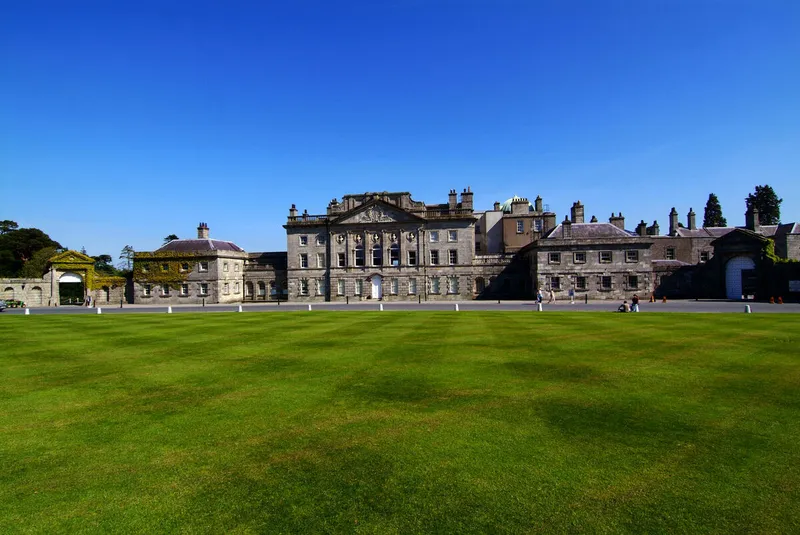
Powerscourt is two things that charge separate admission and sit 6 kilometres apart: a 47-acre garden estate in Enniskerry and Ireland's highest waterfall in a forest park up the road. Most visitors do both in a morning, which is the right call. The gardens are immaculate, the views of Sugar Loaf mountain are genuinely impressive, and the waterfall drops 121 metres into a wooded valley.
The estate dates from the 13th century but the gardens you see today are largely 19th-century work. The Palladian house burned in 1974 and was rebuilt as a shopping and dining complex. It is a strange combination - aristocratic grandeur, garden artistry, and a retail village all on the same grounds. But the gardens are the real draw, and they are among the best in Ireland or Britain. County Wicklow does grand estates very well.
What to Expect
The gardens are the main event. From the house terrace, a formal Italian garden drops away in terraces down to Triton Lake with Sugar Loaf mountain framed perfectly behind it. The design is deliberate - every sightline calculated to draw your eye to the mountain. It is one of those views that makes you stop talking for a moment.
Beyond the Italian gardens, the grounds divide into distinct areas. The Japanese Gardens were laid out in 1908 and have a quiet, enclosed feeling. The walled gardens hold herbaceous borders. The Pepper Pot Tower is a folly on a hilltop with views across the estate. The Pet Cemetery is genuinely charming - generations of Powerscourt family dogs and horses buried under handwritten headstones.
The Avoca Cafe in the main house is better than it needs to be. Good food, reasonable prices, and the terrace overlooks the gardens. It gets busy at lunch but moves quickly.
The waterfall is a separate visit. Drive 6 kilometres south from the estate into the Powerscourt Waterfall forest park. A short walk from the car park brings you to the base of the falls - 121 metres of water dropping over a granite cliff into a pool. In winter after heavy rain, the volume is impressive. In dry summer, it can be a trickle. The forest park around it is good for picnics and short walks.
Is It Worth It?
Two separate sites six kilometres apart, and most people do both in a morning. The 47-acre gardens at Enniskerry are immaculate with the Sugar Loaf framed behind them, and the waterfall up the road drops 121 metres into a wooded valley, the highest in Ireland. The estate goes back to the 13th century though the gardens are largely 19th-century work. Parking is free at both, the Avoca cafe in the house is excellent, and two to three hours covers the gardens with another hour for the falls.
The catch: Powerscourt is expensive for what it is. EUR 14 for the gardens and EUR 7 for the waterfall, no combined ticket, and the retail village in the house feels out of place. The waterfall in particular can be disappointing if there has been no rain - you pay EUR 7 to see a wet rock face. Check recent weather before visiting. Also, the estate is popular with Dublin day-trippers and coach tours, so weekend afternoons can be crowded.
How to Get There
Powerscourt is in Enniskerry village, about 25 kilometres south of Dublin city centre via the M11 and R117. Allow 40-50 minutes depending on traffic. The waterfall entrance is 6 km further south on a signposted road.
Dublin Bus route 44 runs from Hawkins Street to Enniskerry village, from where it is a 1 km walk to the estate entrance. There is no public transport to the waterfall. A car makes the day much easier, especially if combining with Glendalough or the Bray cliff walk.
Where to Stay Nearby
Enniskerry is a pretty village with cafes and a few B&Bs. The Powerscourt Hotel is right next door. For more options, see the County Wicklow hub.
Absurdly grand for a county this close to Dublin. The Sika restaurant is excellent and the views of Sugar Loaf from the terrace are worth the room rate alone.
Check availability →What Else is Nearby
A Note on the History
The Powerscourt estate was granted to the Anglo-Norman de la Poer (Power) family in the 13th century. The current house was designed by Richard Cassels in the 1730s for the 1st Viscount Powerscourt. The gardens were laid out over the following century by successive Viscounts, each adding their own section - the Italian terraces, the Japanese Gardens, the walled garden.
In 1974, a fire destroyed the interior of the house just as a major restoration was nearing completion. It sat as a shell for 20 years before being converted into the current retail and dining complex. The gardens, thankfully, were untouched by the fire and have been maintained continuously since the 18th century.
Frequently Asked Questions