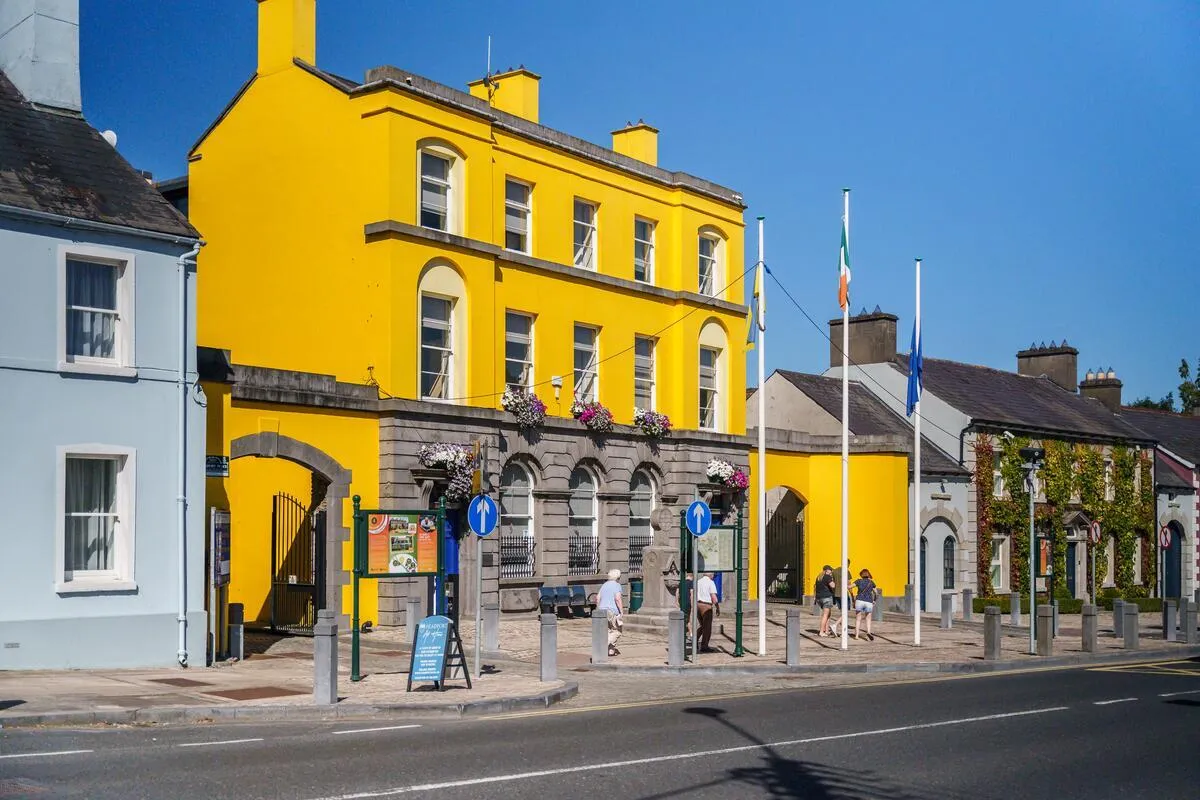
Slane Castle sits on a 1,500-acre estate above the River Boyne in County Meath. Most people know the name from music - U2, the Rolling Stones and Bruce Springsteen have all played the natural amphitheatre in the castle grounds. But Slane is three things at once: a working estate with a whiskey distillery, a planned Georgian village, and a launchpad for the Boyne Valley's ancient sites.
The distillery is the main reason to visit outside concert season. It runs daily tours through converted 18th-century stables, finishing with a tasting. The castle itself is not a regular visitor attraction. Public access is limited to Heritage Week and private tours booked in advance. Plan accordingly.
The village is worth time on its own. Four nearly identical Georgian houses face each other across the central crossroads - a piece of 18th-century estate planning that still defines the place. The Hill of Slane, a five-minute drive north, connects to St Patrick and the earliest days of Christianity in Ireland.
What to Expect
Start in the village. The crossroads is the centre of everything. The Four Sisters - four Georgian townhouses built by the Conyngham estate in the 1700s - sit at each corner. They are not a formal attraction, but they are the most distinctive architectural feature in the village. From the crossroads, the main street runs down towards the River Boyne.
Slane has a handful of restaurants and traditional pubs. It is a small village and you will cover it on foot in twenty minutes. The river is pleasant for a walk but there is no formal riverside trail.
Slane Distillery
The distillery sits within the castle estate, housed in converted 18th-century stables. Tours run regularly and finish with a guided whiskey tasting. Check slanedistillery.ie for current times and pricing before you visit. Allow 90 minutes for the full tour.
The conversion of the old stables is well done. The tour covers the whiskey-making process from grain to barrel, with the estate's history woven in. Even if you are not a whiskey drinker, the building itself is worth seeing. The tasting at the end includes three expressions.
Hill of Slane
Drive five minutes north from the village. The Hill of Slane is where, according to tradition, St Patrick lit the Paschal fire in 433 AD - directly challenging the High King at the Hill of Tara, visible across the plains to the south. The ruins of a 16th-century church and tower stand on the summit. The views across the Boyne Valley are excellent on a clear day.
The hill is free to access and takes about 30 minutes to explore. There are no facilities at the top.
Concert Season
Slane Castle has hosted open-air concerts since 1981. The natural bowl in the grounds holds up to 80,000 people. Luke Combs plays on 18-19 July 2026. Past headliners include Oasis, Guns N' Roses and Eminem. Concert days transform the village entirely - expect road closures, shuttle buses and very large crowds.
Is It Worth It?
The distillery and the village are the visit, and both are straightforward. Slane sits on a 1,500-acre estate above the Boyne, best known for the natural amphitheatre where U2, the Rolling Stones and Springsteen have all played. Outside concert season the draw is the whiskey distillery, running daily tours through converted 18th-century stables and finishing with a tasting of three expressions, about 90 minutes in all. The village is a planned Georgian one with the Four Sisters townhouses at the crossroads, and you will walk it in twenty minutes. The Hill of Slane is free.
Here is the truth about Slane Castle: you probably will not get inside. The castle does not operate regular public tours. During Heritage Week (usually late August), limited public tours are available by appointment. Outside that window, private tours cost EUR 150 for up to six people, with an additional EUR 12.50 per person up to a maximum of 25. You must book at least one week in advance.
Do not plan a trip to Slane expecting to walk up and tour the castle. It is a private residence first. The distillery and grounds are the accessible parts of the estate.
How to Get There
Slane is roughly 50 minutes north of Dublin by car. Take the M1 motorway towards Drogheda, exit at Junction 10 for the N2, and follow signs for Slane. The route is straightforward and well signposted.
From Drogheda, Slane is a 15-minute drive west on the N51. From Navan, it is 15 minutes east on the same road. Both towns make practical bases if you are spending time in the Boyne Valley.
Bus Eireann operates services to Slane from Dublin and Drogheda. Frequency is limited - check timetables in advance, especially at weekends. A car gives you far more flexibility, particularly for reaching the Hill of Slane and the wider Boyne Valley sites.
If you are visiting Ireland without a car, consider a Boyne Valley day trip from Dublin that includes Slane as a stop. For a broader driving route through the region, see the Ireland road trip guide.
Parking in the village is free and generally easy outside concert days. The distillery has its own car park.
Where to Stay Nearby
Slane village has limited accommodation. The nearest towns with a full range of hotels are Drogheda (15 min east) and Navan (15 min west). Both sit on the N51 and work well as bases for the Boyne Valley. See the County Meath guide for broader accommodation options across the county.
Country house hotel 10 minutes from Slane. Restored Georgian estate with excellent restaurant. The closest quality accommodation to the village.
Check availability →What Else is Nearby
A Note on the History
The Conyngham family has owned the Slane estate since 1703. The castle you see today was designed by three architects - James Wyatt, James Gandon and Francis Johnston - and built in 1785. A fire in 1991 destroyed much of the interior. The restoration took years and cost millions, partly funded by the concert revenue that Lord Henry Conyngham pioneered from 1981.
That first concert - Thin Lizzy in 1981 - was thrown partly out of financial necessity. It worked. The natural amphitheatre in the castle grounds proved ideal, and Slane became one of Ireland's most important live music venues.
The Hill of Slane carries a much older story. In 433 AD, St Patrick is said to have lit the Paschal fire here in defiance of the High King at Tara. The fire was visible from Tara across the Boyne plains. Whether the account is history or legend, the hill has been a place of Christian worship for over 1,500 years. The ruined friary on the summit dates from the 16th century.
The village itself reflects Georgian estate planning. The four identical houses at the crossroads were built to give symmetry and order to the settlement. It is one of the best surviving examples of a planned estate village in Ireland.
Frequently Asked Questions