County Meath
The Royal County - where the High Kings ruled from Tara, where Newgrange predates the pyramids, and where the Boyne Valley holds more archaeology per square mile than almost anywhere in Europe. Rich farmland, Norman castles, monastic ruins, and a depth of history that makes the rest of Ireland look recent.
Meath is where Irish history starts. That is not an exaggeration. Newgrange is older than the pyramids, older than Stonehenge, and engineered with a precision that still raises questions about the people who built it. The Hill of Tara was the seat of the High Kings. The Battle of the Boyne in 1690 decided the fate of the British and Irish crowns. Layer upon layer of significance, concentrated in a county that most Dublin tourists never bother to visit.
The county itself is rich farmland - the Royal County, as it is known, for good reason. This is Ireland's most fertile land, and the wealth it generated built the castles, monasteries, and estates that dot the landscape. Trim Castle is the largest Norman castle in Ireland. The monastic sites at Kells and Bective are atmospheric and largely unvisited. And the Boyne Valley between Drogheda and Slane holds more archaeology per square mile than almost anywhere in Europe.
Newgrange and Knowth can only be accessed via the Bru na Boinne Visitor Centre - you cannot drive to the tombs directly. Book online in advance, especially in summer. The winter solstice lottery for Newgrange's passage tomb illumination is entered through the OPW website. Meath is a car county, but its proximity to Dublin means the roads can be busy, particularly the N2 and M3.
Below you'll find my complete Meath intelligence - where to base yourself, what's genuinely worth your time, and the practical stuff that the tourism brochures conveniently skip. Everything from first-hand experience.
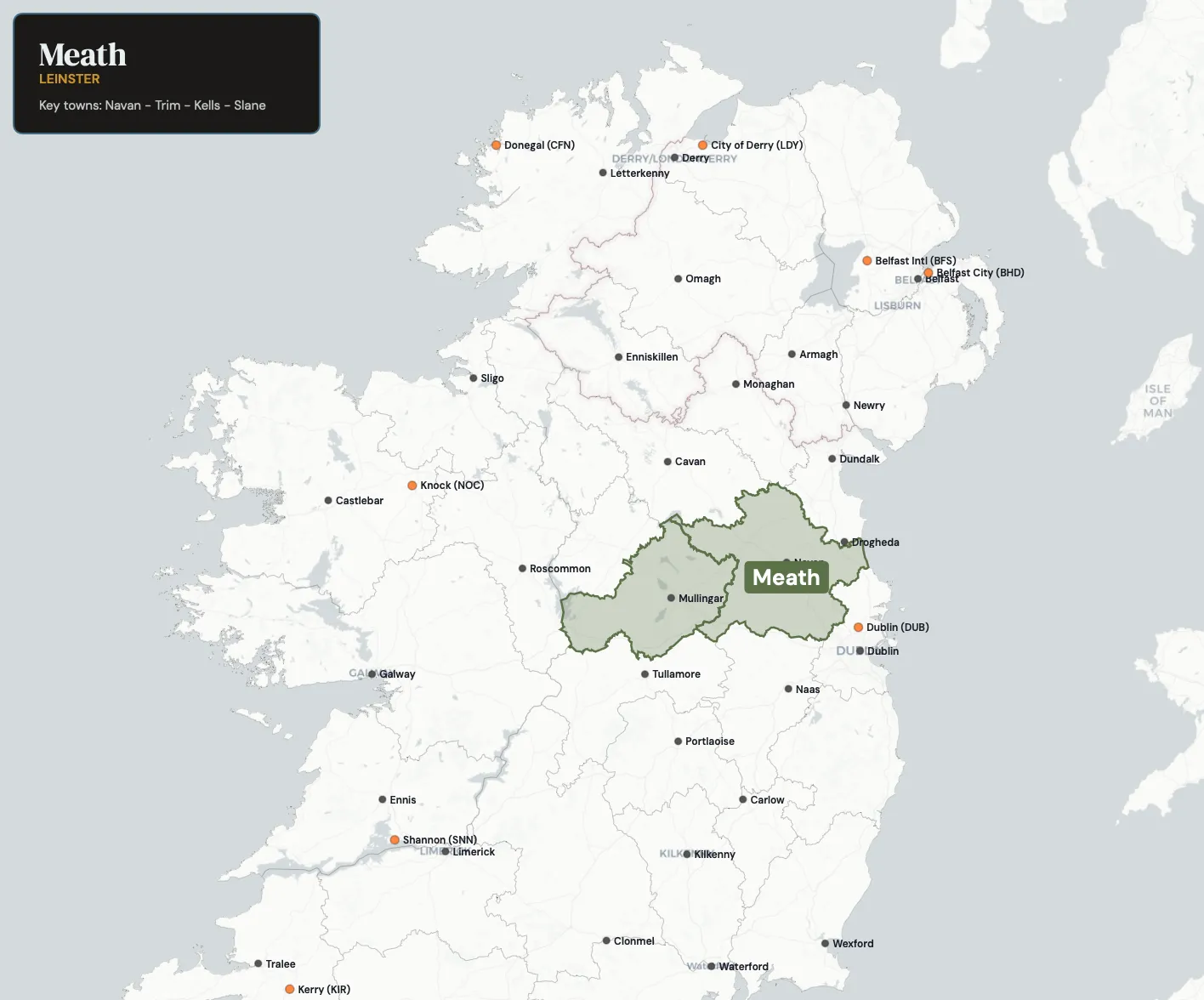
Where is County Meath?
Signature Destinations
The places that make Meath worth the drive. Arranged by genuine impact, not alphabetical order.
Heritage Full guide Newgrange (Bru na Boinne)
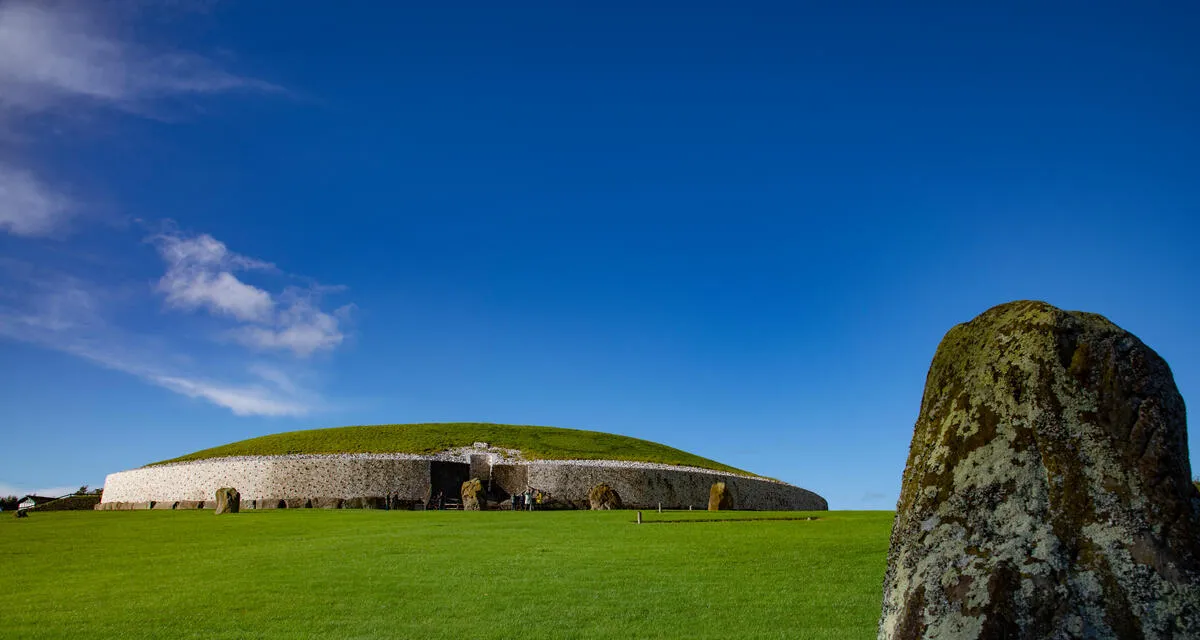
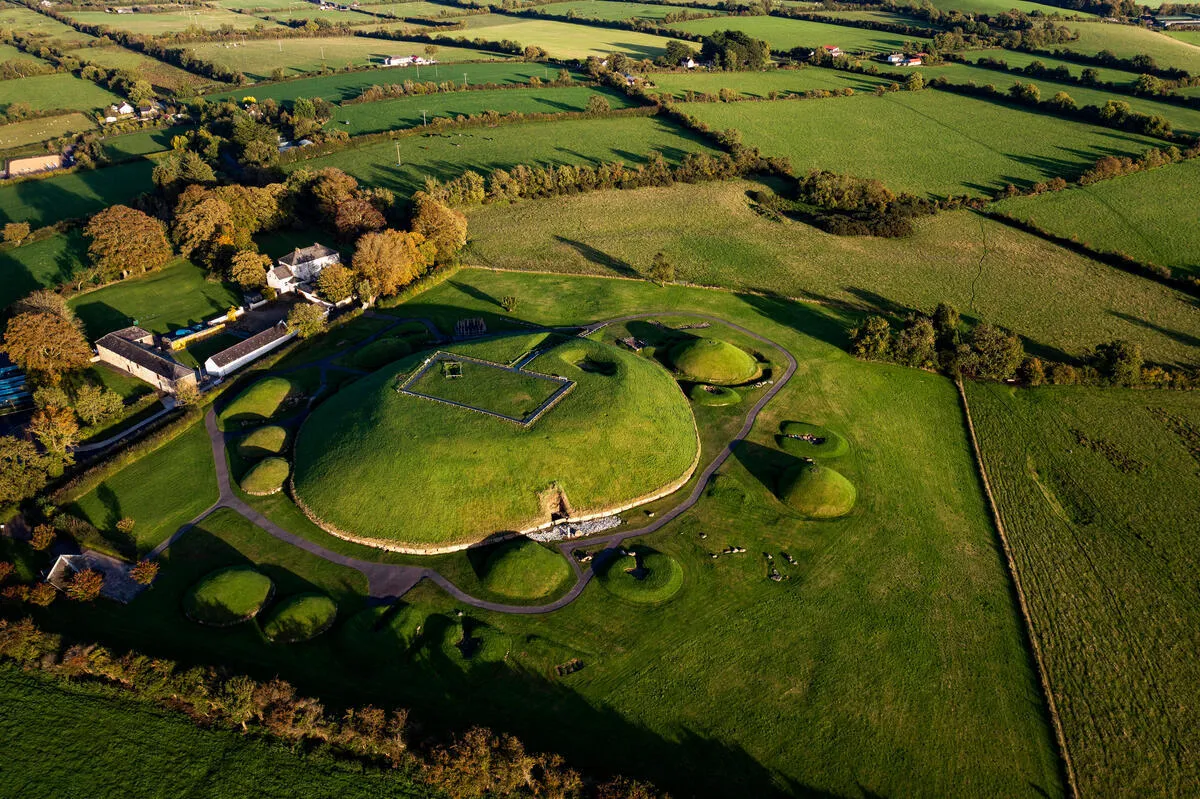
A 5,200-year-old passage tomb aligned so precisely that sunlight floods the inner chamber at the winter solstice. UNESCO World Heritage Site and arguably the most important prehistoric monument in western Europe. The visitor centre is excellent. The bus to the mound, the walk in, and the moment when the guide demonstrates the light effect inside the chamber - it stays with you.
Castle Full guide Trim Castle
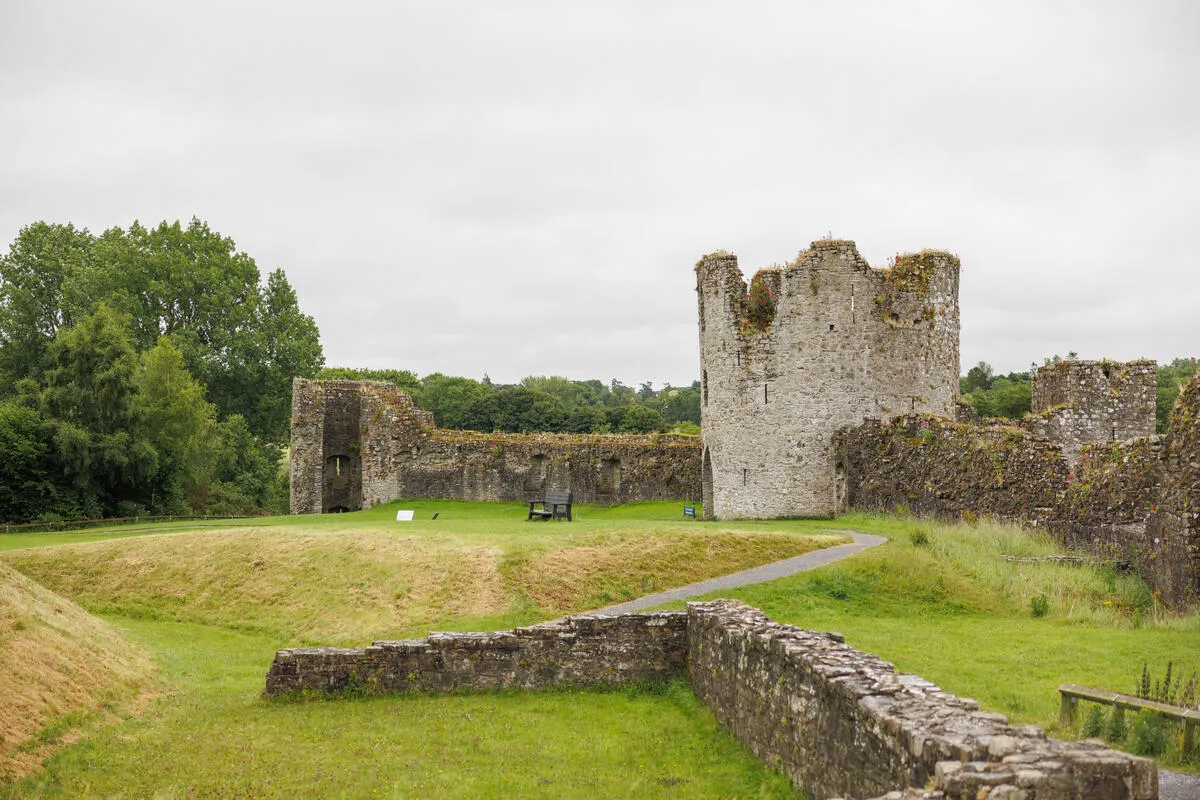
The largest Anglo-Norman castle in Ireland, built in the 12th century and used as a location in Braveheart. The keep is massive and the curtain walls are largely intact. You can enter the keep with a guided tour or explore the grounds freely. The town of Trim wraps around it with a medieval character that enhances the visit. Well worth a couple of hours.
Heritage Full guide Hill of Tara
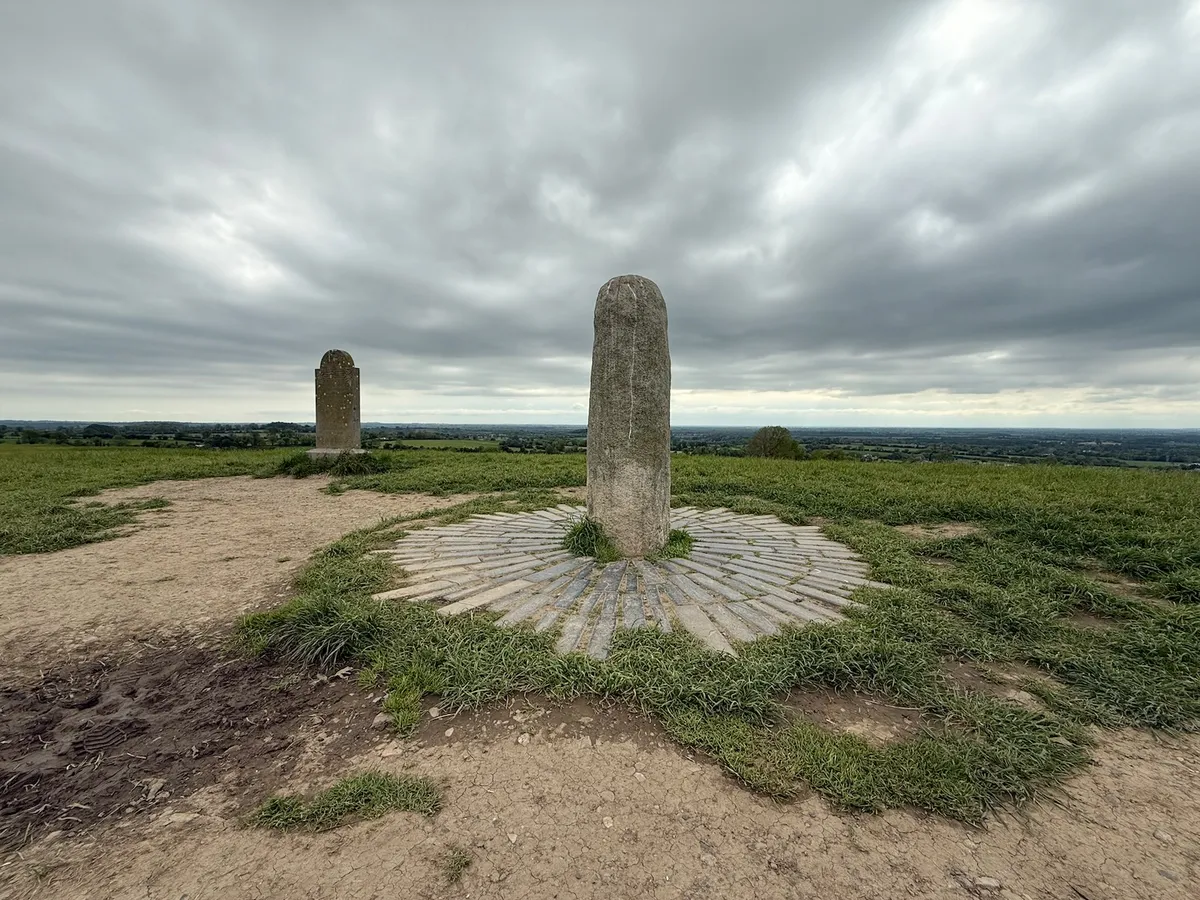
The seat of the High Kings of Ireland for centuries. What you see today is a series of earthworks on a low hill with views across five counties - the physical remains are understated, but the historical significance is immense. The visitor centre in the church provides context. Walk the Rath of the Synods and the Mound of the Hostages. Free access to the hill itself.
Heritage Full guide Knowth
Newgrange's neighbour and arguably more impressive as a total site - the main mound is surrounded by 18 smaller satellite tombs and the collection of megalithic art is the largest in western Europe. You cannot enter the main passage (unlike Newgrange), but the exterior and the satellite tombs are extraordinary. Accessed via the same Bru na Boinne Visitor Centre.
Ruin Full guide Bective Abbey
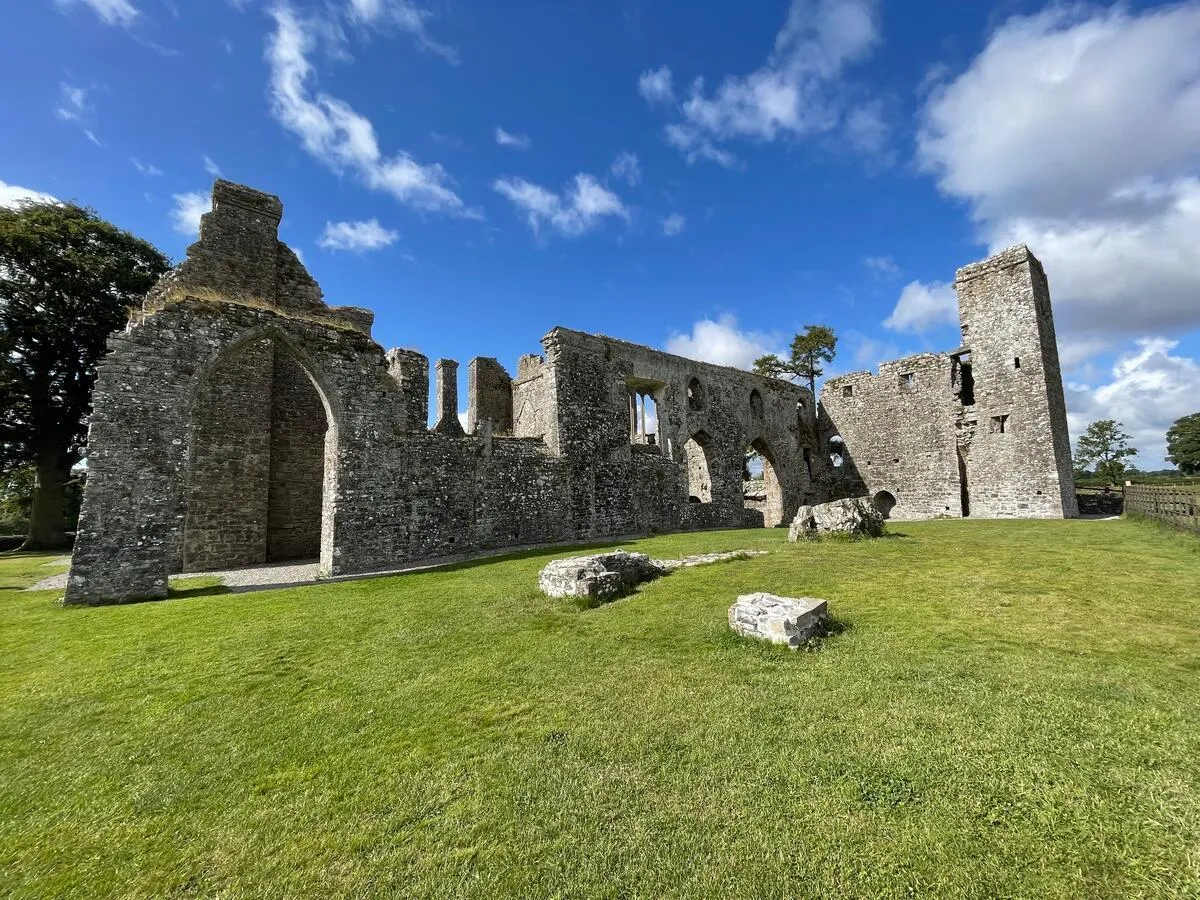
A 12th-century Cistercian abbey ruin in a field beside the Boyne. No visitor centre, no entry fee, no crowds - just a remarkably intact ruin with a cloister you can walk through. Used as a location in Braveheart. The setting is peaceful and photogenic. One of those places that makes you glad you left the main road.
Heritage Full guide Slane Castle & Village
An 18th-century castle with a famous natural amphitheatre in the grounds that has hosted concerts by U2, the Rolling Stones, and others. The village of Slane is one of the prettiest in Ireland - a planned estate village with four identical Georgian houses at its central crossroads. Slane Distillery in the castle grounds offers tours.
Where to Base Yourself
Trim is the best base for heritage and atmosphere. Navan is the practical choice with the most services. Slane is for couples and anyone who wants a village setting in the heart of the Boyne Valley.
Trim
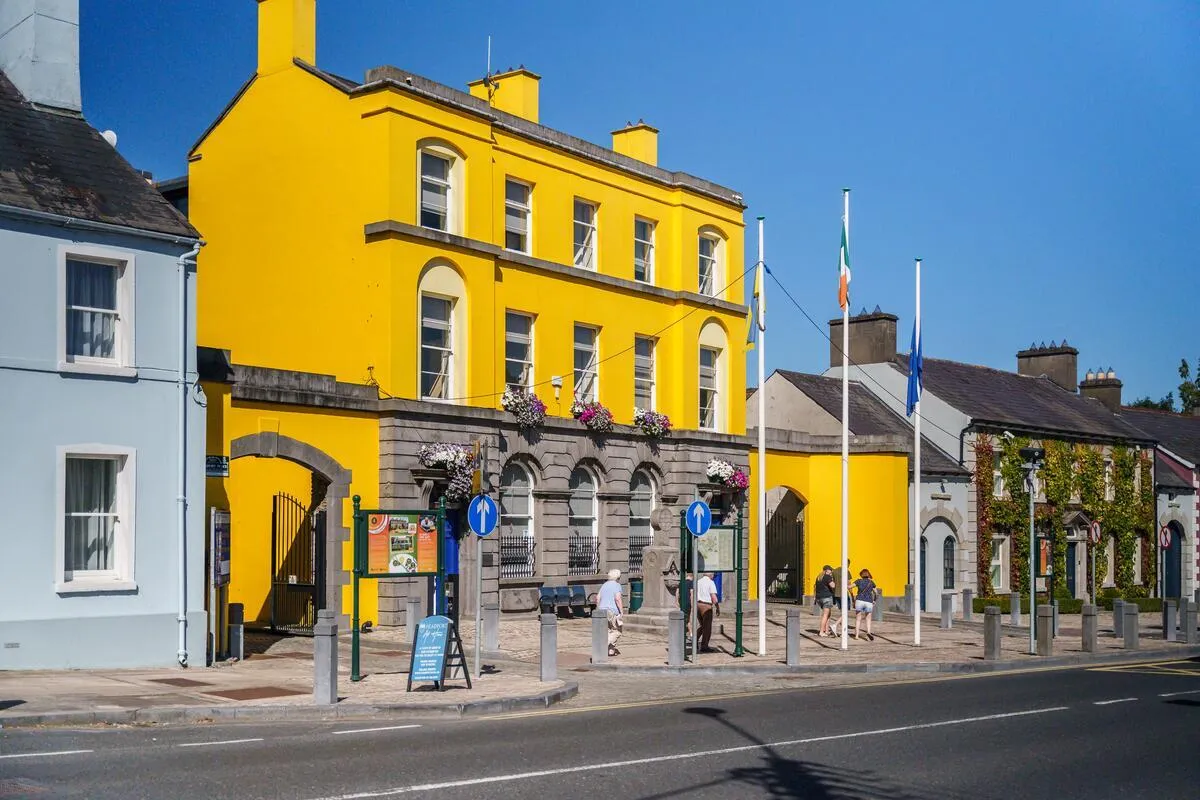
The best base in Meath. A genuine medieval town with the castle as its centrepiece, plus a selection of good pubs and restaurants. Compact and walkable. Within easy reach of Bective, Tara, and the Bru na Boinne sites. The heritage trail through town is well signposted and takes about an hour.
Navan
The county town and the most functional base. Not much in the way of tourist attractions, but good shops, restaurants, and accommodation options. Central for reaching everything in the county. The Boyne flows through town and there is a pleasant riverside walk.
Slane
A beautiful estate village on the Boyne with the castle, distillery, and a handful of good pubs and restaurants. Small but atmospheric. The Hill of Slane, where Patrick supposedly lit his Paschal fire in defiance of the High King at Tara, is a five-minute walk from the village. Limited accommodation but what exists is good.
Getting There & Around
Dublin Airport (DUB)
About 30-45 minutes from most of Meath. The closest county to Dublin Airport after Dublin itself. Extremely convenient for international arrivals who want to start outside the city.
From Dublin
About 45 minutes to Navan or Trim via the M3 motorway. Fast and straightforward. Meath is commuter country for Dublin, so expect traffic on the M3 at peak hours, but outside rush hour the drive is easy.
From Belfast
About 1.5 hours via the M1 south to Drogheda, then west on the N51 to Slane and the Boyne Valley. Alternatively, take the M1 further south and join the M3 to Navan. Either route is straightforward.
By Bus
Bus Eireann runs Dublin to Navan and Dublin to Trim regularly. The services are commuter-oriented but work well for visitors. No train station in the county - the nearest rail connections are Dublin and Drogheda.
When to Visit
April through October all work well - Meath is on the drier east coast and the heritage sites are largely outdoor, so long daylight hours help. Newgrange is open year-round. The winter solstice on December 21st is the most magical time to be at Newgrange, but entry to the chamber is by lottery. Summer weekends are busiest at the main sites - book Bru na Boinne in advance.
Where to Stay
Meath benefits from Dublin's proximity - there is a good range of hotels and country houses for a rural county. The Boyne Valley area has the most character.
Tankardstown House, Slane
A beautifully restored Georgian manor house in the Boyne Valley between Slane and Navan. The restaurant uses produce from the kitchen garden. The converted stables and cottages are as good as the main house. Five minutes from the Bru na Boinne Visitor Centre and ten from Slane Castle. The kind of place that makes you want to cancel your onward plans and stay another night.
Hotels
Good range for a rural county, benefiting from Dublin proximity. Trim Castle Hotel is well positioned. Knightsbrook near Trim has a spa and golf. Several country house options around the Boyne Valley.
B&Bs
Strong options around the Boyne Valley and in the villages. Many B&B hosts are knowledgeable about the local archaeology and history - ask for recommendations.
Self-catering
Growing range of cottages and farmhouse rentals, particularly in the Boyne Valley area. Good option for families visiting Newgrange and Trim over multiple days.
Finding Your Meath Roots
Meath's heritage spans five millennia without interruption. The Boyne Valley builders, the Celtic kings at Tara, the Norman lords at Trim, the Pale, the Battle of the Boyne, the Famine - every era of Irish history left its mark here. The county was the heartland of the Pale and has a stronger Anglo-Norman heritage than most of Ireland. If your surname is Plunkett, Cusack, Dillon, Nangle, or Fleming, you are likely looking at Old English Pale families with deep Meath roots.