County Antrim

Northern Ireland's headline act - a county of basalt columns, rope bridges, and castle ruins on cliff edges. The Causeway Coast is the draw and it delivers. But the quiet Glens on the eastern seaboard, puffin-covered Rathlin Island, and the moorland interior are the parts that stay with you longer.

Guides
3
Best months
May - Sep
From Dublin
2h drive
From Belfast
20 min - 1.5h
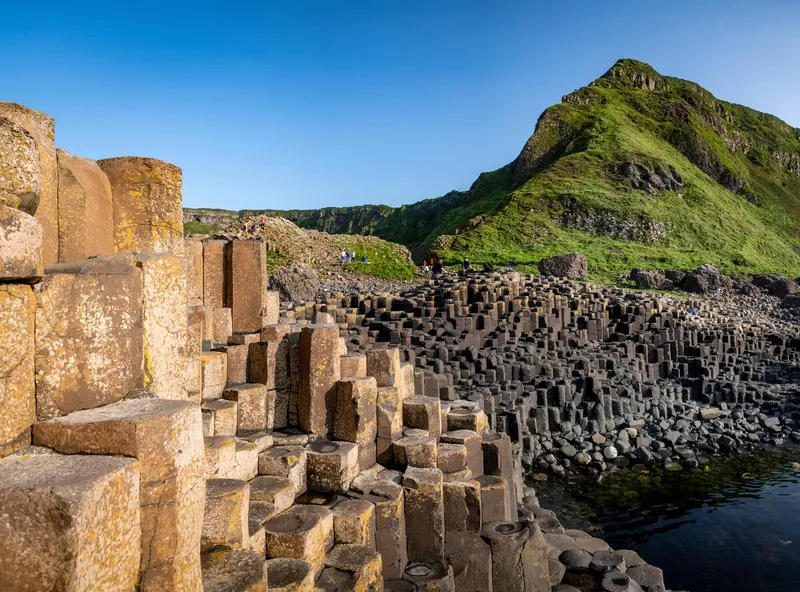
Giant's Causeway basalt columns at sunset

Antrim is Northern Ireland's showpiece county and it knows it. The Causeway Coast between Portrush and Ballycastle is the most heavily promoted stretch of coastline in Ireland, and with good reason - the Giant's Causeway, Carrick-a-Rede rope bridge, Dunluce Castle, and the Dark Hedges all sit within a thirty-mile strip. The marketing machine is powerful, the coach tours are relentless, and in July and August the coast road can feel like a theme park queue.

But Antrim is much more than the Causeway Coast brochure. The nine Glens of Antrim on the eastern seaboard are beautiful, empty, and largely ignored by international tourists. Rathlin Island sits six miles off Ballycastle and has more puffins than people. Carrickfergus has the best-preserved Norman castle in Ireland. And the inland plateau around Slemish - where Patrick was supposedly enslaved - is an austere, moorland landscape that feels nothing like the manicured coast.

Know before you go

The Causeway Coast is a car journey, not a bus trip. You can technically reach the Giant's Causeway by bus from Belfast, but you will miss everything else. The coast road from Larne to Portrush is the thing - plan to drive it slowly and stop often. In summer, book Carrick-a-Rede and the Causeway in advance online. The parking situation at both is designed to frustrate.

Below you'll find my complete Antrim intelligence - where to base yourself, what's genuinely worth your time, and the practical stuff that the tourism brochures conveniently skip. Everything from first-hand experience.
Where is County Antrim?

Signature Destinations

The places that make Antrim worth the drive. Arranged by genuine impact, not alphabetical order.

Giant's Causeway basalt columns, County Antrim. Photo: Chris Hill Photographic / Copyright: Tourism Ireland Natural Wonder Full guide

Giant's Causeway

Forty thousand interlocking basalt columns formed by volcanic activity 60 million years ago. UNESCO World Heritage Site and Northern Ireland's most visited attraction. The visitor centre is National Trust and well done. The columns themselves are free to access if you walk from the town side. Go early morning or late afternoon to avoid the worst crowds.

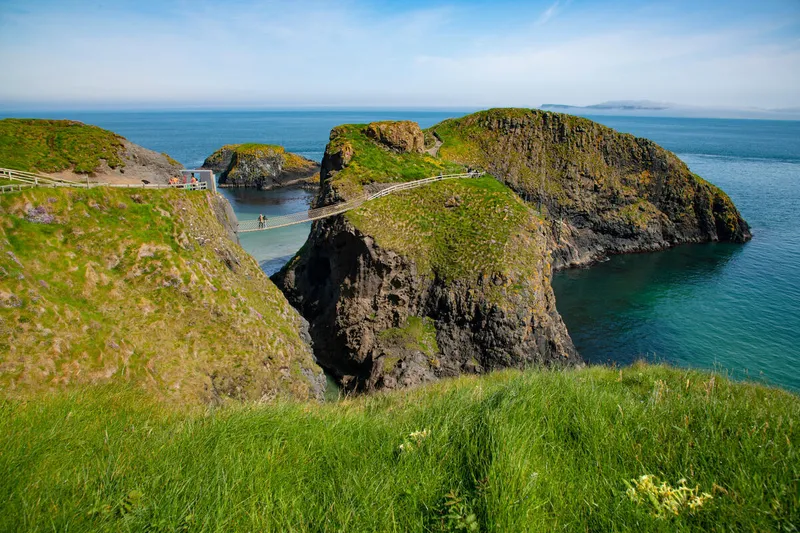
Carrick-a-Rede rope bridge, County Antrim. Photo: Chris Hill Photographic / Copyright: Tourism Ireland Coastal Full guide

Carrick-a-Rede Rope Bridge

A rope bridge linking the mainland to a small island used by salmon fishermen for 350 years. The bridge itself is short - the experience is the approach walk along the cliffs and the views from the island. Booking is mandatory in summer and slots sell out days ahead. If the bridge is sold out, the cliff path walk is still worth doing.

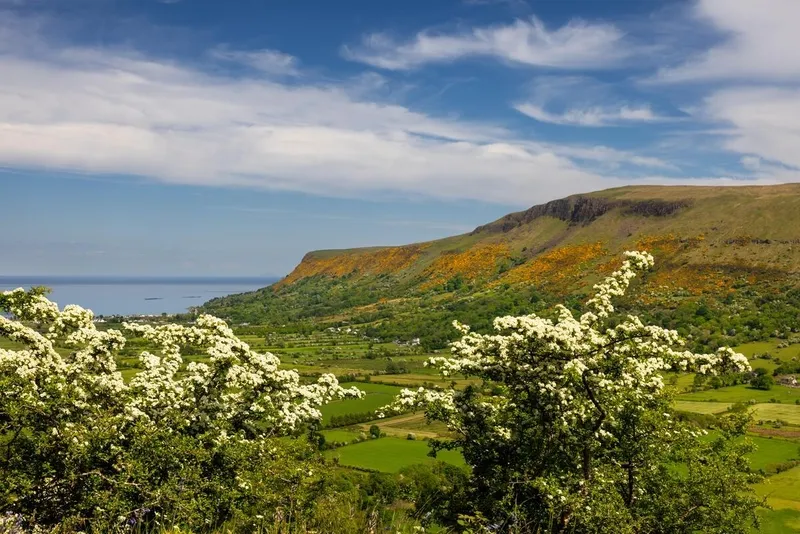
Glenariff Glen, Glens of Antrim. Photo: Bernie Brown / Copyright: Tourism Ireland Landscape Full guide

The Glens of Antrim

Nine glacial valleys that run from the inland plateau down to the sea along Antrim's eastern coast. Glenariff is the most visited - the waterfalls walk through the forest park is excellent. Cushendall and Cushendun are beautiful villages. The coast road between them is narrow, winding, and worth every hairpin bend. This is the quiet side of Antrim.

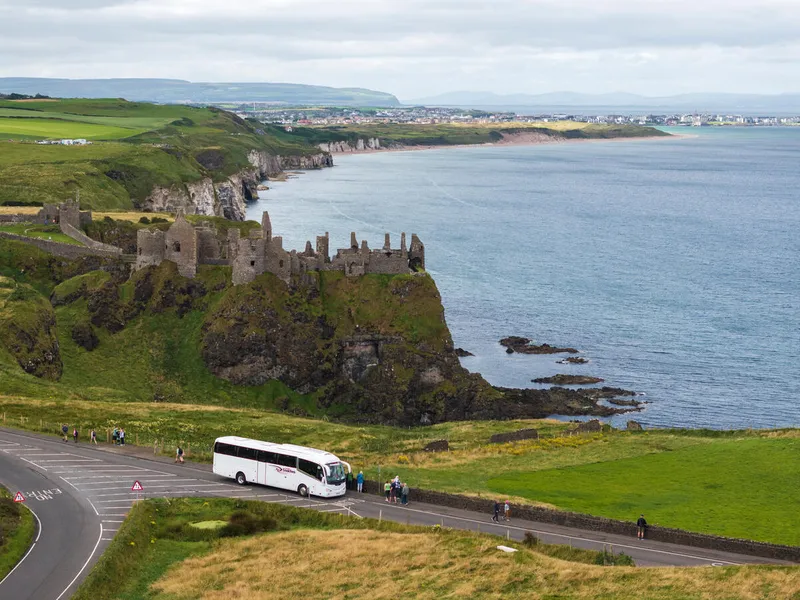
Dunluce Castle ruins on the Antrim coast. Photo: Richard Watson / Copyright: Tourism Ireland Heritage Full guide

Dunluce Castle

A medieval castle ruin perched on a basalt outcrop over the sea between Portrush and Portballintrae. Parts of the kitchen literally fell into the ocean during a storm in 1639. The setting is extraordinary - Game of Thrones used it as inspiration for the Greyjoy castle. Free views from the road; the castle itself has a small entry fee.

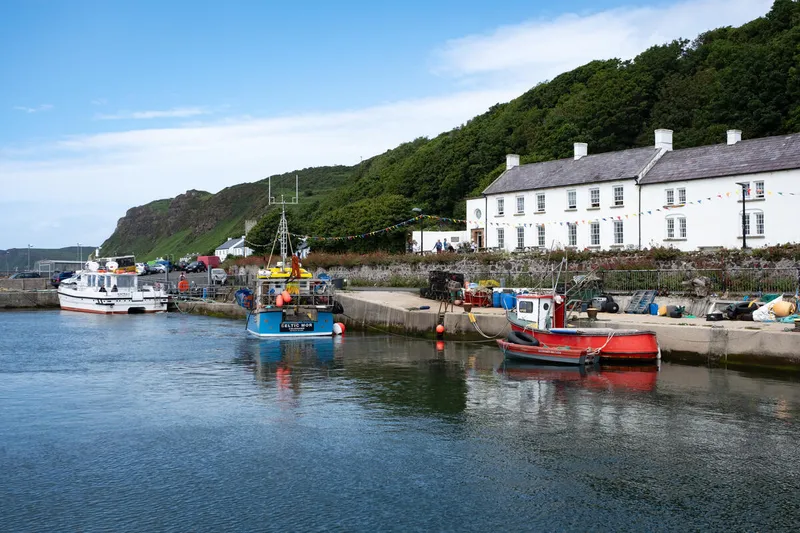
Rathlin Island harbour, County Antrim. Photo: Diana Jarvis / Copyright: Tourism Ireland Island Full guide

Rathlin Island

Northern Ireland's only inhabited offshore island, six miles from Ballycastle by ferry. Population around 150. The RSPB seabird centre at the west end has puffins from April to August. The island is small enough to walk or cycle in a day. Ferries run year-round but the schedule is weather-dependent. Bring layers.

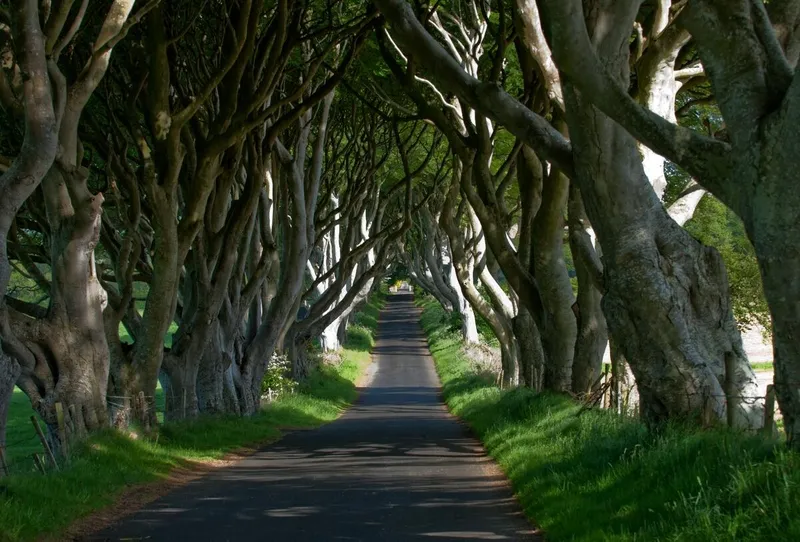
The Dark Hedges avenue of beech trees, County Antrim. Photo: Arthur Ward Landmark Full guide

The Dark Hedges

An avenue of beech trees planted in the 18th century along a road near Ballymoney. Made famous by Game of Thrones. Photogenic, but the reality is a 100-metre stretch of road that takes about two minutes to walk. Visit at dawn for the best light and no crowds. It is what it is - beautiful, brief, and heavily Instagrammed.

Where to Base Yourself

Antrim's coast towns serve different needs. Ballycastle for authenticity, Portrush for buzz, Cushendall for the Glens, Bushmills for proximity to the big sights. Choose based on what matters to you.

Ballycastle

North coast (1h 15m from Belfast) Coastal town
Best for: Causeway Coast east, Rathlin Island, authentic feel

The best base on the Causeway Coast if you want a real town rather than a resort. The harbour is the departure point for Rathlin Island. Good restaurants, decent pubs, and a sense of community that Portrush has lost to tourism. The Ould Lammas Fair in August is one of the oldest fairs in Ireland.

3* Seaside

Portrush

North coast (1h from Belfast) Resort
Best for: Causeway Coast west, golf, nightlife, families

Northern Ireland's traditional seaside resort. The beach is excellent, the amusements are nostalgic, and the restaurants have improved enormously. Home to Royal Portrush golf club. In summer it is busy in the way that seaside towns are meant to be busy. Good base for the Giant's Causeway (15 min) and Dunluce.

3* Seaside

Cushendall

East coast (1h from Belfast) Village
Best for: Glens of Antrim, walkers, quiet coast

The capital of the Glens - a tiny village at the foot of three of the nine glens with a gorgeous setting and an unhurried atmosphere. The Curfew Tower in the centre was built as a prison. A few good pubs, one excellent restaurant. This is the Antrim coast without the Causeway coach tours.

3* Heritage

Bushmills

North coast (1h 10m from Belfast) Village
Best for: Whiskey, Giant's Causeway proximity, foodies

A village built around the world's oldest licensed distillery. Two minutes from the Giant's Causeway and five from Dunluce Castle. The Bushmills Inn is one of the best small hotels in Northern Ireland. Tiny but perfectly placed for the western Causeway Coast.

4* Coaching Inn

Getting There & Around

✈️

Belfast International Airport (BFS)

About 30 minutes from Belfast city centre and 1-1.5 hours from the north coast depending on your destination. The main international gateway. Car hire desks at the terminal - you will need a car for the Causeway Coast.

🚗

From Dublin

About 2 hours to Belfast via the M1, then another hour to the north coast. The A26 from Ballymena is the fastest route to the coast. Alternatively, drive up the east coast via Larne for the scenic Glens route - longer but beautiful.

🚗

From Belfast

The north coast is 1-1.5 hours depending on destination. Two options: the fast inland route via the M2 and A26 through Ballymena, or the scenic coast road via the A2 through Larne and the Glens. The coast road adds an hour but is the point of the trip.

🚆

By Train

Translink runs Belfast to Coleraine and Portrush. The Coleraine-Portrush branch line takes five minutes. No train to Ballycastle or the Glens. The Belfast-Derry line via Coleraine is one of the most scenic rail journeys in Ireland.

🚌

By Bus

Translink's Causeway Rambler bus (seasonal) runs between Coleraine and Carrick-a-Rede, stopping at the Causeway and other sights. Useful if you do not want to drive, but it runs to a schedule. Regular bus services connect Belfast to Ballycastle and Cushendall.

When to Visit

May, June, and September are the sweet spot - long evenings, manageable crowds, and the best chance of decent weather. July and August bring peak crowds to the Causeway Coast, and the big attractions require advance booking. The Glens are quieter year-round. Rathlin's puffin season runs April to August.

Jan
5°C
Empty
Feb
5°C
Empty
Mar
7°C
Quiet
Apr
9°C
Moderate
May
12°C
Busy
Jun
14°C
Busy
Jul
16°C
Peak
Aug
16°C
Peak
Sep
14°C
Moderate
Oct
10°C
Quiet
Nov
7°C
Empty
Dec
6°C
Empty
Ideal
Possible
Brave

Where to Stay

The Causeway Coast has the best accommodation range in Northern Ireland outside Belfast. The Glens are charming but limited. Book early for summer - the north coast is the most popular holiday destination in Northern Ireland.

Patrick's pick
4* Coaching Inn

Bushmills Inn, Bushmills Village

A beautifully restored coaching inn with turf fires, gas lamps, and a whiskey bar that takes its location beside the distillery seriously. The best hotel on the Causeway Coast and one of the best small hotels in Ireland. Two minutes from the Giant's Causeway, five from Dunluce Castle. The restaurant is excellent. Book the original building over the extension.

Check availability Affiliate link - helps support this site
🏨

Hotels

Bushmills Inn is the standout. Portrush has several options from budget to mid-range. The Glens are limited to guesthouses and one or two small hotels. Ballycastle has a few decent choices.

🏡

B&Bs

Strong along the coast and in the Glens villages. The Whitepark Bay area has several excellent options with sea views. Book early for July and August - the Causeway Coast fills up fast.

🏠

Self-catering

Good range of coastal cottages and holiday lets, particularly around Portrush, Portballintrae, and Ballycastle. Prices spike significantly in peak summer. Off-season is excellent value.

Search Antrim accommodation

Compare prices across Booking.com, Hotels.com, Airbnb and more

Powered by Stay22
🔍 Heritage & Ancestry

Finding Your Antrim Roots

Antrim's plantation heritage is profound - the county was one of the most heavily settled during the Ulster Plantation, with Scottish settlers arriving in large numbers from the early 1600s. The Glens retained a more Gaelic character. The linen industry, the Troubles, and emigration to America and Scotland all shaped the county's story. If your surname is McAllister, McAuley, McNeil, O'Neill, or Stewart, the roots may well run through Antrim.

McAllisterMcAuleyMcNeilO'NeillStewartBoydMcKeownMcCormickBlackMcIlroy

Where to start

1
PRONI (Public Record Office of Northern Ireland)
The primary resource for NI genealogy - church records, valuation rolls, wills
2
Ulster Historical Foundation
Excellent research service for Ulster ancestry - particularly strong on Scots-Irish connections
3
IrishGenealogy.ie
Free church records covering both sides of the border
4
Ballymoney Museum
Local history collection with genealogy resources for north Antrim